Garmin / The rankings
Garmin fenix alternatives: six watches that answer the fenix question a different way
The fenix 8 is the most complete rugged GPS watch anyone sells, and that is exactly why people go looking: it is priced like it. Here is what to buy instead, split by which part of the fenix you were actually paying for.
By Mike M.Updated Researched from the maker's manuals and spec sheets
#adReader-supported: we may earn a commission if you buy through our links, at no extra cost to you. It never decides a ranking. How we rate · Disclosure
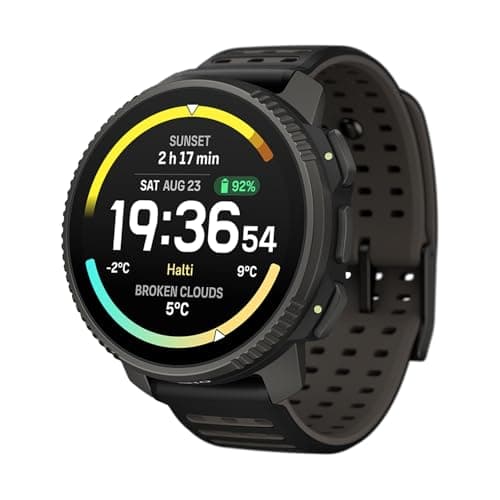
Our top pick
Suunto Vertical 2 Titanium
The closest like-for-like swap: sapphire over a 1.5-inch AMOLED, a titanium bezel, offline maps, a flashlight, 20 days of daily use and 65 multi-band GPS hours.
#ad · Suunto list price as of November 6, 2026 · Disclosure for the link to Suunto Vertical 2 Titanium
Quick picks
The rankings at a glance
| # | Product | Best for | Score | Price |
|---|---|---|---|---|
| 1 | Suunto Vertical 2 Titanium The closest like-for-like swap: sapphire over a 1.5-inch AMOLED, a titanium bezel, offline maps, a flashlight, 20 days of daily use and 65 multi-band GPS hours. | Best fenix alternative overallRechargeable GPS | 9.3 /10 | |
| 2 | 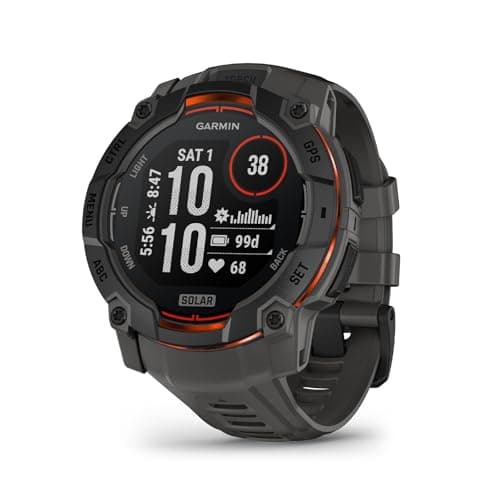 Garmin Instinct 3 Solar (50mm) Garmin rates it unlimited in smartwatch mode with solar and 260 GPS hours with sun, on a 10 ATM MIL-STD-810 case. You give up maps, sapphire and the dive rating. | Best if the fenix was simply too much watchSolar GPS | 9.8 /10 | |
| 3 | 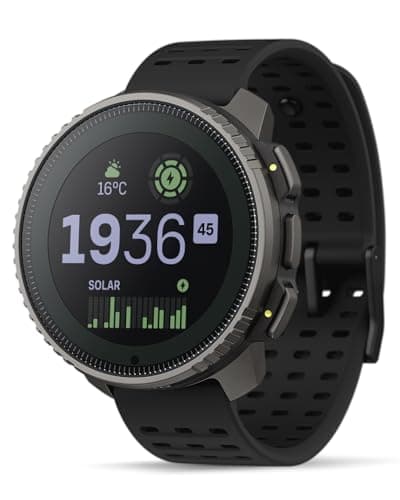 Suunto Vertical Titanium Solar Grade 5 titanium, sapphire, offline maps and 74 grams, with Suunto's stated 60 smartwatch days and 90 multi-band GPS hours with solar. | Best solar alternative with mapsSolar GPS | 9.6 /10 | |
| 4 |  COROS VERTIX 2S 118 hours of standard full GPS and 36 days of daily use under sapphire on a Grade 5 titanium bezel, rated to work at -30 degrees C. No solar, no flashlight. | Best battery without a solar lensRechargeable GPS | 9.6 /10 | |
| 5 | 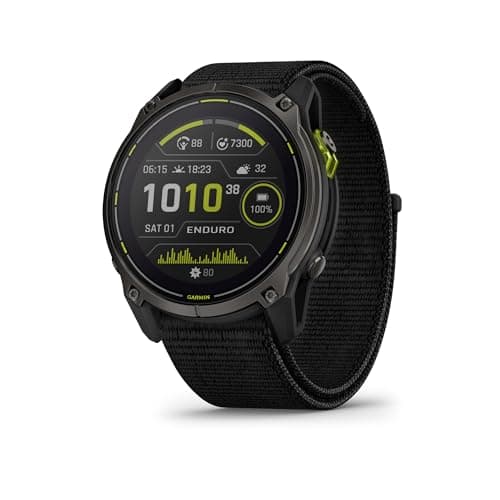 Garmin Enduro 3 The longest GPS figure Garmin publishes for any watch here, 320 hours with solar, with sapphire, preloaded maps and 63 grams. Garmin states no water rating or MIL-STD line for it. | Best alternative inside Garmin's own rangeSolar GPS | 9.7 /10 | |
| 6 | 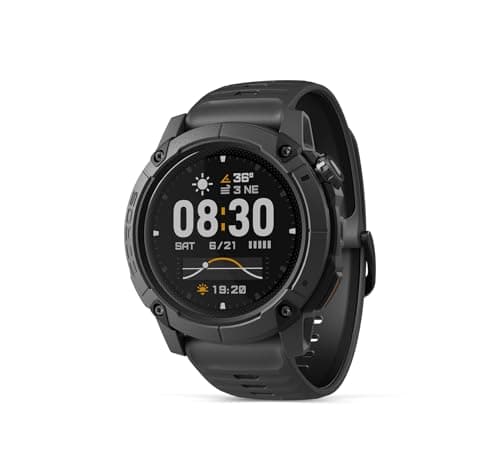 COROS NOMAD Maps with trail and street names, 50 all-systems GPS hours and 22 days of daily use at 61 grams. Mineral glass and 5 ATM are the honest limits. | Best budget pickRechargeable GPS | 9.1 /10 |
#ad · Prices come live from Amazon, last checked November 20, 2026. Scores are ours, built from the makers' manuals, battery tables and spec pages. Product photos come from Amazon; anything still on a stock frame is labelled on its card. Tap a row for the full write-up.
What the fenix is genuinely known for
This page exists because the fenix is expensive, not because it is bad. It is the most complete rugged GPS watch on the market and it is worth being precise about why before recommending anything else.
On the sapphire versions Garmin publishes a scratch-resistant sapphire lens, a titanium bezel, leakproof metal buttons and a sensor guard, on a case Garmin dive-rates to 40 meters and says is tested to U.S. military standards for thermal, shock and water resistance. Those versions ship with TopoActive maps preloaded. The 51mm fenix 8 Solar is rated at 30 days of typical use rising to 48 with solar, 95 GPS hours rising to 149, and 653 hours of max-battery GPS with solar — the longest figure in Garmin's own fenix 8 table. Add a speaker and microphone, a flashlight with a red mode, and the deepest sport and navigation feature set in wearables.
The three reasons people look elsewhere
1. The price. This is the big one, and it is the reason the autocomplete for this query is full of the words "cheaper" and "affordable". A sapphire fenix 8 is a four-figure watch at list in its larger sizes. Nothing on the list below asks that.
2. It is more watch than the job needs. A very large share of fenix buyers use a fraction of it: time, steps, a GPS track and the flashlight. If you navigate from a phone and have never opened a map on your wrist, you are paying for the single most expensive feature in the category and not using it.
3. Materials for the money. This is the quiet one. Suunto and COROS both put sapphire and titanium on watches that cost less than a sapphire fenix, and Garmin puts neither on any Instinct at any price. If a scratch-proof lens is your priority rather than a feature list, the alternatives genuinely win that column.
What an alternative has to replace
We judged every candidate on five things, in this order, because this site ranks on what a watch survives and how long it runs rather than on feature counts.
A published battery table, not a marketing number. Each figure quoted below is the maker's own, for a named mode, cited at the bottom of this page. Where a maker publishes nothing for a mode, we leave the row empty rather than estimating it.
A lens and bezel the maker will name. "Scratch-resistant" is not a material. Sapphire, titanium and Grade 5 titanium are, and we only credit them where the spec sheet says the word.
Maps, or an honest admission that there are none. Mapping is the biggest price step in rugged GPS. Two picks below have no maps at all and we say so in their first line.
Buttons. Every pick here can be driven with gloves on. A touch-only rugged watch is a contradiction.
A stated water rating. All six have one except where the maker publishes none, which happens once below and is flagged.
Why these six, in this order
1. Suunto Vertical 2 Titanium — the closest swap. Suunto's flagship is the one alternative that does not ask you to give up a category. Its spec sheet names sapphire crystal and a titanium bezel over a glass-fiber-reinforced polyamide case, a 1.5-inch LTPO AMOLED at 466 by 466, offline maps, an integrated LED flashlight, 100 meters of water resistance and an operating range of -20°C to +55°C, at 87 grams. Suunto rates it at 20 days of daily use, 40 days standby, 65 hours of all-systems multi-band GPS and up to 250 hours in power-saving GNSS modes. Against a fenix you lose the dive rating, the MIL-STD-810 statement and Garmin's ecosystem depth. You keep the materials, the maps and the light, for less. The honest cons: this generation dropped solar, and Suunto publishes no military-standard line. Our full write-up is the Suunto Vertical 2 review, and the brand-level argument is in Suunto vs Garmin.
2. Garmin Instinct 3 Solar (50mm) — the alternative most fenix shoppers should actually buy. If the reason you are on this page is that the fenix costs more than your use of it justifies, stop here. Garmin rates the 50mm Instinct 3 Solar at 40 days in smartwatch mode and unlimited with solar under its three-hours-at-50,000-lux assumption, 60 GPS hours rising to 260 with solar, and 150 max-battery GPS hours going unlimited with sun. That is a longer everyday battery than any fenix 8, on a case Garmin rates at 10 ATM and states is built to MIL-STD-810, with the same flashlight. What you give up is real and specific: no maps, no sapphire, no dive rating, a monochrome screen. For a buyer who navigates from a phone, that list costs nothing. The side-by-side is Instinct vs fenix, and the whole sub-$500 Garmin range is ranked in best Garmin watch under $500.
3. Suunto Vertical Titanium Solar — the solar alternative with maps. The previous-generation Vertical is still sold beside the Vertical 2 and it is the only watch on this page that pairs solar with maps, sapphire and a Grade 5 titanium bezel — at 74 grams, lighter than a 51mm fenix 8. Suunto states 30 days of daily use rising to 60 with solar, standby of 60 days going to a year with solar, 65 hours of multi-band GPS rising to 90 with solar, and up to 500 hours in power-saving GNSS modes, with 32 GB of map storage and dual-band L1 + L5 reception. The trade for the solar lens is the older platform: a dimmer MIP screen, no flashlight and an earlier optical heart-rate sensor. Also a 100-meter rating and no MIL-STD claim. If "fenix alternative" means "stop charging it", this is the mapping answer; the comparison with Garmin's version of the same idea is Suunto Vertical Solar vs Instinct 3 Solar.
4. COROS VERTIX 2S — the longest battery with no solar lens involved. COROS publishes 118 hours of standard full GPS, 73 hours with all systems on, 43 hours dual-frequency, and 36 days of daily use — the longest non-solar GPS figure on this site — under sapphire glass on a Grade 5 titanium alloy bezel with a titanium cover, at 10 ATM, with downloadable global landscape and topo maps and a stated working range down to -30°C, which is ten degrees colder than Garmin states for an Instinct. It is 87 grams with the silicone band and 70 with nylon. The honest cons: no solar, no flashlight and no MIL-STD claim in COROS's specs. Read the VERTIX 2S review and Garmin vs COROS before you commit to the ecosystem, because that is the real cost of switching.
5. Garmin Enduro 3 — the alternative inside Garmin's own range. Plenty of people asking for a fenix alternative want a different Garmin, not a different brand. The Enduro 3 is the one: Garmin's release states 320 hours of GPS with solar — the largest GPS figure Garmin publishes for any watch we list — and 90 days in smartwatch mode, with a sapphire lens, a 51mm titanium bezel, preloaded TopoActive maps, a flashlight, and an UltraFit nylon band that brings it to 63 grams. That is lighter than a 51mm fenix 8 and it runs longer. The catch is a real one: Garmin's Enduro 3 release states no water rating and no MIL-STD-810 line, so we claim neither, and the nylon strap is the reason for the weight — fit silicone and you add it back. The head-to-head is fenix 8 vs Enduro 3.
6. COROS NOMAD — the budget pick. The cheapest watch here that still draws a map, and the map is better than its price suggests: COROS lists landscape maps with trail and street names, which no Garmin Instinct can show at all, plus topo maps and dual-frequency GNSS. COROS states 22 days of daily use, 50 hours with all systems on, 56 hours in endurance mode and 34 hours dual-frequency, at 61 grams. The limits are where you would expect them and we will not dress them up: hardened mineral glass, not sapphire, and 5 ATM, not 10 — the wrong pair for wading or swimming. For a hunter or an angler who wants named trails on the wrist and does not get in the water, it is the most watch per dollar on the page.
If "alternative" just means cheaper
Be honest with yourself about which part of the fenix you were buying, because that answer picks your watch without any further argument.
If you wanted maps: the Suunto Vertical 2, the Vertical Titanium Solar, the VERTIX 2S, the Enduro 3 and the NOMAD all have them. The Instinct does not, and no amount of discounting changes that.
If you wanted the battery: a solar Instinct beats every fenix 8 in everyday use on Garmin's own table, at a fraction of the price. The full ranking is longest battery life GPS watches.
If you wanted sapphire and titanium: Suunto and COROS are the cheap route to both, and best titanium watches lists what each maker actually names.
If you wanted the toughest thing you can get: leave GPS behind entirely. A Casio G-Shock survives more for less money than anything on this page, as long as you can live without a GPS track — the trade is set out in G-Shock vs Garmin Instinct, and the non-Casio versions of the same idea are in G-Shock alternatives.
If you wanted the smartwatch side: that is a different page. The Apple Watch Ultra alternatives list approaches the same field from the phone-ecosystem end, and Apple Watch Ultra vs fenix 8 is the direct comparison.
What we will not claim
We have not worn these six watches on a single trip, and this page does not pretend otherwise. Every number above is published by the maker for a named mode, with the document linked in Sources. Where a maker is silent, the page stays silent: no water rating for the Enduro 3, no MIL-STD-810 line for any Suunto or COROS, no sapphire for any Instinct, no dive certification for anything here.
We also will not tell you a fenix is a bad watch. It is the best-equipped watch in the category, and if you want a documented 40-meter dive rating and preloaded maps and sapphire and a military-standard statement on one wrist, the honest answer is that you buy the fenix and pay for it. This page is for everybody whose actual requirement is narrower than that — which, in our experience of the keyword data, is most people typing the word "alternative".
In detail
The picks, in full
Rank 1
Best fenix alternative overall
Suunto Vertical 2 Titanium
The closest like-for-like swap: sapphire over a 1.5-inch AMOLED, a titanium bezel, offline maps, a flashlight, 20 days of daily use and 65 multi-band GPS hours.
EvidenceResearched · every row sourced
| Power class | Rechargeable GPS. A rechargeable lithium cell charged from a cable. Days to a few weeks per charge; the cell ages with every cycle. |
|---|---|
| Battery (smartwatch) | Up to 20 days daily use; up to 40 days standby |
| Battery (GPS) | Up to 65 h all-systems + multi-band (60 h always-on); up to 75 h single-band |
| Battery (max GPS) | Up to 250 h in power-saving GNSS modes |
| Glass | Sapphire crystal |
| Bezel & case | Titanium bezel; glass fiber reinforced polyamide case |
| Water rating | 100 m |
| Display | 1.5-inch LTPO AMOLED, 466 × 466 |
| Maps & GPS | Offline maps; GPS, GLONASS, Galileo, QZSS, BeiDou |
| Flashlight | Integrated LED flashlight |
| Weight | 87 g / 3.07 oz |
| Operating temp | -20°C to +55°C (-5°F to +130°F) |
What the 9.3 score weighs
- Battery & power independence (25% of the score)
- Durability of materials (25% of the score)
- Serviceability & lifespan (20% of the score)
- Field usability (15% of the score)
- Value per decade (10% of the score)
- Mission fit (5% of the score)
What the spec sheet supports
- Sapphire and titanium at the price of a polymer Garmin.
- Offline maps and a flashlight on a Suunto for the first time in the Vertical line.
Good to know
The Vertical 2 dropped solar; the original Vertical Titanium Solar still has it.
#ad · Suunto list price as of November 6, 2026 · Disclosure for the link to Suunto Vertical 2 Titanium
Rank 2
Best if the fenix was simply too much watch
Garmin Instinct 3 Solar (50mm)
Garmin rates it unlimited in smartwatch mode with solar and 260 GPS hours with sun, on a 10 ATM MIL-STD-810 case. You give up maps, sapphire and the dive rating.
EvidenceResearched · every row sourced
What the 9.8 score weighs
- Battery & power independence (25% of the score)
- Durability of materials (25% of the score)
- Serviceability & lifespan (20% of the score)
- Field usability (15% of the score)
- Value per decade (10% of the score)
- Mission fit (5% of the score)
What the spec sheet supports
- Garmin's own table shows the 50mm solar model doubling the 45mm in GPS-with-solar hours (260 vs 130).
- Physical buttons, a monochrome display readable in full sun, and a flashlight with a red mode.
- 10 ATM rating and a MIL-STD 810 claim on a watch that costs less than half a fenix.
Good to know
No maps: it navigates breadcrumb trails and waypoints, not topo maps.
#ad · Price as of November 20, 2026 · Disclosure for the link to Garmin Instinct 3 Solar (50mm)
Rank 3
Best solar alternative with maps
Suunto Vertical Titanium Solar
Grade 5 titanium, sapphire, offline maps and 74 grams, with Suunto's stated 60 smartwatch days and 90 multi-band GPS hours with solar.
EvidenceResearched · every row sourced
| Power class | Solar GPS. A rechargeable cell topped up by a solar lens. Weeks between charges; the cell still ages like any lithium battery. |
|---|---|
| Battery (smartwatch) | Up to 30 days daily use (60 days with solar); standby up to 60 days (1 year with solar) |
| Battery (GPS) | Up to 65 h multi-band (90 h with solar); up to 90 h single-band (140 h with solar) |
| Battery (max GPS) | Up to 500 h in power-saving GNSS modes |
| Glass | Sapphire crystal |
| Bezel & case | Titanium Grade 5 bezel; glass fiber reinforced polyamide case |
| Water rating | 100 m |
| Display | 1.4-inch matrix (MIP) |
| Maps & GPS | Free offline outdoor maps, 32 GB map storage; dual-band GNSS, L1 + L5 |
| Weight | 74 g / 2.61 oz |
| Operating temp | -20°C to +55°C (-5°F to +130°F) |
What the 9.6 score weighs
- Battery & power independence (25% of the score)
- Durability of materials (25% of the score)
- Serviceability & lifespan (20% of the score)
- Field usability (15% of the score)
- Value per decade (10% of the score)
- Mission fit (5% of the score)
What the spec sheet supports
- Solar, sapphire and titanium at 74 g, lighter than a fenix 8 51mm.
- 500 hours in power-saving GPS is the highest Suunto figure and beats the fenix 8 Solar 47mm's max-battery figure without solar.
Good to know
Previous generation: no flashlight, dimmer MIP screen, older optical heart rate.
- Promo code: AFF-RRSVCS3040% off the Suunto Vertical, Race and Race S at Suunto · ends Dec 31, 2026
#ad · Suunto list price as of November 6, 2026 · Disclosure for the link to Suunto Vertical Titanium Solar
Rank 4
Stock photoBest battery without a solar lens
COROS VERTIX 2S
118 hours of standard full GPS and 36 days of daily use under sapphire on a Grade 5 titanium bezel, rated to work at -30 degrees C. No solar, no flashlight.
EvidenceResearched · every row sourced
| Power class | Rechargeable GPS. A rechargeable lithium cell charged from a cable. Days to a few weeks per charge; the cell ages with every cycle. |
|---|---|
| Battery (smartwatch) | 36 days daily use |
| Battery (GPS) | 118 hours standard full GPS; 73 hours all systems on; 43 hours dual-frequency |
| Glass | Sapphire glass |
| Bezel & case | Grade 5 titanium alloy bezel with PVD coating; titanium alloy cover |
| Water rating | 10 ATM (surface water activities, not diving) |
| Display | 1.4-inch touchscreen always-on memory LCD, 280 × 280 |
| Maps & GPS | Downloadable global landscape and topo maps; GPS, GLONASS, Galileo, BeiDou, QZSS dual-frequency |
| Weight | 87 g with silicone band; 70 g with nylon band |
| Size | 50.3 × 50.3 × 16 mm |
| Operating temp | -22°F to 122°F (-30°C to 50°C) working; charging under 2 hours |
What the 9.6 score weighs
- Battery & power independence (25% of the score)
- Durability of materials (25% of the score)
- Serviceability & lifespan (20% of the score)
- Field usability (15% of the score)
- Value per decade (10% of the score)
- Mission fit (5% of the score)
What the spec sheet supports
- 118 standard-GPS hours without a solar lens beats every Garmin's non-solar figure here.
- Rated to work at -30°C, ten degrees colder than a Garmin's stated range.
- Sapphire, titanium, 10 ATM and free downloadable topo maps.
Good to know
No solar, no flashlight.
#ad · Price as of November 20, 2026 · Disclosure for the link to COROS VERTIX 2S
Rank 5
Best alternative inside Garmin's own range
Garmin Enduro 3
The longest GPS figure Garmin publishes for any watch here, 320 hours with solar, with sapphire, preloaded maps and 63 grams. Garmin states no water rating or MIL-STD line for it.
EvidenceResearched · every row sourced
| Power class | Solar GPS. A rechargeable cell topped up by a solar lens. Weeks between charges; the cell still ages like any lithium battery. |
|---|---|
| Battery (smartwatch) | Up to 90 days in smartwatch mode |
| Battery (GPS) | Up to 320 hours in GPS mode with solar charging; up to 120 hours with multi-band SatIQ |
| Glass | Scratch-resistant sapphire lens |
| Bezel & case | 51mm titanium bezel; UltraFit nylon band |
| Maps & GPS | Preloaded TopoActive maps |
| Flashlight | Built-in LED flashlight with variable brightness, red light and strobe |
| Weight | 63 grams |
What the 9.7 score weighs
- Battery & power independence (25% of the score)
- Durability of materials (25% of the score)
- Serviceability & lifespan (20% of the score)
- Field usability (15% of the score)
- Value per decade (10% of the score)
- Mission fit (5% of the score)
What the spec sheet supports
- 320 GPS hours with solar is the largest GPS figure Garmin publishes for any watch we list.
- Lighter than a 51mm fenix 8 thanks to the nylon strap and titanium bezel.
- Sapphire and preloaded maps.
Good to know
Garmin's Enduro 3 release does not state a water rating or MIL-STD line, so we do not claim them here.
#ad · Price as of November 20, 2026 · Disclosure for the link to Garmin Enduro 3
Rank 6
Best budget pick
COROS NOMAD
Maps with trail and street names, 50 all-systems GPS hours and 22 days of daily use at 61 grams. Mineral glass and 5 ATM are the honest limits.
EvidenceResearched · every row sourced
| Power class | Rechargeable GPS. A rechargeable lithium cell charged from a cable. Days to a few weeks per charge; the cell ages with every cycle. |
|---|---|
| Battery (smartwatch) | 22 days daily use |
| Battery (GPS) | 50 hours all systems on; 56 hours endurance mode; 34 hours dual-frequency |
| Glass | Hardened mineral glass |
| Bezel & case | Fiber reinforced polymer with aluminum alloy bezel |
| Water rating | 5 ATM (surface water activities, not diving) |
| Maps & GPS | Landscape maps with trail and street names, topo maps; dual-frequency GNSS |
| Weight | 61 g with silicone band; 49 g with nylon band |
| Size | 47.8 × 47.8 × 14.8 mm |
What the 9.1 score weighs
- Battery & power independence (25% of the score)
- Durability of materials (25% of the score)
- Serviceability & lifespan (20% of the score)
- Field usability (15% of the score)
- Value per decade (10% of the score)
- Mission fit (5% of the score)
What the spec sheet supports
- Trail and street names on the map layer, which a Garmin Instinct cannot show at all.
- Lightest mapping watch on the site.
Good to know
Mineral glass and 5 ATM.
#ad · Price as of November 20, 2026 · Disclosure for the link to COROS NOMAD
What switching away from Garmin actually costs
The app and the history. Leaving Garmin Connect for Suunto's or COROS's app means leaving years of recorded activity behind unless you export it. Both brands import files; neither imports your Garmin history as if it were native. Decide this before you buy, not after.
The straps and the chargers. Garmin's QuickFit ecosystem is enormous. Suunto and COROS use standard pins on most models, which is cheaper, but the aftermarket is thinner and every brand uses its own proprietary charge cable.
The update runway. This matters more than anything on a watch you intend to own for a decade. Garmin has the longest record of adding features to watches already sold; Suunto and COROS both ship real firmware improvements but with shorter histories to judge them by. We go through the whole question, including warranty terms per brand, in the watch warranty comparison.
The bottom line
Our recommendation
Buy this one
The closest like-for-like swap: sapphire over a 1.5-inch AMOLED, a titanium bezel, offline maps, a flashlight, 20 days of daily use and 65 multi-band GPS hours.
#ad · Suunto list price as of November 6, 2026 · Disclosure for the link to Suunto Vertical 2 Titanium
The runner-up
Garmin Instinct 3 Solar (50mm)
Garmin rates it unlimited in smartwatch mode with solar and 260 GPS hours with sun, on a 10 ATM MIL-STD-810 case. You give up maps, sapphire and the dive rating.
#ad · Price as of November 20, 2026 · Disclosure for the link to Garmin Instinct 3 Solar (50mm)
Brands: want your product tested? For Brands.
How we scored this
What we checked to build this ranking
Every pick here is researched against the documents that decide whether a watch lasts: the maker's own battery table read mode by mode, what the lens and case are actually made of, the water rating, whether a MIL-STD-810 line is on the record and in whose words, and how long the maker keeps updating the line. Each one is then scored on a public rubric weighted for a decade of ownership, and every figure links to where it came from.
That is why the order on this page is worth following: it is built from specs you can open yourself, and commissions never set a score or decide a pick. The rubric and its weights are published.
Corrections & updates
- First published. Every figure is the maker's own, cited per row: Garmin's fenix 8, Enduro 3 and Instinct 3 releases and battery tables, Suunto's Vertical 2 and Vertical Titanium Solar product pages, and the COROS VERTIX 2S / NOMAD specification tables. No dive rating, MIL-STD-810 line or sapphire claim is made for any watch whose maker does not state one; the Enduro 3's missing water rating is Garmin's silence and is flagged as such.
Questions
Frequently asked
What is the best Garmin fenix alternative?
The Suunto Vertical 2 Titanium for most people. Suunto names sapphire crystal and a titanium bezel, ships offline maps and an integrated flashlight, rates the watch at 100 meters, and publishes 20 days of daily use and 65 hours of all-systems multi-band GPS. You give up the fenix's 40-meter dive rating, its MIL-STD-810 statement and Garmin's ecosystem. If your reason for leaving was the price rather than the brand, the Garmin Instinct 3 Solar (50mm) is the better answer.
Is there a cheaper Garmin that does what a fenix does?
Partly. The Instinct line costs a fraction of a fenix and beats it on everyday battery — Garmin rates the 50mm Instinct 3 Solar as unlimited in smartwatch mode with solar against 48 days for the 51mm fenix 8 Solar — on a 10 ATM case Garmin says is built to MIL-STD-810. What no Instinct does at any price is draw a topographic map, carry a named sapphire lens or hold a dive rating. Inside Garmin's own range the closest true alternative is the Enduro 3, which has maps, sapphire and a longer GPS figure than any fenix 8.
Which fenix alternative has the longest battery life?
Among watches with maps, the Garmin Enduro 3: Garmin states 320 hours of GPS with solar and 90 days in smartwatch mode. Among watches without a solar lens at all, the COROS VERTIX 2S at 118 hours of standard full GPS and 36 days of daily use. And if maps are not required, the 50mm Instinct 3 Solar is rated unlimited in smartwatch mode with solar, which beats everything else on this page in everyday use.
Do any fenix alternatives have sapphire glass and titanium?
Yes, and this is where the alternatives genuinely beat Garmin on value. Suunto names sapphire crystal with a titanium bezel on the Vertical 2 and Grade 5 titanium with sapphire on the Vertical Titanium Solar; COROS names sapphire glass over a Grade 5 titanium alloy bezel on the VERTIX 2S. Garmin names sapphire on the fenix sapphire versions and the Enduro 3, and on no Instinct at any price.
What does the fenix have that no alternative here matches?
A 40-meter dive-rated case and a MIL-STD-810 statement on the same watch as sapphire, titanium and preloaded maps. None of the six alternatives carries a dive certification, no Suunto or COROS on this page publishes a military-standard line, and Garmin publishes no water rating at all for the Enduro 3. If a documented depth rating is a requirement, the fenix 8 is the watch and the alternatives are not substitutes.
Is the Suunto Vertical 2 or the Vertical Titanium Solar the better fenix alternative?
The Vertical 2 if you want the bright AMOLED, the flashlight and the current platform; the Vertical Titanium Solar if you want to stop charging. Suunto rates the solar model at 30 days of daily use rising to 60 with solar and 65 multi-band GPS hours rising to 90, against 20 days and 65 hours for the Vertical 2, and it is 13 grams lighter. Both carry sapphire, a titanium bezel, offline maps and a 100-meter rating.
Keep reading
Related on Bezel & Bearing
- Instinct vs fenixThe cheaper-Garmin version of this question.
- Suunto vs GarminThe brand-level trade, in full.
- Garmin vs COROSWhat switching ecosystems costs.
- Best Garmin under $500If the alternative needs to be cheaper.
- Suunto Vertical 2 reviewThe winner of this page in full.
- Best rugged GPS watchesThe whole field, no fenix frame.
Receipts
Sources
- Garmin newsroom — fenix 8 Series press release (checked 2026-09-20)
- Garmin — fenix 8 Series Owner's Manual, Battery Information (checked 2026-09-20)
- Garmin — fenix 8 Series Owner's Manual, Specifications (checked 2026-09-20)
- Garmin newsroom — Enduro 3 press release (checked 2026-09-20)
- Garmin newsroom — Instinct 3 Series press release (checked 2026-09-20)
- Garmin — Instinct 3 Solar Series Owner's Manual, Battery Life Information (checked 2026-09-20)
- Garmin — Instinct 3 Solar Series Owner's Manual, Specifications (checked 2026-09-20)
- Suunto — Vertical 2 Titanium Black product page and tech specs (checked 2026-09-20)
- Suunto — Vertical Titanium Solar Black product page and tech specs (checked 2026-09-20)
- COROS — VERTIX 2S / APEX / NOMAD specification tables (checked 2026-09-20)
Battery, glass, case and water figures come from the maker's own owner's manuals, spec pages and press releases, linked on every product so you can open the page they came from. Prices are set by Amazon and change often, so each buy button takes you to the current one. Read the full method.