GPS Watches / Review
COROS VERTIX 2S review: the longest battery on the site that still needs a cable
Sapphire under a PVD-coated titanium bezel, 118 hours of continuous GPS, 36 days of daily wear and a working range down to -30C. COROS built the materials and the battery of a decade watch and then left out the solar lens, and that one omission is the whole review.
By Mike M.Updated Researched from the maker's manuals and spec sheets
#adReader-supported: we may earn a commission if you buy through our links, at no extra cost to you. It never decides a ranking. How we rate · Disclosure
The verdict
The watch and its alternatives
 Stock photo
The watch under review
COROS VERTIX 2S
Rechargeable GPS8.1 /1036 days of daily use, 118 standard-GPS hours, sapphire, Grade 5 titanium bezel, 10 ATM, rated to -30C. Score below.
Check price · Amazon#ad · Price as of November 4, 2026 · Disclosure for the link to COROS VERTIX 2S
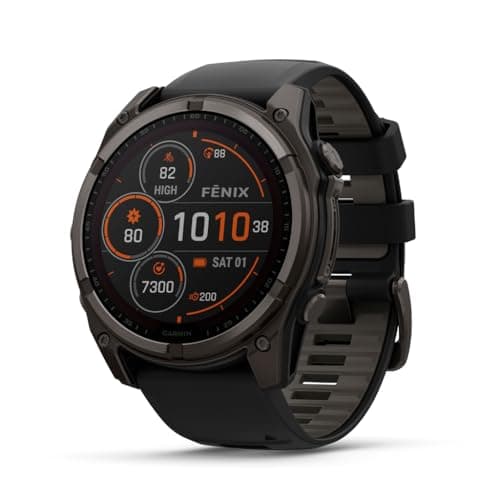
Alternative: the one with solar and a dive rating
Garmin fenix 8 Solar (51mm, Sapphire)
Solar GPS8.7 /10Sapphire and titanium too, plus a solar lens, preloaded topo maps, a flashlight, a 40 m dive rating and a MIL-STD-810 line. Costs more.
$1,092.78Amazon#ad · Price as of November 4, 2026 · Disclosure for the link to Garmin fenix 8 Solar (51mm, Sapphire)
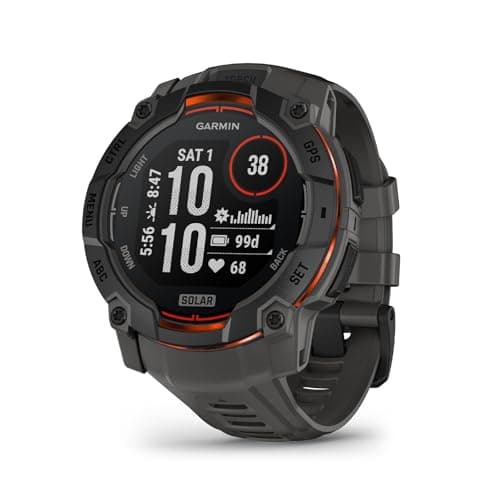
Alternative: the one that stops charging
Garmin Instinct 3 Solar (50mm)
Solar GPS8.7 /10No sapphire, no maps, far cheaper, and Garmin rates its smartwatch mode unlimited in sufficient sun.
$399.99Amazon#ad · Price as of November 4, 2026 · Disclosure for the link to Garmin Instinct 3 Solar (50mm)
Verdict and score
What the VERTIX 2S is
COROS sells a small line and the VERTIX is the top of it. The VERTIX 2S is the big one: a 50.3 × 50.3 × 16 mm case, 87 g on the silicone band and 70 g on the nylon, with a 1.4-inch 280 × 280 always-on memory LCD touchscreen under sapphire. COROS's own page describes it as a 36-day, 118-hour watch, and that is the headline the whole product is built around.
It is, in other words, a direct answer to the sapphire-and-titanium Garmin fenix — same ambitions, same materials vocabulary, a different power philosophy and a lower price. If you have read our rugged GPS watch rankings, this is the watch that keeps turning up one slot below the solar Garmins on battery and level with them on materials.
What it is not is a watch with a solar lens, a flashlight or a dive rating. COROS claims none of the three, and this review does not credit any of them. It also carries no MIL-STD-810 line in COROS's specs, so the site's military-standard flag stays off — the reasoning behind that flag is in what MIL-STD-810 actually means.
The battery figures, in full
COROS publishes GPS battery in three tiers depending on how many constellations you ask for and whether you want dual-frequency. Here they are unrearranged, next to what the watch does when it is not recording:
| Mode (COROS's wording) | COROS VERTIX 2S |
|---|---|
| Daily use | 36 days |
| Standard full GPS | 118 hours |
| All systems on | 73 hours |
| Dual-frequency | 43 hours |
| Charging | Under 2 hours |
Read the middle three rows together, because that spread is the useful part. One hundred eighteen hours is the single-constellation figure — it is what you get on a long trip where a bearing within a few meters is plenty. Seventy-three hours is what you get with every constellation enabled. Forty-three hours is dual-frequency, the mode that fights canyon walls and tree canopy, and it costs you nearly two-thirds of the headline. That is not a COROS failing; every dual-frequency watch pays that tax, and when multi-band is worth switching on is its own guide on this site.
The number to compare against the rest of the market is 118 hours, and it is genuinely class-leading for a watch with no solar lens. A fenix 8 Solar reaches 95 GPS-only hours on battery alone and only beats the COROS when the sun does the extra work. Where that leaves the ranking is laid out in longest-battery-life GPS watches.
The 36-day daily-use figure deserves one caveat of its own: it is a figure for the watch doing watch things with sensors on, not a figure for a watch you also train on five times a week. Every hour of GPS recording comes out of the same cell. Treat 36 days as the ceiling of a quiet month, not as a promise.
The missing solar lens
We want to be fair about the size of this problem. Thirty-six days is a long cycle: a VERTIX 2S owner who mostly wears the watch and occasionally records a hike might put twenty or thirty cycles a year through the cell, which is a gentler life than a smartwatch that charges nightly gets in a month. The watch is not fragile. It is simply dependent, in a way that a Tough Solar G-Shock or a solar Garmin is not, and dependence is what the buy-it-for-life argument on this site is about. Our position on the trade is in are solar watches worth it.
Materials and the cold rating
COROS lists sapphire glass, a Grade 5 titanium alloy bezel with PVD coating and a titanium alloy cover. That is the same materials answer a sapphire fenix gives, at a lower price, and it is the strongest part of this watch. Sapphire is the single spec most worth paying for on a watch you intend to keep, for the reason laid out in sapphire vs Gorilla Glass: it is the one surface you cannot avoid dragging across rock, doorframes and truck beds.
Water resistance is 10 ATM, which COROS describes as suitable for surface water activities and not for diving. That is the same rating a Garmin Instinct carries and a step below the fenix 8's 40 m dive rating. For swimming, rain, wading and a capsize it is entirely adequate; for anything with a tank on your back it is not the watch.
The specification that nothing else here matches is the working range: -22F to 122F, which is -30C to 50C. Garmin's outdoor watches are generally specified to -20C. Ten degrees sounds like a detail until you have watched a watch go dim and slow on a January morning, and if you hunt late season or ski tour, this is a real and unusual advantage. COROS publishes no MIL-STD-810 claim and no dive rating, and we do not invent either.
Maps, GNSS and the screen
The VERTIX 2S takes downloadable global landscape and topo maps, and COROS does not charge for them. Satellite support is GPS, GLONASS, Galileo, BeiDou and QZSS, with dual-frequency available. On paper that is the same navigation capability a mapping Garmin has, and the practical difference is in the map rendering and the route-planning ecosystem around it rather than in the hardware.
The screen is the honest trade. A 1.4-inch 280 × 280 always-on memory LCD is sun-legible, costs almost nothing to leave on, and is the reason the battery figures look the way they do. It is also lower-resolution and flatter-looking than the AMOLED on a Suunto Vertical 2 or a fenix 8 AMOLED, and a map on it carries less detail per square inch. If you have never used a transflective display, the comparison worth reading first is MIP vs AMOLED battery life — that choice, not the brand, is what decides how a watch like this behaves.
There is no flashlight. On a watch at this price, with this much case to work with, that is a genuine omission rather than a nitpick: a wrist light is the feature outdoor owners report using most once they have it. The models that have one are listed in Garmin watches with a flashlight.
Where you buy it, and why that matters
One practical note that affects this watch more than most. At the time of writing, Amazon does not list the VERTIX 2S itself — a search returns replacement straps and other brands' watches, and our own ASIN resolver found no purchasable listing for the model. COROS sells it directly, and the buy button on this page is a tagged Amazon search rather than a product link, which is the honest way to handle a model Amazon does not stock. We print no price for it anywhere on this site.
That is worth knowing for two reasons. The first is warranty and returns: buying direct from the maker is not a worse experience, but it is a different one, and there is no Prime window to fall back on. The second is availability risk on a watch you intend to keep for a decade — straps, chargers and service for a direct-sold model come from one source. Neither point is a reason to avoid the watch. Both are reasons to buy it from COROS with your eyes open.
Against the Garmins
Against the fenix 8 Solar, the COROS wins on non-solar GPS hours and on cold tolerance, matches it on sapphire and titanium, and loses on solar, the 40 m dive rating, the MIL-STD-810 line, the flashlight and preloaded maps. It also costs meaningfully less. If you want the complete watch and the budget is there, the fenix is the complete watch; if you want 90 percent of it for less, this is the 90 percent.
Against the Instinct 3 Solar, the comparison is not close on materials — the Instinct has no sapphire, no titanium and no maps — and not close on power independence either, in the Instinct's favor: Garmin rates its smartwatch mode unlimited in sufficient sun. These two watches are answers to different questions. One is the cheapest way to stop charging; the other is the cheapest way to get sapphire, titanium and maps together.
Against the Suunto Vertical 2, the COROS has nearly twice the daily-use figure and almost twice the GPS hours; the Suunto has a 1.5-inch AMOLED, a flashlight and the better-looking map. Same materials, same price class, opposite screens. The brand-level version of this argument is Suunto vs Garmin.
Who should buy it, and who should not
Buy it if you want sapphire and titanium without paying flagship-Garmin money; if your trips are measured in days of continuous recording rather than hours; if you work or play below freezing; or if you have simply never been convinced that a solar lens on a watch does much.
Skip it if the reason you are shopping is that you are tired of charging things, because this watch does not solve that and a solar Garmin does. Skip it if you dive, because 10 ATM is not a dive rating. Skip it if you want a flashlight or the sharpest possible map, both of which the AMOLED competition does better. And skip it if buying direct from a maker rather than a retailer is a dealbreaker for you.
If the battery figure is what brought you here, the full ranking is in longest-battery-life GPS watches, and the offline-map picks are in best watch with offline maps.
How it stacks up against the obvious alternative. The brand-level comparison, including why the solar lens on a Garmin matters more over a decade than the bigger raw GPS figure here, is in Garmin vs COROS.
In detail
Spec sheet and score
Stock photoThe watch under review
COROS VERTIX 2S
36 days of daily use, 118 standard-GPS hours, sapphire, Grade 5 titanium bezel, 10 ATM, rated to -30C. Score below.
EvidenceResearched · every row sourced
| Power class | Rechargeable GPS. A rechargeable lithium cell charged from a cable. Days to a few weeks per charge; the cell ages with every cycle. |
|---|---|
| Battery (smartwatch) | 36 days daily use |
| Battery (GPS) | 118 hours standard full GPS; 73 hours all systems on; 43 hours dual-frequency |
| Glass | Sapphire glass |
| Bezel & case | Grade 5 titanium alloy bezel with PVD coating; titanium alloy cover |
| Water rating | 10 ATM (surface water activities, not diving) |
| Display | 1.4-inch touchscreen always-on memory LCD, 280 × 280 |
| Maps & GPS | Downloadable global landscape and topo maps; GPS, GLONASS, Galileo, BeiDou, QZSS dual-frequency |
| Weight | 87 g with silicone band; 70 g with nylon band |
| Size | 50.3 × 50.3 × 16 mm |
| Operating temp | -22°F to 122°F (-30°C to 50°C) working; charging under 2 hours |
How the 8.1 score breaks down
- Battery & power independence (25%)
- 9
- Durability of materials (25%)
- 9
- Serviceability & lifespan (20%)
- 6
- Field usability (15%)
- 8
- Value per decade (10%)
- 8
- Mission fit (5%)
- 7
What the spec sheet supports
- 118 standard-GPS hours without a solar lens beats every Garmin's non-solar figure here.
- Rated to work at -30°C, ten degrees colder than a Garmin's stated range.
- Sapphire, titanium, 10 ATM and free downloadable topo maps.
Where it falls short
- No solar, no flashlight.
- No MIL-STD claim in COROS's specs.
Skip this if…
…you want a watch that stops needing a cable altogether; that is the solar Garmin's job.
#ad · Price as of November 4, 2026 · Disclosure for the link to COROS VERTIX 2S
Alternative: the one with solar and a dive rating
Garmin fenix 8 Solar (51mm, Sapphire)
Sapphire and titanium too, plus a solar lens, preloaded topo maps, a flashlight, a 40 m dive rating and a MIL-STD-810 line. Costs more.
EvidenceResearched · every row sourced
| Power class | Solar GPS. A rechargeable cell topped up by a solar lens. Weeks between charges; the cell still ages like any lithium battery. |
|---|---|
| Battery (smartwatch) | Up to 30 days typical use; up to 48 days with solar |
| Battery (GPS) | Up to 95 hours GPS-only; up to 149 hours with solar |
| Battery (max GPS) | Up to 186 hours max-battery GPS; up to 653 hours with solar |
| Battery (solar) | Expedition GPS mode up to 50 days; up to 118 days with solar |
| Glass | Scratch-resistant sapphire lens (sapphire versions) |
| Bezel & case | Titanium bezel (sapphire versions); leakproof metal buttons; sensor guard |
| Water rating | 40-meter dive-rated case |
| MIL-STD-810 | Tested to U.S. military standards for thermal, shock and water resistance |
| Maps & GPS | TopoActive maps preloaded on sapphire versions |
| Flashlight | Built-in LED flashlight with variable intensities, red light and strobe |
How the 8.7 score breaks down
- Battery & power independence (25%)
- 9
- Durability of materials (25%)
- 10
- Serviceability & lifespan (20%)
- 7
- Field usability (15%)
- 10
- Value per decade (10%)
- 6
- Mission fit (5%)
- 8
What the spec sheet supports
- Sapphire, titanium and leakproof metal buttons on a case Garmin dive-rates to 40 m.
- 653 hours of max-battery GPS with solar is the longest figure in Garmin's fenix 8 table.
- Preloaded topo maps, a speaker and mic, and a flashlight.
Where it falls short
- A MIP display in a world of AMOLEDs; that is also why the battery lasts.
- The fenix 9 Pro (August 2026) now sits above it in the line, with a titanium case and solar on select models.
- Big: 51mm is a lot of watch under a sleeve.
Skip this if…
…you have never used the maps on a watch; the Instinct 3 Solar gives you the battery for half the money.
#ad · Price as of November 4, 2026 · Disclosure for the link to Garmin fenix 8 Solar (51mm, Sapphire)
Alternative: the one that stops charging
Garmin Instinct 3 Solar (50mm)
No sapphire, no maps, far cheaper, and Garmin rates its smartwatch mode unlimited in sufficient sun.
EvidenceResearched · every row sourced
How the 8.7 score breaks down
- Battery & power independence (25%)
- 10
- Durability of materials (25%)
- 8
- Serviceability & lifespan (20%)
- 7
- Field usability (15%)
- 9
- Value per decade (10%)
- 10
- Mission fit (5%)
- 8
What the spec sheet supports
- Garmin's own table shows the 50mm solar model doubling the 45mm in GPS-with-solar hours (260 vs 130).
- Physical buttons, a monochrome display readable in full sun, and a flashlight with a red mode.
- 10 ATM rating and a MIL-STD 810 claim on a watch that costs less than half a fenix.
Where it falls short
- No maps: it navigates breadcrumb trails and waypoints, not topo maps.
- The solar figures assume three hours a day at 50,000 lux, which is midday sun, not a sleeve.
- Garmin does not name the lens material; treat it as strengthened glass, not sapphire.
Skip this if…
…you need on-wrist topo maps, or you wear long sleeves and work indoors, where the solar math never happens.
#ad · Price as of November 4, 2026 · Disclosure for the link to Garmin Instinct 3 Solar (50mm)
How we scored this
What we checked to build this ranking
Every pick here is researched against the documents that decide whether a watch lasts: the maker's own battery table read mode by mode, what the lens and case are actually made of, the water rating, whether a MIL-STD-810 line is on the record and in whose words, and how long the maker keeps updating the line. Each one is then scored on a public rubric weighted for a decade of ownership, and every figure links to where it came from.
That is why the order on this page is worth following: it is built from specs you can open yourself, and commissions never set a score or decide a pick. The rubric and its weights are published.
Questions
Frequently asked
How long does the COROS VERTIX 2S battery last?
COROS states 36 days of daily use, 118 hours of standard full GPS, 73 hours with all satellite systems on and 43 hours in dual-frequency mode, with a full charge taking under 2 hours.
Does the COROS VERTIX 2S have solar charging?
No. COROS lists no solar lens for the VERTIX 2S; it charges from a cable. Among the watches on this site, solar means a Garmin Instinct or fenix Solar, a Suunto Vertical Titanium Solar, or a Casio with Tough Solar.
Is the COROS VERTIX 2S sapphire?
Yes. COROS lists sapphire glass with a Grade 5 titanium alloy bezel with PVD coating and a titanium alloy cover.
Is the COROS VERTIX 2S waterproof?
COROS rates it to 10 ATM and describes that as suitable for surface water activities, not diving. It carries no dive rating.
Does the COROS VERTIX 2S have maps?
Yes. COROS lists downloadable global landscape and topo maps at no extra cost, with GPS, GLONASS, Galileo, BeiDou and QZSS support including dual-frequency.
Can you buy the COROS VERTIX 2S on Amazon?
Not reliably. At the time of writing our ASIN lookup found no purchasable Amazon listing for the watch itself, only replacement straps. COROS sells it directly, and the buy link here is a tagged Amazon search rather than a product page.
Keep reading
Related on Bezel & Bearing
- Longest-battery-life GPS watchesWhere 118 hours ranks.
- Best rugged GPS watchesThe overall ranking.
- Suunto Vertical 2 reviewSame materials, AMOLED screen.
- Garmin fenix 8 Pro reviewThe flagship with satellite SOS.
- Sapphire vs Gorilla GlassWhy the lens is the good news.
- Best watch with offline mapsMapping watches, ranked.
Receipts
Sources
- COROS — VERTIX 2S / APEX / NOMAD specification tables (checked 2026-09-20)
- Garmin — fenix 8 Series Owner's Manual, Battery Information (checked 2026-09-20)
- Garmin newsroom — fenix 8 Series press release (checked 2026-09-20)
- Garmin — Instinct 3 Solar Series Owner's Manual, Battery Life Information (checked 2026-09-20)
Battery, glass, case and water figures come from the maker's own owner's manuals, spec pages and press releases, linked on every product so you can open the page they came from. Prices are set by Amazon and change often, so each buy button takes you to the current one. Read the full method.