Built to Last / Guide
Which rugged watch has the best warranty? Every maker's own policy, side by side
Warranty length is the number everyone quotes and the least useful one. These are the published terms for Garmin, Casio, Suunto, COROS, Apple, Amazfit and the analog brands, plus the exclusions that quietly remove most of what actually happens to a watch.
By Mike M.Updated Researched from the maker's manuals and spec sheets
#adReader-supported: we may earn a commission if you buy through our links, at no extra cost to you. It never decides a ranking. How we rate · Disclosure
Every published warranty term
These are read from each maker's own warranty policy rather than from a retailer's product page, and they are U.S. terms where the maker publishes a U.S.-specific policy. Warranty periods vary by country; a two-year European term for a brand that gives one year in the States is a consumer-law floor rather than a maker's promise, so we quote what the U.S. policy says.
| Maker | Watch body | Straps, battery, accessories | In the policy's own words |
|---|---|---|---|
| Garmin | 1 year | Battery excluded as a consumable | "free from defects in materials or workmanship for one year from the date of purchase" |
| Casio (U.S.) | 1 year | Battery, band and case excluded | One year from purchase, excluding consumables and parts with limited resistance |
| Suunto | 2 years | Battery, button assembly, strap, charger, cable: 1 year | "Product body, including main board, display, sensors and other integrated functional parts — 2 years" |
| COROS | 2 years from activation | Accessories 1 year; watch bands 90 days | "COROS offers a 2-year warranty from the activation date for watches" |
| Apple | 1 year | Battery excluded as a consumable | "ONE (1) YEAR from the date of original retail purchase by the end-user purchaser" |
| Amazfit | 1 year | Not stated on the U.S. store page | U.S. store: a 1-year warranty and 30-day returns |
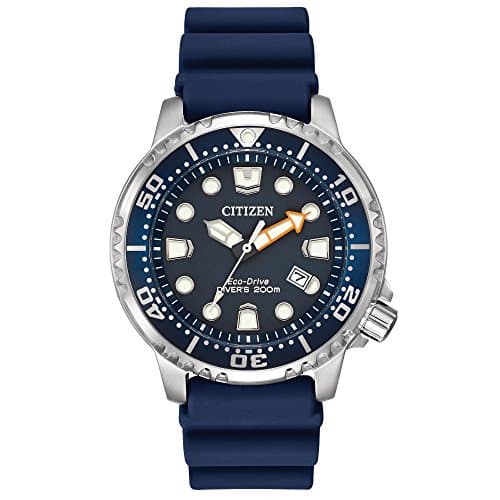
| Citizen (Promaster BN0151) | 5-year limited | — | Five-year limited warranty, per Citizen's product page |
| Marathon (TSAR) | 2 years, 3 on registration | — | Two years, plus an extra year on registration, per Marathon |
| Bertucci (A-2T Solar) | 3 years | — | Three years, per its authorized dealer listing |
| Hamilton (Khaki Field) | 2 years international | — | Two-year international warranty, per Hamilton |
| Timex (Expedition, Ironman) | 1 year limited | — | One-year limited manufacturer's warranty, per Timex |
Two details in that table are worth pulling out before anything else. Suunto is the only GPS maker here that publishes a component-level table rather than one number, which is more honest than it looks: it tells you plainly that the strap and the battery are one-year parts even though the watch is a two-year product. And COROS counts its two years from the activation date rather than the purchase date, which is unusually generous — a watch that sits in a box for three months has not started burning its warranty.
What all of them exclude
Read any four of these policies in a row and the same list appears in each. This is the part that decides whether a warranty will ever pay out for you, and it is why we rank serviceability above warranty length on the rubric every watch on this site is scored against.
Cosmetic damage is out, everywhere. Garmin excludes "cosmetic damage, such as scratches, nicks and dents". Apple excludes cosmetic damage including scratches and dents. COROS excludes "body damage such as cracks, dents, scratches" and cosmetic damage from drops. Suunto excludes normal wear including "scratches, abrasions, or alteration of the color and/or material of non-metallic straps". So the most common thing that happens to a rugged watch — a scratched crystal and a chewed bezel — is never a warranty matter. That is an argument for buying sapphire up front rather than for buying a longer warranty; see the most scratch-resistant smartwatch.
The battery is a consumable. Garmin excludes "consumable parts, such as batteries" unless the failure was caused by a defect in materials or workmanship. Apple uses almost identical wording. Suunto gives the battery one year against two for the body, and excludes non-rechargeable batteries entirely. Casio excludes the battery as a part with limited resistance. In other words, the single component with a guaranteed finite life is the one nobody warrants for the life of the watch, which is the strongest argument on this site for a power system whose cell is a replaceable part. That argument is set out in how long solar watches last.
Water damage is usually out, even on a 200 m watch. Garmin's warranty excludes "damage caused by accident, abuse, misuse, water, flood, fire". COROS excludes "liquid exposure causing rust, corrosion, moisture, or spill damage" and damage from dirt, sand or excessive debris. A water rating describes a static pressure test on a new watch with intact gaskets; it is not a promise that water ingress in year three is covered. The difference is the whole subject of watch water resistance explained.
Third-party service voids it. Casio's policy is voided by repairs performed by anyone other than a Casio service center; Apple excludes damage from service performed by anyone who is not a representative of Apple or an authorized provider; Suunto voids coverage where the product has been repaired with unauthorized parts or by an unauthorized service center. Practical consequence: a cheap battery swap at a mall kiosk inside the warranty window can cost you the warranty. After it expires, an independent watchmaker is usually the better and cheaper option anyway.
The COROS clause that voids Amazon purchases
This is the single most useful thing on the page, and it is the kind of thing an affiliate site has an incentive not to tell you.
COROS's warranty policy excludes "Products purchased from unauthorized resellers," and it names eBay and Amazon specifically, excepting COROS's own official stores. Read that carefully: a COROS watch bought from a third-party Amazon seller may have no manufacturer warranty at all, while the same watch bought from the official COROS storefront does. If you are buying COROS, check that the seller is COROS before you check the price — and if the two differ by less than the cost of a repair, buy direct.
We link COROS watches on this site the same way we link everything else, and the price you see is the live Amazon price, so this matters to our own readers. Two of the three COROS watches we cover have no Amazon listing at all and already send you to COROS; where there is a listing, confirm the seller. No other maker here publishes a clause this explicit, though most reserve the right to require proof of purchase from an authorized dealer, so the same caution applies in weaker form across the board. Our verdicts on the COROS line are in the VERTIX 2S review and Garmin vs COROS.
Why a one-year watch can outlive a two-year one
If warranty length were a proxy for durability, Suunto and COROS would be twice the watch Garmin is, and the Citizen diver would be five times. Nobody believes that, and the reason is that a warranty measures a maker's confidence about manufacturing defects in the first year or two, not the service life of the object.
What actually decides whether a watch reaches year ten, in the order it decides it:
One: is the lens hard enough. A scratched crystal is the most common cosmetic write-off and no warranty covers it. Sapphire is the fix, and it is a purchase decision, not a support decision.
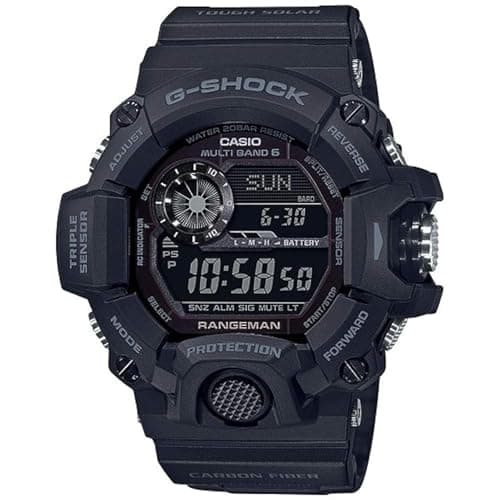
Two: can the cell be replaced, and by whom. A Casio Tough Solar cell is a part a watchmaker can change years out, for a two-figure sum, and the Rangeman module has been in production since 2013, so parts and experience are everywhere. A sealed rechargeable pack in a GPS watch is a different proposition: replaceable in practice at a service center, but the economics eventually say replace the watch. We walk through the Casio case in G-Shock solar battery replacement and the Garmin side in how long Garmin watches last.
Three: are the straps standard. A 22 mm spring-bar strap is a five-dollar consumable you can buy for the next twenty years. A proprietary quick-fit lug on a discontinued model is a watch with a shelf life. This is a boring criterion that decides more ten-year outcomes than any warranty clause.
Four: how long the maker keeps the platform alive. This one cuts against the mechanical and coin-cell watches: a digital or analog quartz watch with no firmware cannot be abandoned by a software roadmap, while a GPS smartwatch depends on the maker continuing to ship updates and keep its app working. Casio's module numbers run for a decade and more; no maker here publishes a support-lifetime commitment for a GPS watch, and we are not going to invent one.
What the watch actually costs you after year one
"Which watch needs the least maintenance outdoors" is a fair question and the answer is not the one with the best warranty. Ranked by how little you have to do to it:
Tough Solar digital (Rangeman, Mudman, the square). Rinse it, replace the strap every few years, and have the cell changed by a watchmaker when it stops holding charge. No charging, no firmware, no app. The lowest-maintenance power system we cover.
Eco-Drive or solar analog (Citizen Promaster). The same picture with a gasket service to think about if you actually dive it, and a five-year warranty behind it.
Quartz analog with a coin cell (Marathon, Luminox, Timex). A battery and a gasket check every few years, at a watchmaker, for less than a tank of fuel. Tritium tubes dim on a known curve — see tritium vs lume.
Solar GPS (Garmin, Suunto). Charge it less often than a non-solar watch, update firmware, keep the app installed, clean the charging contacts, and accept that the cell is a consumable with a finite number of cycles. Solar genuinely reduces this work by cutting charge cycles, which is the subject of are solar watches worth it.
Mechanical (Hamilton, Seiko). No battery ever, and a watchmaker service every several years that costs more than a battery by an order of magnitude. Lowest consumable cost, highest service cost — the trade is in solar vs automatic.
The picks
These four are chosen on the combination this page argues for: a maker that backs the watch for a long time, failure modes that are cheap when they happen, and parts you will still be able to buy. Prices move, so the buttons show the live price rather than a number we typed.
Our picks for this
Backed longest, and cheapest to keep running
The longest published warranty on the site, the one that extends on registration, the one whose parts are everywhere, and the GPS watch least likely to need the warranty.
Best solar analog watch
Citizen Promaster Dive BN0151-09L
Solar, no charger7.9/10Five-year limited warranty, the longest here, on an ISO-rated 200 m diver that never takes a battery and has no firmware to abandon.
$337.50Amazon#ad · Price as of November 4, 2026 · Disclosure for the link to Citizen Promaster Dive BN0151-09L
 Stock photo
Best military-issue analog
Marathon 41mm Large Diver's Quartz (TSAR)
Replaceable cell8.2/10Two years, extending to three on registration, on a sapphire 30 ATM quartz diver with a serviceable ETA movement.
Check price · Amazon#ad · Price as of November 4, 2026 · Disclosure for the link to Marathon 41mm Large Diver's Quartz (TSAR)
Best for a decade without a charger
G-Shock Rangeman GW-9400
Solar, no charger8.7/10One year, and the cheapest watch here to keep alive: a 2013 module, stock straps and bezels, and a Tough Solar cell a watchmaker can replace.
$320.00Amazon#ad · Price as of November 4, 2026 · Disclosure for the link to G-Shock Rangeman GW-9400
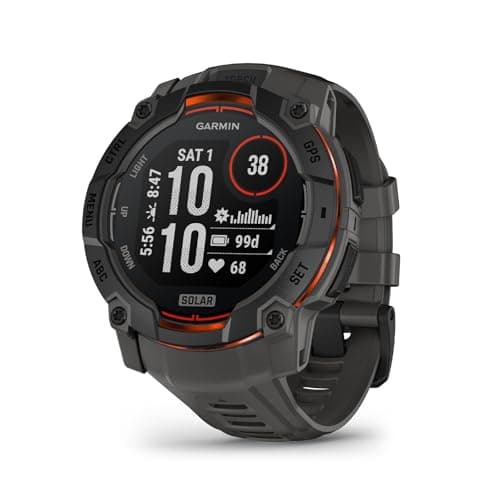
Best for a decade of GPS without a charger
Garmin Instinct 3 Solar (50mm)
Solar GPS8.7/10One year, like every Garmin, but 10 ATM and MIL-STD-810 with solar that cuts the charge cycles the warranty will not cover.
$399.99Amazon#ad · Price as of November 4, 2026 · Disclosure for the link to Garmin Instinct 3 Solar (50mm)
What we will not claim
We have not filed a warranty claim with any of these makers and we are not telling you how fast any of them settles one. Every term above is quoted from the maker's own published policy on the date in the sources list, and warranty policies change: check the current document and the card in the box before you rely on a number here.
Specifically: these are U.S. terms, and your rights may be longer under local consumer law — Apple and Suunto both state in their policies that the warranty is in addition to statutory rights rather than instead of them. We quote no extended-warranty or service-plan pricing, because that is retailer-specific and changes constantly. We do not state a repair cost for any model, because no maker here publishes a flat-rate repair price we could cite. And we do not claim any watch on this site is "lifetime warranted"; none of them is.
How we scored this
What we checked to build this ranking
Every pick here is researched against the documents that decide whether a watch lasts: the maker's own battery table read mode by mode, what the lens and case are actually made of, the water rating, whether a MIL-STD-810 line is on the record and in whose words, and how long the maker keeps updating the line. Each one is then scored on a public rubric weighted for a decade of ownership, and every figure links to where it came from.
That is why the order on this page is worth following: it is built from specs you can open yourself, and commissions never set a score or decide a pick. The rubric and its weights are published.
Questions
Frequently asked
Which smartwatch has the best warranty?
Of the GPS makers covered here, Suunto and COROS publish the longest terms at two years on the watch body, against one year from Garmin, Apple and Amazfit. COROS counts its two years from the activation date rather than the purchase date. Suunto gives the strap, battery and charger one year rather than two. All four exclude cosmetic damage, accidental damage and the battery as a consumable, so the headline term is a weaker signal than it looks.
Does Garmin cover water damage under warranty?
No. Garmin's consumer limited warranty covers defects in materials or workmanship for one year and explicitly excludes "damage caused by accident, abuse, misuse, water, flood, fire". A 10 ATM rating describes how the watch was tested when new; it is not a warranty against water ingress later in the watch's life.
Is a COROS watch bought on Amazon covered by the warranty?
Only if the seller is one of COROS's official stores. COROS's warranty policy excludes products purchased from unauthorized resellers and names eBay and Amazon specifically, excepting its own official storefronts. Check who the seller is before you buy, and if an unofficial listing is only slightly cheaper, buy direct from COROS instead.
Is the battery covered by a watch warranty?
Generally not. Garmin and Apple both exclude consumable parts such as batteries unless the failure was caused by a defect in materials or workmanship. Casio excludes the battery as a part with limited resistance. Suunto covers the battery for one year against two years for the watch body, and excludes non-rechargeable batteries entirely. This is the strongest practical argument for a watch whose cell is a replaceable part rather than a sealed pack.
Which rugged watch needs the least maintenance?
A Tough Solar digital such as the G-Shock Rangeman: no charging, no firmware, no app, and a solar cell a watchmaker can replace years out. A solar analog like the Citizen Promaster diver is close behind and carries a five-year limited warranty. A solar GPS watch is the most work of the long-life options — firmware, an app and a cell with a finite cycle count — and a mechanical watch is the least consumable cost but the highest service cost.
Does getting a battery changed at a mall kiosk void the warranty?
It can. Casio's U.S. warranty is voided by repairs performed by anyone other than a Casio service center, Suunto voids coverage for repairs with unauthorized parts or by an unauthorized service center, and Apple excludes damage caused by service performed by anyone who is not an Apple representative or authorized provider. Inside the warranty window, use the maker's service channel; outside it, an independent watchmaker is usually both better and cheaper.
Keep reading
Related on Bezel & Bearing
- How long do solar watches lastWhy the cell is the part nobody warrants.
- G-Shock solar battery replacementWhat a replaceable cell actually costs.
- Buy-it-for-life watchesThe same question asked about the whole watch.
- Watch water resistance explainedWhy a 200 m rating is not warranty cover.
- Garmin vs COROSWhere the two-year warranty sits against Garmin's one.
Receipts
Sources
- Garmin — Consumer Limited Warranty (checked 2026-11-04)
- Casio America — Timepiece Warranty, CASIO Limited Warranty (U.S.) (checked 2026-11-04)
- Suunto — Warranty terms for sports watches, dive computers and precision instruments (checked 2026-11-04)
- COROS — Product Safety & Warranty Policy, watches (checked 2026-11-04)
- Apple — Apple One (1) Year Limited Warranty, United States (checked 2026-11-04)
- Amazfit — About Amazfit (U.S. store: 1-year warranty, 30-day returns) (checked 2026-11-04)
- Citizen — Promaster Dive BN0151-09L product page (checked 2026-09-20)
- Marathon Watch — 41mm Large Diver's Quartz (TSAR) product page (checked 2026-09-20)
- Long Island Watch (authorized dealer) — Bertucci A-2T Solar Classic #12800, full specifications (checked 2026-09-26)
- Hamilton — Khaki Field Auto 38mm (H70455133), specifications (checked 2026-09-26)
- Timex — Expedition Field Post Solar 41mm, specifications (checked 2026-09-26)
Battery, glass, case and water figures come from the maker's own owner's manuals, spec pages and press releases, linked on every product so you can open the page they came from. Prices are set by Amazon and change often, so each buy button takes you to the current one. Read the full method.