Built to Last / Guide
Are solar watches worth it? Yes, and for a reason most reviews do not mention
The obvious argument is that you never buy a battery. The better argument is that a solar watch barely charges, which means the cell inside it barely ages. Here is what the makers publish, what they do not, and when a coin cell is the smarter purchase.
By Mike M.Updated Researched from the maker's manuals and spec sheets
#adReader-supported: we may earn a commission if you buy through our links, at no extra cost to you. It never decides a ranking. How we rate · Disclosure
The straight answer
On this site solar is the single highest-weighted thing a watch can have, so you should expect us to say yes. What is worth your time is why, because the usual reason given, "you never buy a battery", is the least interesting benefit and the easiest to dismiss. A coin cell costs almost nothing and lasts years.
The real answer has two parts. On a quartz watch, solar converts an appointment into nothing: no battery change, no case opening, no reseal, no risk of a bad gasket job. On a GPS watch, solar does something different and more valuable: it keeps a sealed, non-replaceable lithium cell from being cycled, and cycle count is what kills rechargeable electronics.
Two completely different things called solar
These get lumped together constantly and they are not the same product.
Solar as the whole power system. Casio Tough Solar, Citizen Eco-Drive, the Epson solar movement in a Bertucci, the solar movement in a Timex Expedition North. The watch has a solar cell and a rechargeable secondary cell and never meets a charger in its life. Citizen states its Eco-Drive is powered by any light source with no battery replacement. This is the version that is unambiguously worth it.
Solar as a top-up on a rechargeable watch. Garmin's Power Glass lens, Suunto's solar Vertical. The watch still has a USB or magnetic charger in the box, and the solar lens extends the interval between charges, sometimes to the point where Garmin writes the word "unlimited" in its own battery table. This version is worth it for the cycle-count reason rather than the convenience reason.
What the makers publish
No maker publishes a lifespan in years for a watch or a cell, and neither do we. What they do publish is how long the watch runs with no light at all, which is the honest measure of whether solar is a real power system or a decoration:
| Watch | What the maker states | Charger in the box? |
|---|---|---|
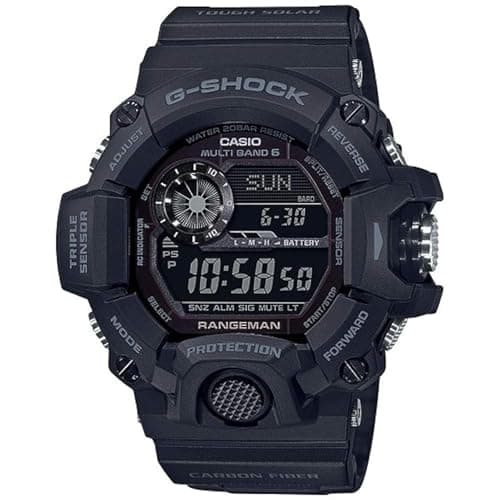
| G-Shock Rangeman GW-9400 | Approx. 8 months from full charge to the lowest level with no light | No |
| G-Shock GW-M5610U | Approx. 10 months with no light, power saving 6 hours a day | No |
| G-Shock Mudmaster GWG-2000 | Approx. 6 months with no light | No |
| Casio Pro Trek PRG-340 | Up to 7 months in use, up to 27 months in power save, with no light | No |
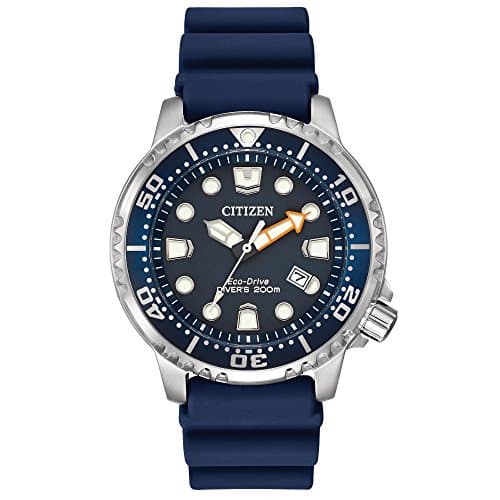
| Citizen Promaster BN0151 | Powered by any light source, no battery replacement; no dark-running figure published | No |
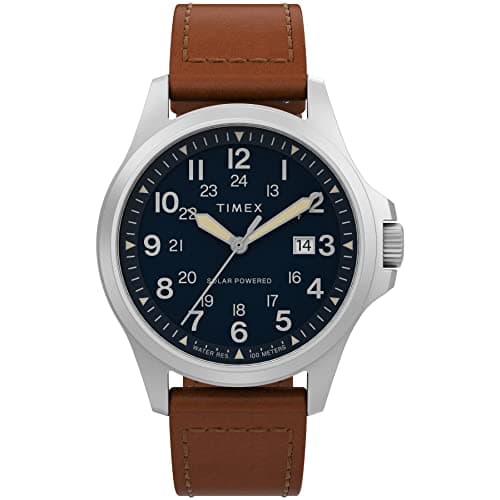
| Timex Expedition North Field Post Solar | Lasts up to 4 months from a full charge | No |
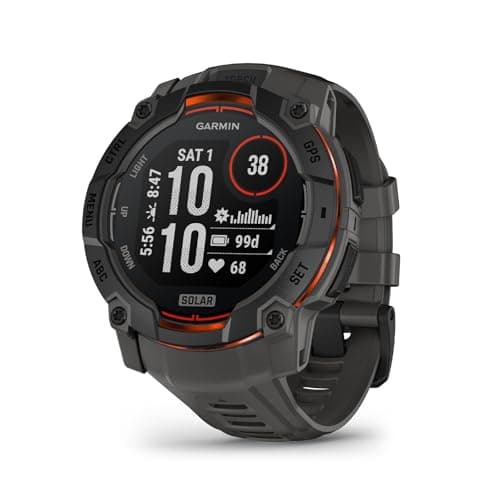
| Garmin Instinct 3 Solar (50mm) | Up to 40 days typical use; unlimited with solar at 3 hr/day, 50,000 lux | Yes |
| Suunto Vertical Titanium Solar | Up to 30 days daily use, 60 with solar; standby up to a year with solar | Yes |
Two things to take from that table. First, the Casio figures are months in a drawer, which is the worst case; worn outdoors, those watches simply never run down. Second, Garmin's condition is three hours a day at 50,000 lux, which is a bright overcast day and not desert noon, so the unlimited claim is achievable for anyone who is actually outdoors. The detail on that is in Garmin solar explained.
The real argument: charge cycles
Here is the part that decides whether a watch is worth owning in ten years, and it is the reason this site weights power at 25%.
A rechargeable lithium cell degrades with charge cycles. A GPS watch that you plug in weekly takes roughly fifty cycles a year; an AMOLED watch charged every two days takes closer to a hundred and fifty. A solar GPS watch worn outdoors might take five. Same cell chemistry, same watch, an order of magnitude difference in how fast the power system ages, and in a sealed outdoor watch the cell is not a part you swap on a Saturday.
That is why an Instinct 3 Solar and an Instinct 3 AMOLED are not the same purchase even though the case is nearly identical: Garmin's AMOLED table gives up to 24 days by gesture or 9 days always-on, against an unlimited-with-solar claim on the Solar model. The comparison is in Instinct 3 solar vs AMOLED.
When solar is not worth it
Three honest cases, because a guide that says yes to everything is useless.
1. The watch lives indoors. Solar cells need light, and a watch worn under a long sleeve in an office, then put in a drawer overnight, may never reach a full charge. Casio's dark-running figures are months, so it will still work, but you are paying a premium for a feature you are not using. A coin-cell G-Shock with a five-year cell is the better buy, and the cheap end of that is best G-Shock under $100.
2. You want the absolute minimum you can spend. Solar is the single feature that separates the cheapest G-Shock tier from the next one up. If the budget is the binding constraint, a DW-5600E on a CR2016 Casio rates at about five years is an honest watch that will outlast most things you own. The tier-by-tier version, with each list price sourced, is best G-Shock under $200.
3. You would rather have no battery at all. A mechanical watch has a mainspring, not a cell: nothing to charge, nothing to replace on a schedule, and a watchmaker service as the running cost instead. It drifts seconds a day and needs winding or daily wear. That is a legitimate different answer and it is argued out in solar vs automatic watch.
The picks
Our picks for this
Four ways to buy solar
The Casio that never meets a charger, the GPS watch whose battery table ends in unlimited, the solar analog diver, and the cheapest solar field watch worth owning.
Best for a decade without a charger
G-Shock Rangeman GW-9400
Solar, no charger8.7/10Tough Solar and Multi-Band 6: about eight months in the dark, 200 m, and a compass, barometer, altimeter and thermometer. No charger exists for it.
$320.00Amazon#ad · Price as of November 4, 2026 · Disclosure for the link to G-Shock Rangeman GW-9400
Best for a decade of GPS without a charger
Garmin Instinct 3 Solar (50mm)
Solar GPS8.7/10Up to 40 days typical use and unlimited with three hours a day at 50,000 lux, which in practice means the cell barely cycles.
$399.99Amazon#ad · Price as of November 4, 2026 · Disclosure for the link to Garmin Instinct 3 Solar (50mm)
Best solar analog watch
Citizen Promaster Dive BN0151-09L
Solar, no charger7.9/10Eco-Drive on an ISO-certified 200 m diver, with a five-year warranty, the longest on this site.
$337.50Amazon#ad · Price as of November 4, 2026 · Disclosure for the link to Citizen Promaster Dive BN0151-09L
Best value field watch
Timex Expedition North Field Post Solar (41mm)
Solar, no charger7.8/10Sapphire and 100 m on a solar analog that Timex states lasts up to four months from a full charge.
$151.90Amazon#ad · Price as of November 4, 2026 · Disclosure for the link to Timex Expedition North Field Post Solar (41mm)
The verdict
If the answer is yes for you, the practical follow-up is how much light the watch really needs and where to keep it when you take it off: how to charge a solar watch.
How we scored this
What we checked to build this ranking
Every pick here is researched against the documents that decide whether a watch lasts: the maker's own battery table read mode by mode, what the lens and case are actually made of, the water rating, whether a MIL-STD-810 line is on the record and in whose words, and how long the maker keeps updating the line. Each one is then scored on a public rubric weighted for a decade of ownership, and every figure links to where it came from.
That is why the order on this page is worth following: it is built from specs you can open yourself, and commissions never set a score or decide a pick. The rubric and its weights are published.
Questions
Frequently asked
Are solar watches worth it?
Yes, if you keep a watch more than a few years. On a Casio or Citizen the solar cell removes battery changes entirely and the maker publishes months of running in total darkness, about eight for the Rangeman GW-9400. On a GPS watch, solar keeps the sealed lithium cell from cycling, which is the thing that actually ends a rechargeable watch.
Do solar watches stop working at night or indoors?
No. A solar watch stores charge in a rechargeable cell and runs from that. Casio states roughly eight months for the Rangeman GW-9400 and ten for the GW-M5610U with no light at all, and Casio's Pro Trek PRG-340 states up to 27 months in power save. Those are drawer figures, so a watch worn outdoors never approaches them.
Does a solar watch ever need a new battery?
Eventually the rechargeable cell wears, and on a Casio or Citizen it is a watchmaker-replaceable part with a published procedure rather than the end of the watch. No maker publishes a lifespan in years, so neither do we. On a sealed GPS watch the equivalent job is a manufacturer service.
Is a solar GPS watch better than a normal rechargeable one?
For longevity, yes, and for a reason that is not convenience: fewer charge cycles mean slower cell ageing. Garmin's Instinct 3 Solar table ends with an unlimited-with-solar claim at three hours a day at 50,000 lux; the AMOLED version of the same watch gives 24 days by gesture or 9 always-on, which means a weekly charge and dozens more cycles a year.
Is solar or automatic better for a watch you keep forever?
Solar, if you want accuracy and zero routine. Automatic, if you want no cell in the watch at all and accept winding, daily wear, a few seconds of drift a day and a periodic service bill. The full argument is in solar vs automatic watch.
Keep reading
Related on Bezel & Bearing
Receipts
Sources
- Casio — Operation Guide, module 3410 (GW-9400 Rangeman), Specifications (checked 2026-09-20)
- Casio — Operation Guide, module 3495 (GW-M5610U), Specifications (checked 2026-09-20)
- Casio — Operation Guide, module 5678 (GWG-2000 Mudmaster), Specifications (checked 2026-09-20)
- G-Central — Pro Trek PRG-340 announcement (size, weight, water rating, battery) (checked 2026-09-20)
- G-Central — G-Shock DW-5600 spec sheet (checked 2026-09-20)
- Garmin — Instinct 3 Solar Series Owner's Manual, Battery Life Information (checked 2026-09-20)
- Garmin — Instinct 3 AMOLED Series Owner's Manual, Battery Life Information (checked 2026-09-20)
- Garmin — Instinct 3 Solar Series Owner's Manual, Solar Charging and Tips for Solar Charging (checked 2026-09-21)
- Citizen — Promaster Dive BN0151-09L product page (checked 2026-09-20)
- Suunto — Vertical Titanium Solar Black product page and tech specs (checked 2026-09-20)
- Timex — Expedition Field Post Solar 41mm, specifications (checked 2026-09-26)
Battery, glass, case and water figures come from the maker's own owner's manuals, spec pages and press releases, linked on every product so you can open the page they came from. Prices are set by Amazon and change often, so each buy button takes you to the current one. Read the full method.