GPS Watches / The rankings
The best watches for mountaineering: cold ratings, a real altimeter, and buttons you can work in mitts
At altitude a watch has three jobs: tell you how high you are, warn you the pressure is falling, and keep working at temperatures that halve a lithium cell. Only a handful of watches publish numbers for all three.
By Mike M.Updated Researched from the maker's manuals and spec sheets
#adReader-supported: we may earn a commission if you buy through our links, at no extra cost to you. It never decides a ranking. How we rate · Disclosure
Quick picks
The rankings at a glance
| # | Product | Best for | Score | Price |
|---|---|---|---|---|
| 1 | 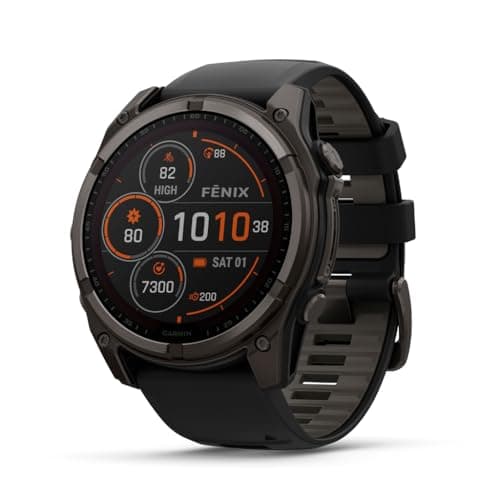 Garmin fenix 8 Solar (51mm, Sapphire) Preloaded TopoActive maps, sapphire, a titanium bezel, a flashlight with a red mode and 149 GPS hours with solar on the 51 mm case. | Best mountaineering watch overallSolar GPS | 8.7 /10 | $1,092.78Amazon |
| 2 | 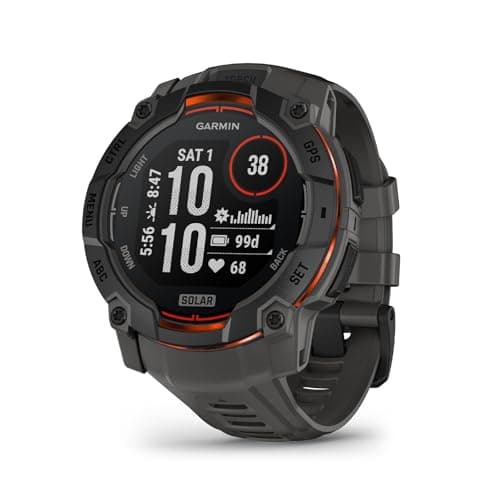 Garmin Instinct 3 Solar (50mm) Rated -20 to 60 C, unlimited smartwatch battery with sun, 10 ATM, built to MIL-STD-810, and a flashlight. No maps. | Best cold-weather valueSolar GPS | 8.7 /10 | $399.99Amazon |
| 3 | 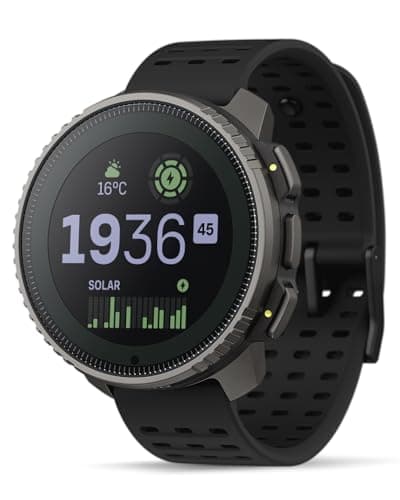 Suunto Vertical Titanium Solar 74 g with sapphire and a Grade 5 titanium bezel, rated -20 to +55 C, with a night-vision-compatible red backlight and 140 single-band GPS hours with solar. | Lightest alpine watchSolar GPS | 8.1 /10 | $549.00Amazon |
| 4 |  COROS VERTIX 2S Rated to -30 C, with 118 hours of standard full GPS, 36 days of daily use, sapphire and a Grade 5 titanium bezel. No solar. | Coldest published ratingRechargeable GPS | 8.1 /10 | Check price · Amazon |
| 5 | 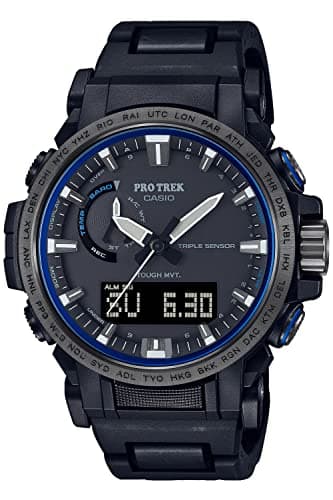 Casio Pro Trek PRW-61 62 g, 100 m, altimeter, barometer, compass and thermometer on Tough Solar with six months of reserve. No GPS, no firmware, nothing to fail. | Best backup altimeterSolar, no charger | 8.1 /10 | $528.47Amazon |
#ad · Prices come live from Amazon, last checked November 4, 2026. Scores are ours, built from the makers' manuals, battery tables and spec pages. Product photos come from Amazon; anything still on a stock frame is labelled on its card. Tap a row for the full write-up.
The direct answer
An alpine watch is judged on four things, in this order: whether its altimeter and barometer are any use, whether it keeps running in the cold, whether you can operate it wearing mitts, and whether it lasts the route without a charge. Everything else is a training feature. If altitude is not your problem and cold simply is, the same watches ranked on published temperature ranges alone are in the best watch for cold weather.
The watches below are ranked on exactly that, using figures their makers publish. Where a maker does not state a cold rating, we say so rather than guessing, because battery behaviour in cold is the specification most often asserted and least often documented.
Cold is the spec nobody publishes
Lithium cells lose usable capacity as temperature drops. That is chemistry, not a defect, and it means a watch quoting 40 hours of GPS at room temperature will not deliver 40 hours at -15 C on a bivy ledge. The honest brands publish an operating range; most do not publish a derated battery figure at all.
Here is what the makers on this page actually state:
| Watch | Published operating range |
|---|---|
| COROS VERTIX 2S | -30 C to 50 C working range |
| Amazfit T-Rex 3 | Low-temperature mode to -30 C: up to 28 h with GNSS on, 32 days with GNSS off |
| Garmin Instinct 3 Solar | -20 C to 60 C |
| Suunto Vertical Titanium Solar | -20 C to +55 C |
| Casio Pro Trek PRW-61 | Low-temperature resistance to -10 C |
| G-Shock Rangeman GW-9400 | Low-temperature resistance to -10 C |
Two conclusions follow. First, the COROS and the Amazfit are the only watches here with a published figure below -20 C, and Amazfit is unusual in quoting runtime at that temperature rather than just survival. Second, the Casios are rated to -10 C, which is lower than most winter days and higher than a winter alpine route, so for serious cold they are a summit-day backup rather than the primary instrument.
The practical workaround every mountaineer already knows: wear the watch under the cuff against a baselayer on summit day. A watch warmed by your wrist performs far better than one exposed on top of a shell. The cost is that a solar lens sees no light there, which is why solar watches want to be topped up on the walk in rather than relied on above the snowline.
Barometric altimeter vs GPS altitude
This is the single most useful thing to understand about a mountain watch, and it is why every pick here has a barometric sensor rather than relying on satellites for height.
A barometric altimeter infers altitude from air pressure. It is precise, responsive and excellent at showing rate of ascent, which is what you want on a fixed line or a long snow slope. Its flaw is that weather also changes pressure, so a stationary watch will drift as a front moves through. Calibrate it at a known elevation, such as a trailhead sign, a hut or a mapped col, and recalibrate each day.
GPS altitude does not drift with weather and is much noisier vertically than horizontally. It is the right thing to calibrate against, not the thing to read while moving.
The barometer trend is the feature that matters most. A falling pressure graph is the earliest warning you will get of a change that ends your route, and on a watch it is free and always on. The Pro Trek PRW-61 and the Rangeman GW-9400 both show it on a coin-cell-grade power budget with no GPS at all. The full explanation is in ABC watch explained and the accuracy question in GPS watch accuracy explained.
The picks, side by side
| Evidence | Garmin fenix 8 Solar (51mm, Sapphire) | Garmin Instinct 3 Solar (50mm) | Suunto Vertical Titanium Solar | COROS VERTIX 2S |
|---|---|---|---|---|
| Power | — | Rechargeable, built-in lithium-ion battery with solar charging display | — | — |
| Battery (GPS) | Up to 95 hours GPS-only; up to 149 hours with solar | Up to 60 hours GPS-only; up to 260 hours with solar (50,000 lux) | Up to 65 h multi-band (90 h with solar); up to 90 h single-band (140 h with solar) | 118 hours standard full GPS; 73 hours all systems on; 43 hours dual-frequency |
| Glass | Scratch-resistant sapphire lens (sapphire versions) | Scratch-resistant display (Garmin does not name sapphire on the Instinct 3) | Sapphire crystal | Sapphire glass |
| Water rating | 40-meter dive-rated case | 10 ATM | 100 m | 10 ATM (surface water activities, not diving) |
| Weight | — | — | 74 g / 2.61 oz | 87 g with silicone band; 70 g with nylon band |
| Score | 8.7/10 | 8.7/10 | 8.1/10 | 8.1/10 |
The fenix 8 Solar in 51 mm wins because mountaineering is the use case that most justifies its price. Preloaded TopoActive maps matter in a whiteout in a way they do not on a marked trail. The sapphire lens and titanium bezel survive rock and ice tools. Leakproof metal buttons and a 40 m dive-rated case handle melt, spindrift and a wet bivy. The flashlight with a red mode is a genuinely useful headlamp backup, and the battery goes to 48 days of smartwatch use and 149 GPS hours with solar.
The Instinct 3 Solar is the value answer and the better buy for most people. Rated -20 to 60 C, 10 ATM, built to MIL-STD-810 in Garmin's words, a flashlight, the full ABC sensor set, and a battery Garmin states as unlimited in smartwatch mode with three hours a day of sun. It gives up maps and sapphire, which on a route you have reconnoitred is a fair trade.
The Suunto Vertical Titanium Solar is the one to carry if grams matter: 74 grams with sapphire and a Grade 5 titanium bezel, 100 m, rated -20 to +55 C, up to 60 days of daily use with solar, and a night-vision-goggle-compatible red backlight that happens to be the perfect alpine-start display because it does not wreck your dark adaptation.
The COROS VERTIX 2S is here for one reason and it is a good one: -30 C published, with 118 hours of standard full GPS and 36 days of daily use on sapphire and titanium. It has no solar lens, and it is not sold on Amazon, so the link here is an honest tagged search. The brand comparison is in Garmin vs COROS.
The Pro Trek PRW-61 is the backup: 62 grams, 100 m, a biomass case, the full triple-sensor set and radio time calibration, on a Tough Solar cell Casio rates at about six months of reserve in the dark. It has no GPS, no app, no firmware and no charging port. That is exactly what you want on the other wrist.
Mitts, buttons and light discipline
Three details that decide whether a watch is usable at altitude:
- Buttons, never a touchscreen. Every pick here has physical buttons. A touchscreen in a wet mitt is an ornament, which is also why the AMOLED outdoor watches are absent from this list.
- A light you can keep red. The Garmin flashlight has a red mode and Suunto specifies a night-vision-compatible red backlight. On a 2 a.m. start, white light costs you twenty minutes of dark adaptation.
- A display that works in glare. Snow and altitude produce the brightest light most people ever navigate in, and a reflective MIP display gets more readable as light increases where an AMOLED fights it. Garmin uses MIP on the solar fenix, Instinct and Enduro; Suunto uses a 1.4-inch MIP. See MIP vs AMOLED battery life.
Why serious parties carry two
Not redundancy for its own sake. The reason is that the two instruments fail differently.
A GPS watch fails by running out of power, by a firmware fault, or by being dropped from a belay. A solar ABC watch fails by its barometric altimeter drifting as weather changes, which is predictable and correctable. On a multi-day route, carrying a Pro Trek or Rangeman as the second watch costs 62 to 93 grams and removes the single-point failure entirely, and the Casio will still be showing pressure trend when the GPS watch is flat.
The decade pick
In detail
The picks, in full
Rank 1
Best mountaineering watch overall
Garmin fenix 8 Solar (51mm, Sapphire)
Preloaded TopoActive maps, sapphire, a titanium bezel, a flashlight with a red mode and 149 GPS hours with solar on the 51 mm case.
EvidenceResearched · every row sourced
| Power class | Solar GPS. A rechargeable cell topped up by a solar lens. Weeks between charges; the cell still ages like any lithium battery. |
|---|---|
| Battery (smartwatch) | Up to 30 days typical use; up to 48 days with solar |
| Battery (GPS) | Up to 95 hours GPS-only; up to 149 hours with solar |
| Battery (max GPS) | Up to 186 hours max-battery GPS; up to 653 hours with solar |
| Battery (solar) | Expedition GPS mode up to 50 days; up to 118 days with solar |
| Glass | Scratch-resistant sapphire lens (sapphire versions) |
| Bezel & case | Titanium bezel (sapphire versions); leakproof metal buttons; sensor guard |
| Water rating | 40-meter dive-rated case |
| MIL-STD-810 | Tested to U.S. military standards for thermal, shock and water resistance |
| Maps & GPS | TopoActive maps preloaded on sapphire versions |
| Flashlight | Built-in LED flashlight with variable intensities, red light and strobe |
How the 8.7 score breaks down
- Battery & power independence (25%)
- 9
- Durability of materials (25%)
- 10
- Serviceability & lifespan (20%)
- 7
- Field usability (15%)
- 10
- Value per decade (10%)
- 6
- Mission fit (5%)
- 8
What the spec sheet supports
- Sapphire, titanium and leakproof metal buttons on a case Garmin dive-rates to 40 m.
- 653 hours of max-battery GPS with solar is the longest figure in Garmin's fenix 8 table.
- Preloaded topo maps, a speaker and mic, and a flashlight.
Where it falls short
- A MIP display in a world of AMOLEDs; that is also why the battery lasts.
- The fenix 9 Pro (August 2026) now sits above it in the line, with a titanium case and solar on select models.
- Big: 51mm is a lot of watch under a sleeve.
Skip this if…
…you have never used the maps on a watch; the Instinct 3 Solar gives you the battery for half the money.
#ad · Price as of November 4, 2026 · Disclosure for the link to Garmin fenix 8 Solar (51mm, Sapphire)
Rank 2
Best cold-weather value
Garmin Instinct 3 Solar (50mm)
Rated -20 to 60 C, unlimited smartwatch battery with sun, 10 ATM, built to MIL-STD-810, and a flashlight. No maps.
EvidenceResearched · every row sourced
How the 8.7 score breaks down
- Battery & power independence (25%)
- 10
- Durability of materials (25%)
- 8
- Serviceability & lifespan (20%)
- 7
- Field usability (15%)
- 9
- Value per decade (10%)
- 10
- Mission fit (5%)
- 8
What the spec sheet supports
- Garmin's own table shows the 50mm solar model doubling the 45mm in GPS-with-solar hours (260 vs 130).
- Physical buttons, a monochrome display readable in full sun, and a flashlight with a red mode.
- 10 ATM rating and a MIL-STD 810 claim on a watch that costs less than half a fenix.
Where it falls short
- No maps: it navigates breadcrumb trails and waypoints, not topo maps.
- The solar figures assume three hours a day at 50,000 lux, which is midday sun, not a sleeve.
- Garmin does not name the lens material; treat it as strengthened glass, not sapphire.
Skip this if…
…you need on-wrist topo maps, or you wear long sleeves and work indoors, where the solar math never happens.
#ad · Price as of November 4, 2026 · Disclosure for the link to Garmin Instinct 3 Solar (50mm)
Rank 3
Lightest alpine watch
Suunto Vertical Titanium Solar
74 g with sapphire and a Grade 5 titanium bezel, rated -20 to +55 C, with a night-vision-compatible red backlight and 140 single-band GPS hours with solar.
EvidenceResearched · every row sourced
| Power class | Solar GPS. A rechargeable cell topped up by a solar lens. Weeks between charges; the cell still ages like any lithium battery. |
|---|---|
| Battery (smartwatch) | Up to 30 days daily use (60 days with solar); standby up to 60 days (1 year with solar) |
| Battery (GPS) | Up to 65 h multi-band (90 h with solar); up to 90 h single-band (140 h with solar) |
| Battery (max GPS) | Up to 500 h in power-saving GNSS modes |
| Glass | Sapphire crystal |
| Bezel & case | Titanium Grade 5 bezel; glass fiber reinforced polyamide case |
| Water rating | 100 m |
| Display | 1.4-inch matrix (MIP) |
| Maps & GPS | Free offline outdoor maps, 32 GB map storage; dual-band GNSS, L1 + L5 |
| Weight | 74 g / 2.61 oz |
| Operating temp | -20°C to +55°C (-5°F to +130°F) |
How the 8.1 score breaks down
- Battery & power independence (25%)
- 9
- Durability of materials (25%)
- 9
- Serviceability & lifespan (20%)
- 6
- Field usability (15%)
- 8
- Value per decade (10%)
- 8
- Mission fit (5%)
- 7
What the spec sheet supports
- Solar, sapphire and titanium at 74 g, lighter than a fenix 8 51mm.
- 500 hours in power-saving GPS is the highest Suunto figure and beats the fenix 8 Solar 47mm's max-battery figure without solar.
Where it falls short
- Previous generation: no flashlight, dimmer MIP screen, older optical heart rate.
- 100 m water rating, no MIL-STD claim in Suunto's specs.
Skip this if…
…you want the brightest screen and a flashlight; that is the Vertical 2.
#ad · Price as of November 4, 2026 · Disclosure for the link to Suunto Vertical Titanium Solar
Rank 4
Stock photoColdest published rating
COROS VERTIX 2S
Rated to -30 C, with 118 hours of standard full GPS, 36 days of daily use, sapphire and a Grade 5 titanium bezel. No solar.
EvidenceResearched · every row sourced
| Power class | Rechargeable GPS. A rechargeable lithium cell charged from a cable. Days to a few weeks per charge; the cell ages with every cycle. |
|---|---|
| Battery (smartwatch) | 36 days daily use |
| Battery (GPS) | 118 hours standard full GPS; 73 hours all systems on; 43 hours dual-frequency |
| Glass | Sapphire glass |
| Bezel & case | Grade 5 titanium alloy bezel with PVD coating; titanium alloy cover |
| Water rating | 10 ATM (surface water activities, not diving) |
| Display | 1.4-inch touchscreen always-on memory LCD, 280 × 280 |
| Maps & GPS | Downloadable global landscape and topo maps; GPS, GLONASS, Galileo, BeiDou, QZSS dual-frequency |
| Weight | 87 g with silicone band; 70 g with nylon band |
| Size | 50.3 × 50.3 × 16 mm |
| Operating temp | -22°F to 122°F (-30°C to 50°C) working; charging under 2 hours |
How the 8.1 score breaks down
- Battery & power independence (25%)
- 9
- Durability of materials (25%)
- 9
- Serviceability & lifespan (20%)
- 6
- Field usability (15%)
- 8
- Value per decade (10%)
- 8
- Mission fit (5%)
- 7
What the spec sheet supports
- 118 standard-GPS hours without a solar lens beats every Garmin's non-solar figure here.
- Rated to work at -30°C, ten degrees colder than a Garmin's stated range.
- Sapphire, titanium, 10 ATM and free downloadable topo maps.
Where it falls short
- No solar, no flashlight.
- No MIL-STD claim in COROS's specs.
Skip this if…
…you want a watch that stops needing a cable altogether; that is the solar Garmin's job.
#ad · Price as of November 4, 2026 · Disclosure for the link to COROS VERTIX 2S
Rank 5
Best backup altimeter
Casio Pro Trek PRW-61
62 g, 100 m, altimeter, barometer, compass and thermometer on Tough Solar with six months of reserve. No GPS, no firmware, nothing to fail.
EvidenceResearched · every row sourced
| Power class | Solar, no charger. A solar cell that recharges from any light and never meets a charger. The rechargeable cell is a watchmaker-replaceable part. |
|---|---|
| Battery (cell) | Approximately 6 months with no light (Casio's stated usage conditions) |
| Power | Solar panel and one rechargeable battery |
| Bezel & case | Biomass plastics case |
| Water rating | 100 m |
| Sensors | Direction, pressure/altitude and temperature sensors; radio time calibration (JJY, WWVB, MSF, DCF77, BPC); double LED light |
| Weight | 62 g |
| Size | 51.0 × 47.4 × 14.7 mm |
| Operating temp | Low-temperature resistance to -10°C (14°F) |
How the 8.1 score breaks down
- Battery & power independence (25%)
- 9
- Durability of materials (25%)
- 6
- Serviceability & lifespan (20%)
- 9
- Field usability (15%)
- 8
- Value per decade (10%)
- 9
- Mission fit (5%)
- 8
What the spec sheet supports
- Solar, atomic and triple sensor at 62 g and 14.7 mm.
- Cleaner dial and a proper altimeter graph for hikers.
Where it falls short
- 100 m and no mud-resistant buttons; it is a hiking watch, not a Mudman.
- Mineral glass.
Skip this if…
…your watch gets buried in mud or dunked regularly; the G-Shock Mudman is the sealed version of this idea.
#ad · Price as of November 4, 2026 · Disclosure for the link to Casio Pro Trek PRW-61
How to choose a mountaineering watch
1. Require a barometric altimeter. Not GPS altitude. The rate of ascent and the pressure trend are the two readings you will use most.
2. Read the published operating range. COROS states -30 C, Garmin -20 to 60 C, Suunto -20 to +55 C, Casio -10 C. If a maker publishes nothing, treat the battery figures as room-temperature numbers.
3. Buttons only. If you cannot work it in a mitt, it is the wrong watch.
4. Insist on a red light mode. Alpine starts are long and dark adaptation is worth protecting.
5. Prefer MIP over AMOLED. Reflective displays get more readable in snow glare and cost less power to leave on.
6. Plan how it charges. A solar watch worn under a shell sees no light, so top it up on the walk in. If the route is long and cold, the COROS numbers without sun are the honest ones to plan against.
How we scored this
What we checked to build this ranking
Every pick here is researched against the documents that decide whether a watch lasts: the maker's own battery table read mode by mode, what the lens and case are actually made of, the water rating, whether a MIL-STD-810 line is on the record and in whose words, and how long the maker keeps updating the line. Each one is then scored on a public rubric weighted for a decade of ownership, and every figure links to where it came from.
That is why the order on this page is worth following: it is built from specs you can open yourself, and commissions never set a score or decide a pick. The rubric and its weights are published.
Questions
Frequently asked
What is the best watch for mountaineering?
The Garmin fenix 8 Solar in 51 mm Sapphire: preloaded TopoActive maps, a sapphire lens in a titanium bezel, a 40 m dive-rated case with leakproof buttons, a flashlight with a red mode, and up to 95 GPS hours rising to 149 with solar. The Instinct 3 Solar is the better value pick if you do not need maps.
How cold can a GPS watch work in?
It depends on the model and most makers publish a range. COROS states -30 C to 50 C for the VERTIX 2S, Amazfit publishes a -30 C low-temperature mode for the T-Rex 3, Garmin rates the Instinct 3 at -20 to 60 C, Suunto rates the Vertical Titanium Solar at -20 to +55 C, and Casio rates the Pro Trek PRW-61 and Rangeman GW-9400 to -10 C. Expect less runtime than the room-temperature figures.
Is a barometric altimeter better than GPS for altitude?
For reading altitude and rate of ascent while moving, yes: it is precise and responsive. It drifts as weather changes pressure, so calibrate it at every known elevation. GPS altitude does not drift but is vertically noisy, which makes it the right thing to calibrate against rather than to read continuously.
Do I need maps on a mountaineering watch?
More than on a marked trail. Seeing terrain around you in a whiteout or at night is the situation maps are for, which is why the fenix 8 Solar with preloaded TopoActive maps leads this list. On a route you have scouted, a mapless watch with a good altimeter and compass is enough.
Should I wear my watch over or under my sleeve in the cold?
Under, against a baselayer, on cold summit days: body heat keeps the cell nearer its rated capacity. The trade-off is that a solar lens collects nothing there, so top the watch up in daylight lower on the route rather than counting on solar above the snowline.
Keep reading
Related on Bezel & Bearing
Receipts
Sources
- Garmin newsroom — fenix 8 Series press release (checked 2026-09-20)
- Garmin — fenix 8 Series Owner's Manual, Battery Information (checked 2026-09-20)
- Garmin newsroom — Instinct 3 Series press release (checked 2026-09-20)
- Garmin — Instinct 3 Solar Series Owner's Manual, Specifications (checked 2026-09-20)
- Garmin — Instinct 3 Solar Series Owner's Manual, Battery Life Information (checked 2026-09-20)
- Suunto — Vertical Titanium Solar Black product page and tech specs (checked 2026-09-20)
- COROS — VERTIX 2S / APEX / NOMAD specification tables (checked 2026-09-20)
- Amazfit — T-Rex 3 product page, Technical Specifications (checked 2026-09-20)
- Casio — Operation Guide, module 5673 (Pro Trek PRW-61), Specifications (checked 2026-09-20)
- Casio — Operation Guide, module 3410 (GW-9400 Rangeman), Specifications (checked 2026-09-20)
Battery, glass, case and water figures come from the maker's own owner's manuals, spec pages and press releases, linked on every product so you can open the page they came from. Prices are set by Amazon and change often, so each buy button takes you to the current one. Read the full method.