Built to Last / Guide
What an ABC watch is, what the three sensors actually do, and why one can outlast every GPS watch you will ever own
Altimeter, barometer, compass: three readings from two sensors, powered by a coin cell or a solar panel, with no map, no track and no charger. The case for the ABC watch is the case for the decade, and here is how the sensors work and where they fall short.
By Mike M.Updated Spec-sheet researched, not worn by us
#adReader-supported: we may earn a commission if you buy through our links, at no extra cost to you. It never decides a ranking. How we rate · Disclosure
A, B and C
- Altimeter: your elevation, derived from air pressure against a reference. Casio's Rangeman manual describes readings taken from a pressure sensor and converted to altitude, with a reference altitude you can set.
- Barometer: the air pressure itself, and its trend over hours. A falling trend is the oldest weather forecast there is.
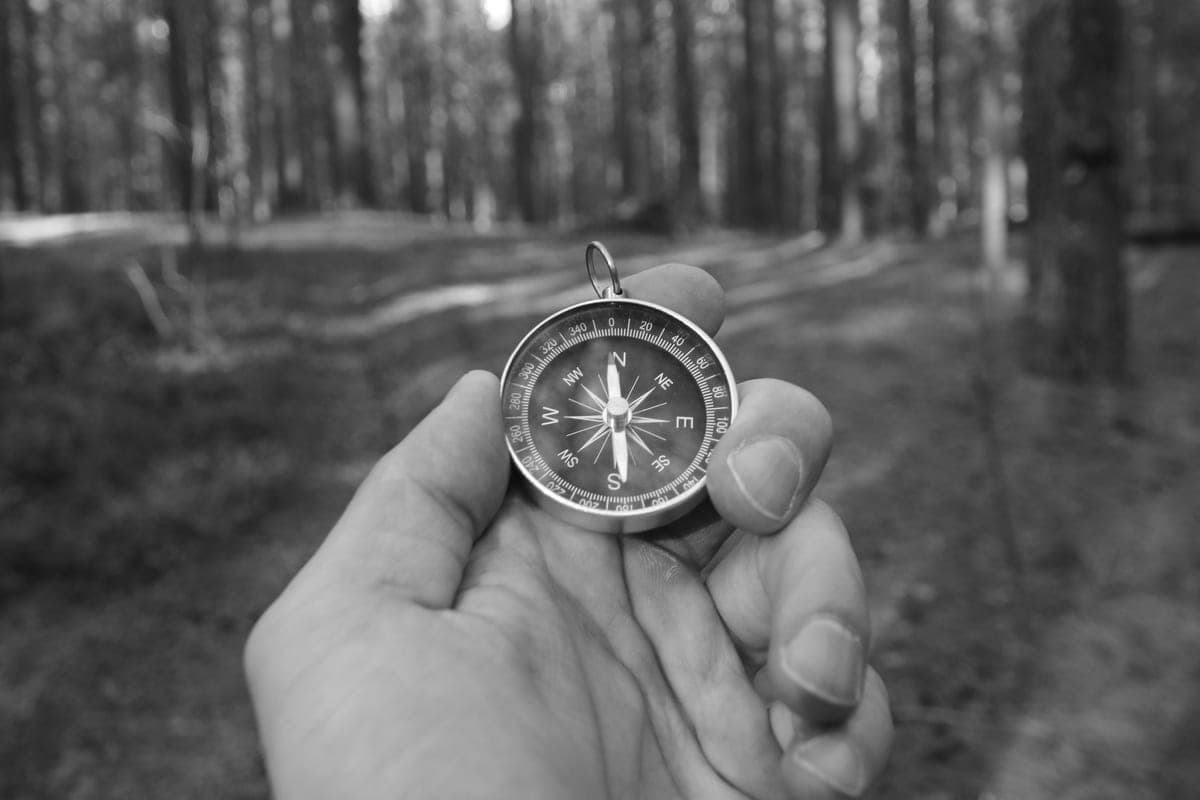
- Compass: magnetic north from a bearing sensor. Casio's manuals describe a bearing sensor calibration and a magnetic declination correction so the watch can show true north; Suunto's Core Alpha page lists a compass with adjustable declination.
Most ABC watches add a thermometer (Casio's "Triple Sensor" is pressure, direction and temperature), sunrise and sunset times, and on the radio models, atomic time calibration.
Three readings from two sensors
Calibrating, from the manuals
- Altitude: at a trailhead sign, a summit marker or a known contour, set the reference altitude. Casio's manual describes this for the Rangeman; do it again at the next known point on a long day.
- Compass: run the bearing sensor calibration away from metal, set your local magnetic declination, and keep the watch level when reading. Casio's manuals list all three.
- Temperature: take the watch off the wrist for a few minutes; the sensor reads the case, which reads you.
- Sunrise and sunset: on a Casio, set the home city and, where the manual allows, your latitude and longitude; the default is Tokyo, and the times are only as good as the location you gave it.
What an ABC watch cannot do
It cannot tell you where you are. It has no map, no breadcrumb track, no waypoints, no return-to-start. It gives you a bearing and an elevation, and you supply the map. For a hunter who knows the ground and wants a watch that is never dead, that is the right trade; for a hiker on new ground who wants to be walked back to the truck, it is the wrong one. The decision for hunters is worked through on GPS vs ABC watch for hunting.
Why it lasts longer
A GPS chip and a screen are what drain a smartwatch; Garmin rates the Instinct 3 Solar at 40 days in smartwatch mode and hours with GPS on. Casio rates the Rangeman GW-9400, with all three sensors, at about 8 months in the dark on Tough Solar, and indefinitely in light; the Pro Trek PRW-61 at about 6 months; Suunto gives the Core Alpha a replaceable CR2032. The sensors are not what drain a watch; the satellite receiver is. Remove it and the power clock slows by an order of magnitude, and with no firmware to update, the software clock stops. That is why the buy-it-for-life winner is an ABC watch.
The picks
Our picks for this
Three ABC watches, two power classes
The solar G-Shock that wins the site, the coin-cell Suunto with a night-vision backlight, and the slim solar Pro Trek.
 Stock photo
Best for a decade without a charger
G-Shock Rangeman GW-9400
Solar, no charger8.7/10Triple Sensor, Tough Solar, Multi-Band 6, 200 m, mud resistant, about 8 months in the dark.
Check price · Amazon#ad · Price set by Amazon · Disclosure for the link to G-Shock Rangeman GW-9400
- Stock photo
Best ABC watch for light discipline
Suunto Core Alpha
Replaceable cell7.5/10ABC with adjustable declination, NVG-compatible red backlight, CR2032, 30 m.
Check price · Amazon#ad · Price set by Amazon · Disclosure for the link to Suunto Core Alpha
- Stock photo
Best Pro Trek overall
Casio Pro Trek PRW-61
Solar, no charger8.1/10Triple Sensor, Tough Solar, radio time, in a lighter, slimmer case than the Rangeman.
Check price · Amazon#ad · Price set by Amazon · Disclosure for the link to Casio Pro Trek PRW-61
ABC or GPS
- ABC if you carry a map, know the ground, and want a watch that is never charging: Rangeman, PRW-61, Core Alpha.
- GPS if you need a track back or a map on the wrist: Instinct 3 Solar keeps the cell clock slowest; the fenix 8 adds full maps.
- Both is a common answer among the hunters this site is written for: an ABC watch on the wrist and a phone or handheld for the map.
The ranking is best ABC watches; the G-Shock version is best G-Shock with compass.
How we scored this
Watches we claim to have worn or tested: 0
Plenty of sites say they took every watch up a mountain. We didn't, and we say so. What we do instead: read the maker's own battery table mode by mode, check what the lens and case are actually made of, note the water rating and whether a MIL-STD-810 claim exists, ask how long the maker keeps updating the line, and score every pick on a public rubric weighted for a decade of ownership. Every figure links to where it came from.
Scores are editorial judgments from that documented research, not test results. Commissions never set a score or decide a pick. The rubric and its weights are published.
Questions
Frequently asked
What does ABC stand for on a watch?
Altimeter, barometer, compass. The altimeter and barometer are one pressure sensor read two ways; the compass is a magnetic bearing sensor. Most ABC watches add a thermometer and sunrise and sunset times.
Is an ABC watch better than a GPS watch?
It lasts longer, because it has no GPS receiver to feed: Casio rates the Rangeman at about 8 months in the dark on solar against 40 days for the Instinct 3 Solar. It cannot show a map or record a track. Better depends on whether you carry the map yourself.
How accurate is an ABC watch altimeter?
As accurate as its last calibration and the weather since. Because it derives altitude from air pressure, a change in the weather reads as a change in altitude; every manual tells you to set a reference altitude at a known point. A GPS watch cross-checks against the satellite fix; an ABC watch cannot.
Keep reading
Related on Bezel & Bearing
Receipts
Sources
- Casio — Operation Guide, module 3410 (GW-9400 Rangeman), Specifications (checked 2026-09-20)
- Casio — Operation Guide, module 5673 (Pro Trek PRW-61), Specifications (checked 2026-09-20)
- New Atlas — Casio Pro Trek PRW-61 announcement (size, weight, water rating, battery) (checked 2026-09-20)
- G-Central — Pro Trek PRG-340 announcement (size, weight, water rating, battery) (checked 2026-09-20)
- Suunto — Core Alpha Stealth product page and tech specs (checked 2026-09-20)
- Garmin — Instinct 3 Solar Series Owner's Manual, Battery Life Information (checked 2026-09-20)
We don't own or wear-test these watches and we don't pretend to. Battery, glass, case and water figures come from the maker's own owner's manuals, spec pages and press releases (linked on every product), and where a figure isn't published we say so. Prices are set by Amazon and change often, so we don't print them. Read the full method.