Built to Last / The rankings
The most scratch-resistant smartwatch screens: six watches whose makers name sapphire
Screen scratches are the damage people actually get, and the fix is one word on a spec sheet. These are the smartwatches whose makers put sapphire in writing, ranked by what the rest of the watch does with it.
By Mike M.Updated Researched from the maker's manuals and spec sheets
#adReader-supported: we may earn a commission if you buy through our links, at no extra cost to you. It never decides a ranking. How we rate · Disclosure
Quick picks
The rankings at a glance
| # | Product | Best for | Score | Price |
|---|---|---|---|---|
| 1 | 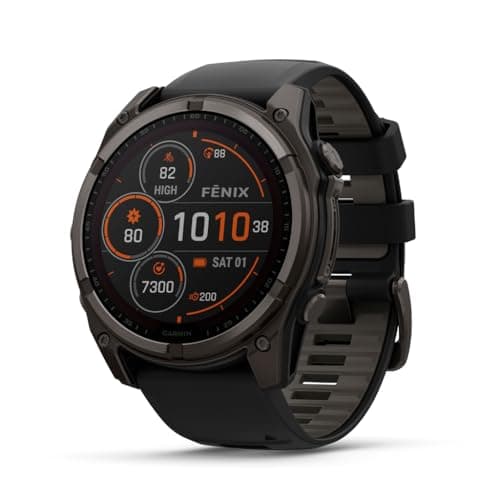 Garmin fenix 8 Solar (51mm, Sapphire) Sapphire lens, titanium bezel, metal sensor guard and a 40 m dive-rated case: the hardest screen on the longest-lasting body. | Toughest screen overallSolar GPS | 8.7 /10 | $1,092.78Amazon |
| 2 | 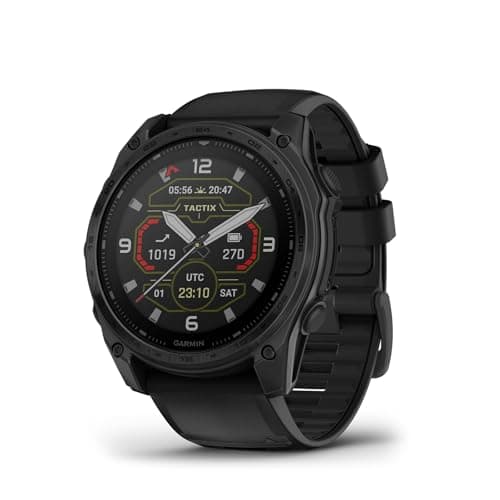 Garmin tactix 8 – Solar (51mm) The same sapphire-and-titanium construction with leakproof buttons and a 40 m dive rating, plus the light-discipline features. | Toughest screen, tactical buildSolar GPS | 8.7 /10 | $1,399.99Amazon |
| 3 | 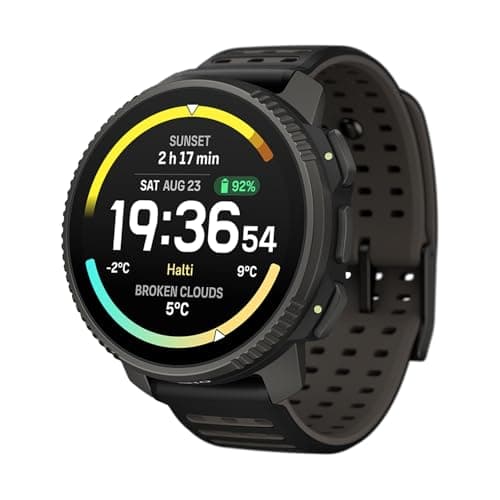 Suunto Vertical 2 Titanium Sapphire crystal over a titanium bezel at a price Garmin charges for polymer. 100 m, 87 g, maps on an AMOLED. | Most sapphire for the moneyRechargeable GPS | 7.6 /10 | $699.00Amazon |
| 4 | 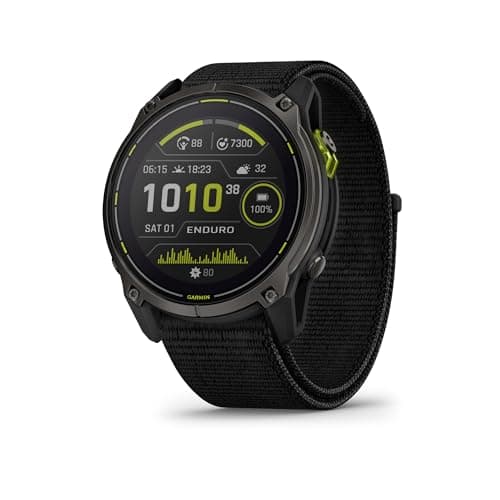 Garmin Enduro 3 Sapphire lens, 51 mm titanium bezel, 63 g, and up to 90 days in smartwatch mode. | Toughest screen with the longest batterySolar GPS | 8.5 /10 | $799.99Amazon |
| 5 | 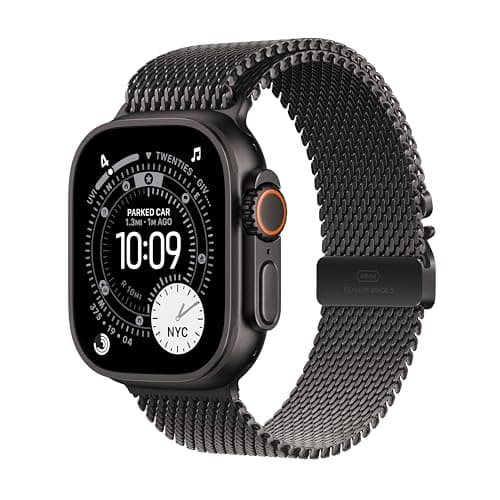 Apple Watch Ultra 3 Flat sapphire crystal in a Grade 5 titanium case, 100 m water resistance and an EN13319 scuba rating. The screen outlasts the charge cycle. | Best sapphire for iPhoneRechargeable GPS | 5.7 /10 | $649.00Amazon |
| 6 | 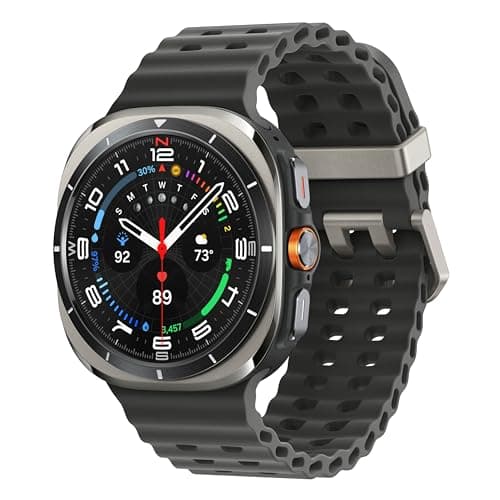 Samsung Galaxy Watch Ultra (2025, 47mm) Sapphire crystal on a Grade 4 titanium 47 mm case at 10 ATM, with up to 60 hours of normal use. | Best sapphire on Wear OSRechargeable GPS | 5.7 /10 | $489.99Amazon |
#ad · Prices come live from Amazon, last checked November 4, 2026. Scores are ours, built from the makers' manuals, battery tables and spec pages. Product photos come from Amazon; anything still on a stock frame is labelled on its card. Tap a row for the full write-up.
The direct answer
There is only one material question that matters for a screen you will look at ten thousand times, and the makers answer it on their own spec pages: is the lens sapphire, or is it glass? Sapphire is second only to diamond on the hardness scale used for minerals, which is why a sapphire lens shrugs off the things that mark glass: a door frame, a rock face, sand, a tailgate, keys in the same pocket.
Every watch on this page has a maker-stated sapphire lens. Nothing is here because a reviewer called it tough, and nothing is here on a scratch-resistant claim alone, because that phrase is used for chemically strengthened glass as often as for sapphire and tells you nothing about hardness.
Why sapphire is the whole answer
Scratching and shattering are two different failures and sapphire only solves one of them, so it is worth being precise about what you are buying.
- Scratching is abrasion by something harder than the lens. Sand and most rock are quartz, which is harder than ordinary and chemically strengthened glass and softer than sapphire. That is the whole mechanism, and it is why a sapphire watch worn in the same conditions stays clear for years.
- Shattering is impact, and here sapphire is the more brittle material. Chemically strengthened glass flexes a little; sapphire does not. In practice a watch that puts sapphire behind a raised titanium bezel, which is what the fenix, tactix, Enduro and both Verticals do, never lets a flat impact reach the lens edge, so the trade is mostly theoretical on this kind of watch.
- Coatings are not hardness. An anti-glare or oleophobic coating wears off a sapphire lens the same way it wears off glass. That is cosmetic, it is not the lens failing, and no maker warrants it.
The longer version of this argument, including where chemically strengthened glass is genuinely the better choice, is in sapphire vs Gorilla Glass, and the specific Gorilla Glass 3 comparison people search for is in sapphire vs Gorilla Glass 3.
The sapphire smartwatches, side by side
Six watches, six spec pages, one shared lens material. The differences that decide the ranking are everything around the lens: what holds it, how deep the case will go, and how often you have to take it off to charge it.
| Evidence | Garmin fenix 8 Solar (51mm, Sapphire) | Garmin tactix 8 – Solar (51mm) | Suunto Vertical 2 Titanium | Garmin Enduro 3 |
|---|---|---|---|---|
| Glass | Scratch-resistant sapphire lens (sapphire versions) | Scratch-resistant sapphire lens | Sapphire crystal | Scratch-resistant sapphire lens |
| Bezel & case | Titanium bezel (sapphire versions); leakproof metal buttons; sensor guard | Titanium bezel; leakproof buttons | Titanium bezel; glass fiber reinforced polyamide case | 51mm titanium bezel; UltraFit nylon band |
| Water rating | 40-meter dive-rated case | 40-meter dive rating with leakproof buttons | 100 m | — |
| Battery (smartwatch) | Up to 30 days typical use; up to 48 days with solar | Up to 48 days in smartwatch mode with always-on display (51mm Solar) | Up to 20 days daily use; up to 40 days standby | Up to 90 days in smartwatch mode |
| Score | 8.7/10 | 8.7/10 | 7.6/10 | 8.5/10 |
The fenix 8 Solar wins because the sapphire is the least interesting thing about it: a titanium bezel, leakproof metal buttons, a metal sensor guard over the optical sensor, which is the part that normally gets scuffed to death on a desk edge, and a case Garmin dive-rates to 40 m rather than merely water-rating. It also states up to 30 days of typical use and up to 48 with solar, which means it leaves the charger alone and spends less of its life being handled.
The tactix 8 Solar is the same construction with the tactical feature set on top, and it is the pick if you want stealth and a green light rather than a different screen; the detail is in the tactix 8 review.
The Suunto Vertical 2 Titanium is the value answer. Sapphire crystal, a titanium bezel, a 100 m rating and a 1.5-inch AMOLED with offline maps, at a price Garmin charges for a polymer case and a lens it will not call sapphire. The cost is battery: 20 days of daily use against 30 for the fenix, with no solar lens.
The Enduro 3 is the one to buy if you want the hard lens and the longest gap between charges: sapphire, a 51 mm titanium bezel, 63 grams, and up to 90 days in smartwatch mode. The Apple Watch Ultra 3 and Galaxy Watch Ultra both put sapphire on Grade 5 and Grade 4 titanium respectively, and both are excellent screens on watches that charge every day or two, which is the trade-off examined in Apple Watch Ultra vs fenix 8.
The popular watches that are not sapphire
This is the part most toughest-smartwatch lists get wrong, so here it is plainly. Three of the most recommended rugged watches on the market do not have sapphire lenses, by their makers' own descriptions:
- Garmin Instinct 3 Solar. Garmin describes the display as scratch-resistant and does not name sapphire. We do not flag it as sapphire for that reason. It is still the best battery on the site and the case is built to MIL-STD-810; it just has a softer screen than a fenix.
- Garmin Instinct 2X Solar. Chemically strengthened Power Glass, in Garmin's words. Hard, not sapphire.
- Amazfit T-Rex 3. Gorilla Glass. A genuinely tough watch, with 10 ATM third-party tested by SGS and a freediving certification to 45 m, built around the softer of the two lens materials.
None of that makes them bad watches, and two of them beat everything here on battery. It means that if the specific thing you are buying is a screen that stays unmarked, you cannot get there from the Instinct line and you have to pay fenix, Suunto or Apple money.
The bezel scratches before the screen
Worth knowing before you spend the money: on a watch with a raised bezel, the bezel takes almost every hit the screen would have taken. That is what it is for. So the second material on the spec sheet matters nearly as much as the first.
Titanium on the fenix 8, tactix 8, Enduro 3, both Suunto Verticals, the Apple Watch Ultra 3 and the Galaxy Watch Ultra marks more easily than steel but will not corrode, and the marks blend into the finish rather than showing as bright scratches. Steel is harder and shows a scratch as a shiny line. Polymer and resin scuff fastest and cost nothing to live with. The material comparison is in titanium vs stainless steel and resin vs steel cases.
The decade pick
In detail
The picks, in full
Rank 1
Toughest screen overall
Garmin fenix 8 Solar (51mm, Sapphire)
Sapphire lens, titanium bezel, metal sensor guard and a 40 m dive-rated case: the hardest screen on the longest-lasting body.
EvidenceResearched · every row sourced
| Power class | Solar GPS. A rechargeable cell topped up by a solar lens. Weeks between charges; the cell still ages like any lithium battery. |
|---|---|
| Battery (smartwatch) | Up to 30 days typical use; up to 48 days with solar |
| Battery (GPS) | Up to 95 hours GPS-only; up to 149 hours with solar |
| Battery (max GPS) | Up to 186 hours max-battery GPS; up to 653 hours with solar |
| Battery (solar) | Expedition GPS mode up to 50 days; up to 118 days with solar |
| Glass | Scratch-resistant sapphire lens (sapphire versions) |
| Bezel & case | Titanium bezel (sapphire versions); leakproof metal buttons; sensor guard |
| Water rating | 40-meter dive-rated case |
| MIL-STD-810 | Tested to U.S. military standards for thermal, shock and water resistance |
| Maps & GPS | TopoActive maps preloaded on sapphire versions |
| Flashlight | Built-in LED flashlight with variable intensities, red light and strobe |
How the 8.7 score breaks down
- Battery & power independence (25%)
- 9
- Durability of materials (25%)
- 10
- Serviceability & lifespan (20%)
- 7
- Field usability (15%)
- 10
- Value per decade (10%)
- 6
- Mission fit (5%)
- 8
What the spec sheet supports
- Sapphire, titanium and leakproof metal buttons on a case Garmin dive-rates to 40 m.
- 653 hours of max-battery GPS with solar is the longest figure in Garmin's fenix 8 table.
- Preloaded topo maps, a speaker and mic, and a flashlight.
Where it falls short
- A MIP display in a world of AMOLEDs; that is also why the battery lasts.
- The fenix 9 Pro (August 2026) now sits above it in the line, with a titanium case and solar on select models.
- Big: 51mm is a lot of watch under a sleeve.
Skip this if…
…you have never used the maps on a watch; the Instinct 3 Solar gives you the battery for half the money.
#ad · Price as of November 4, 2026 · Disclosure for the link to Garmin fenix 8 Solar (51mm, Sapphire)
Rank 2
Toughest screen, tactical build
Garmin tactix 8 – Solar (51mm)
The same sapphire-and-titanium construction with leakproof buttons and a 40 m dive rating, plus the light-discipline features.
EvidenceResearched · every row sourced
| Power class | Solar GPS. A rechargeable cell topped up by a solar lens. Weeks between charges; the cell still ages like any lithium battery. |
|---|---|
| Battery (smartwatch) | Up to 48 days in smartwatch mode with always-on display (51mm Solar) |
| Glass | Scratch-resistant sapphire lens |
| Bezel & case | Titanium bezel; leakproof buttons |
| Water rating | 40-meter dive rating with leakproof buttons |
| MIL-STD-810 | Built to a U.S. military standard (MIL-STD-810) for thermal, shock and water resistance |
| Sensors | Stealth Mode, Night Vision Goggle mode, Jumpmaster (HAHO, HALO, static), Applied Ballistics Ultralight solver |
| Flashlight | Multi-LED flashlight with white or green light |
How the 8.7 score breaks down
- Battery & power independence (25%)
- 9
- Durability of materials (25%)
- 10
- Serviceability & lifespan (20%)
- 7
- Field usability (15%)
- 10
- Value per decade (10%)
- 5
- Mission fit (5%)
- 10
What the spec sheet supports
- The only watch here with sapphire, titanium, a MIL-STD claim, a dive rating and the tactical software in one case.
- Preloaded Applied Ballistics solver, unlike the Instinct 3 Tactical's paid unlock.
- 48 days in smartwatch mode on the solar model.
Where it falls short
- Garmin positions it at the top of its tactical line; the Instinct 3 Tactical does the light-discipline features for far less.
- A big 51mm watch.
Skip this if…
…you want the tactical features without the fenix price; the Instinct 3 Solar Tactical is the honest alternative.
#ad · Price as of November 4, 2026 · Disclosure for the link to Garmin tactix 8 – Solar (51mm)
Rank 3
Most sapphire for the money
Suunto Vertical 2 Titanium
Sapphire crystal over a titanium bezel at a price Garmin charges for polymer. 100 m, 87 g, maps on an AMOLED.
EvidenceResearched · every row sourced
| Power class | Rechargeable GPS. A rechargeable lithium cell charged from a cable. Days to a few weeks per charge; the cell ages with every cycle. |
|---|---|
| Battery (smartwatch) | Up to 20 days daily use; up to 40 days standby |
| Battery (GPS) | Up to 65 h all-systems + multi-band (60 h always-on); up to 75 h single-band |
| Battery (max GPS) | Up to 250 h in power-saving GNSS modes |
| Glass | Sapphire crystal |
| Bezel & case | Titanium bezel; glass fiber reinforced polyamide case |
| Water rating | 100 m |
| Display | 1.5-inch LTPO AMOLED, 466 × 466 |
| Maps & GPS | Offline maps; GPS, GLONASS, Galileo, QZSS, BeiDou |
| Flashlight | Integrated LED flashlight |
| Weight | 87 g / 3.07 oz |
| Operating temp | -20°C to +55°C (-5°F to +130°F) |
How the 7.6 score breaks down
- Battery & power independence (25%)
- 7
- Durability of materials (25%)
- 9
- Serviceability & lifespan (20%)
- 6
- Field usability (15%)
- 9
- Value per decade (10%)
- 7
- Mission fit (5%)
- 7
What the spec sheet supports
- Sapphire and titanium at the price of a polymer Garmin.
- Offline maps and a flashlight on a Suunto for the first time in the Vertical line.
Where it falls short
- The Vertical 2 dropped solar; the original Vertical Titanium Solar still has it.
- 100 m rating, no stated MIL-STD line, no dive rating.
Skip this if…
…you wanted a Suunto that never sees a charger; buy the first-gen Vertical Titanium Solar instead.
#ad · Price as of November 4, 2026 · Disclosure for the link to Suunto Vertical 2 Titanium
Rank 4
Toughest screen with the longest battery
Garmin Enduro 3
Sapphire lens, 51 mm titanium bezel, 63 g, and up to 90 days in smartwatch mode.
EvidenceResearched · every row sourced
| Power class | Solar GPS. A rechargeable cell topped up by a solar lens. Weeks between charges; the cell still ages like any lithium battery. |
|---|---|
| Battery (smartwatch) | Up to 90 days in smartwatch mode |
| Battery (GPS) | Up to 320 hours in GPS mode with solar charging; up to 120 hours with multi-band SatIQ |
| Glass | Scratch-resistant sapphire lens |
| Bezel & case | 51mm titanium bezel; UltraFit nylon band |
| Maps & GPS | Preloaded TopoActive maps |
| Flashlight | Built-in LED flashlight with variable brightness, red light and strobe |
| Weight | 63 grams |
How the 8.5 score breaks down
- Battery & power independence (25%)
- 10
- Durability of materials (25%)
- 9
- Serviceability & lifespan (20%)
- 7
- Field usability (15%)
- 9
- Value per decade (10%)
- 6
- Mission fit (5%)
- 8
What the spec sheet supports
- 320 GPS hours with solar is the largest GPS figure Garmin publishes for any watch we list.
- Lighter than a 51mm fenix 8 thanks to the nylon strap and titanium bezel.
- Sapphire and preloaded maps.
Where it falls short
- Garmin's Enduro 3 release does not state a water rating or MIL-STD line, so we do not claim them here.
- The nylon strap is the point of the weight; a silicone strap adds it back.
Skip this if…
…you swim or dive with your watch and need a stated depth rating; the fenix 8 gives you one.
#ad · Price as of November 4, 2026 · Disclosure for the link to Garmin Enduro 3
Rank 5
Best sapphire for iPhone
Apple Watch Ultra 3
Flat sapphire crystal in a Grade 5 titanium case, 100 m water resistance and an EN13319 scuba rating. The screen outlasts the charge cycle.
EvidenceResearched · every row sourced
| Power class | Rechargeable GPS. A rechargeable lithium cell charged from a cable. Days to a few weeks per charge; the cell ages with every cycle. |
|---|---|
| Battery (smartwatch) | Up to 42 hours of normal use; up to 72 hours in Low Power Mode |
| Glass | Flat sapphire crystal display |
| Bezel & case | Titanium case, Grade 5 |
| Water rating | Water resistance 100 m; EN13319 recreational scuba diving to 40 m |
| MIL-STD-810 | Tested to MIL-STD 810H for altitude, high and low temperature, temperature shock, immersion, freeze/thaw, ice and freezing rain, shock and vibration |
| Display | Always-On Retina, wide-angle OLED, LTPO3, up to 3000 nits |
| Sensors | Satellite connectivity (Emergency SOS, Messages, Find My); depth gauge; siren; 5G/LTE on cellular models |
| Weight | 61.6 g (natural) |
| Size | 49 mm × 44 mm × 12 mm |
| Operating temp | On-wrist -4° to 130°F (-20° to 55°C) |
How the 5.7 score breaks down
- Battery & power independence (25%)
- 2
- Durability of materials (25%)
- 10
- Serviceability & lifespan (20%)
- 4
- Field usability (15%)
- 8
- Value per decade (10%)
- 4
- Mission fit (5%)
- 6
What the spec sheet supports
- Apple lists the MIL-STD 810H subsections it tested against, which Garmin's releases do not.
- Sapphire, titanium, a dive rating and satellite SOS in one watch.
Where it falls short
- 42 hours of battery. A solar Garmin Instinct is rated in weeks; a G-Shock in months.
- A sealed rechargeable cell in a device tied to an annual software cycle.
Skip this if…
…your watch has to outlast a charger, a deployment or a decade; this one is built for a nightly dock.
#ad · Price as of November 4, 2026 · Disclosure for the link to Apple Watch Ultra 3
Rank 6
Best sapphire on Wear OS
Samsung Galaxy Watch Ultra (2025, 47mm)
Sapphire crystal on a Grade 4 titanium 47 mm case at 10 ATM, with up to 60 hours of normal use.
EvidenceResearched · every row sourced
| Power class | Rechargeable GPS. A rechargeable lithium cell charged from a cable. Days to a few weeks per charge; the cell ages with every cycle. |
|---|---|
| Battery (smartwatch) | Up to 60 hours normal use with always-on display; up to 100 hours in Power Saving Mode |
| Battery (GPS) | Up to 48 hours in Exercise Power Saving Mode |
| Power | 590 mAh rechargeable lithium battery (cable/wireless charging, no solar) |
| Glass | Sapphire crystal |
| Bezel & case | Grade 4 titanium, 47 mm |
| Water rating | 10 ATM / IP68 |
| MIL-STD-810 | MIL-STD-810H |
| Maps & GPS | L1 + L5 dual-frequency GPS |
| Operating temp | -20°C to 55°C; rated to 9,000 m altitude |
How the 5.7 score breaks down
- Battery & power independence (25%)
- 3
- Durability of materials (25%)
- 9
- Serviceability & lifespan (20%)
- 4
- Field usability (15%)
- 8
- Value per decade (10%)
- 3
- Mission fit (5%)
- 7
What the spec sheet supports
- Grade 4 titanium, sapphire and 10 ATM: on materials this outspecs every Garmin Instinct.
- A named MIL-STD-810H claim with the test list published, which Garmin does not do.
- Dual-band GPS and full Wear OS apps, notifications and replies on an Android phone.
Where it falls short
- Sixty hours with the screen on. Nothing else on this site charges that often.
- Wear OS watches are supported for a stated number of years, not the indefinite life of a Casio module.
- It is a phone accessory first: pair it with an iPhone and most of it stops working.
Skip this if…
…you measure a watch in weeks rather than days; the materials are excellent and the power system is the opposite of this site's thesis.
#ad · Price as of November 4, 2026 · Disclosure for the link to Samsung Galaxy Watch Ultra (2025, 47mm)
How to check a screen claim yourself
1. Find the word sapphire on the maker's page. Not the retailer's, not a review. If the maker only says scratch-resistant, it is glass. Garmin is a useful example: it names sapphire on the fenix, tactix and Enduro, and does not on the Instinct.
2. Check whether sapphire is standard or an edition. On the fenix 8 and tactix 8 the sapphire lens and titanium bezel come with the Sapphire versions, which is also where the preloaded TopoActive maps live. A non-sapphire fenix is a different watch at a different price.
3. Read the bezel material next. It is the part that will actually get hit. Titanium or steel protects a lens in a way a flush polymer bezel does not.
4. Decide if you need impact resistance more than hardness. If the watch gets swung into concrete and steel rather than dragged along rock, a resin G-Shock with a cheap mineral lens is the more rational purchase, and the lens is replaceable.
5. Ignore screen protectors on sapphire. A film softer than the lens cannot protect it; it just becomes the surface that scratches.
How we scored this
What we checked to build this ranking
Every pick here is researched against the documents that decide whether a watch lasts: the maker's own battery table read mode by mode, what the lens and case are actually made of, the water rating, whether a MIL-STD-810 line is on the record and in whose words, and how long the maker keeps updating the line. Each one is then scored on a public rubric weighted for a decade of ownership, and every figure links to where it came from.
That is why the order on this page is worth following: it is built from specs you can open yourself, and commissions never set a score or decide a pick. The rubric and its weights are published.
Questions
Frequently asked
Which smartwatch has the most scratch-resistant screen?
The Garmin fenix 8 Solar in its Sapphire version. Garmin states a scratch-resistant sapphire lens in a titanium bezel with a metal sensor guard, on a case dive-rated to 40 m. The Garmin tactix 8 Solar, Garmin Enduro 3, Suunto Vertical 2 Titanium, Apple Watch Ultra 3 and Samsung Galaxy Watch Ultra all use sapphire crystal as well.
Is sapphire actually better than Gorilla Glass on a watch?
For scratching, yes, and by a wide margin: sapphire is harder than the quartz in sand and rock, which is what marks glass. For impact, chemically strengthened glass is less brittle. On a watch where the lens sits behind a raised titanium bezel, the scratch advantage is the one you will notice.
Does the Garmin Instinct 3 have a sapphire screen?
No. Garmin describes the Instinct 3 display as scratch-resistant and does not name sapphire, and the Instinct 2X Solar uses chemically strengthened Power Glass. Both are tough watches with softer lenses than a fenix. The detail is in Garmin sapphire vs Gorilla Glass.
Can a sapphire watch screen still crack?
Yes. Sapphire resists abrasion and is more brittle than strengthened glass under a sharp impact. The watches on this page mitigate it the same way: a raised metal bezel that takes the blow before the lens edge does.
Is any G-Shock sapphire?
The Mudmaster GWG-2000 is, with an anti-glare coating, and Casio uses sapphire on the titanium editions of the full-metal square. Every other G-Shock on this site is mineral glass: soft, but inexpensive for a watchmaker to replace.
Keep reading
Related on Bezel & Bearing
Receipts
Sources
- Garmin newsroom — fenix 8 Series press release (checked 2026-09-20)
- Garmin — fenix 8 Series Owner's Manual, Battery Information (checked 2026-09-20)
- Garmin newsroom — tactix 8 press release (checked 2026-09-20)
- Garmin newsroom — Enduro 3 press release (checked 2026-09-20)
- Garmin newsroom — Instinct 3 Series press release (checked 2026-09-20)
- Garmin newsroom — Instinct 2X Solar press release (checked 2026-09-20)
- Suunto — Vertical 2 Titanium Black product page and tech specs (checked 2026-09-20)
- Apple Support — Apple Watch Ultra 3 Tech Specs (checked 2026-09-20)
- Amazfit — T-Rex 3 product page, Technical Specifications (checked 2026-09-20)
- Samsung — Galaxy Watch Ultra (2025) 47mm specifications page (checked 2026-09-26)
Battery, glass, case and water figures come from the maker's own owner's manuals, spec pages and press releases, linked on every product so you can open the page they came from. Prices are set by Amazon and change often, so each buy button takes you to the current one. Read the full method.