Built to Last / Guide
Titanium vs stainless steel watch cases: lighter and corrosion-proof, or harder and repairable
Titanium weighs about half what steel does and ignores salt water. Steel is harder, cheaper and a watchmaker can polish the marks out. For a watch you intend to keep for ten years, those are two genuinely different bets.
By Mike M.Updated Researched from the maker's manuals and spec sheets
#adReader-supported: we may earn a commission if you buy through our links, at no extra cost to you. It never decides a ranking. How we rate · Disclosure
The short version
These two metals are not a quality ladder, even though titanium costs more. They solve different problems, and the right answer depends almost entirely on how big the watch is and where it spends its time.
Titanium is chosen for weight and corrosion. Steel is chosen for hardness, price and repairability. Everything else people argue about downstream of that is detail.
Weight is the difference you feel
Titanium has roughly 55 to 60 percent the density of stainless steel. On a dress watch that is a curiosity. On a 50 mm outdoor watch with a metal bezel, a metal case back and a day of hiking ahead of it, it is the single most noticeable property either metal has.
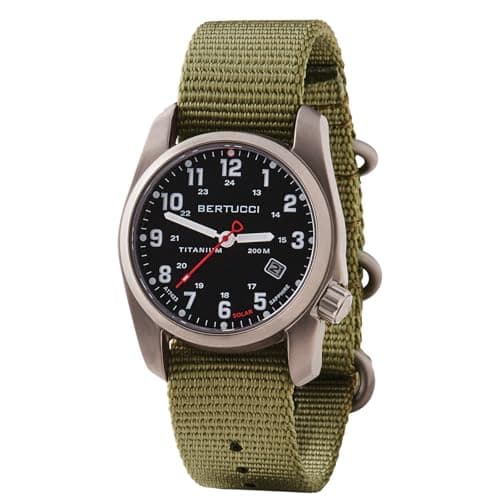
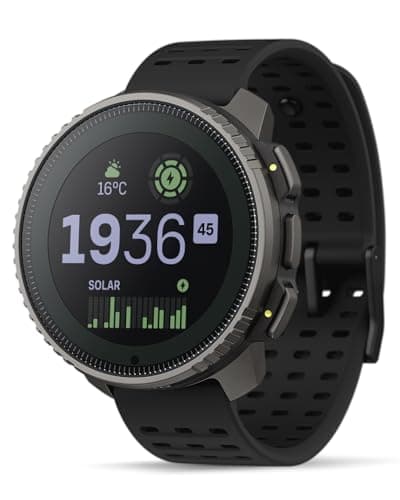
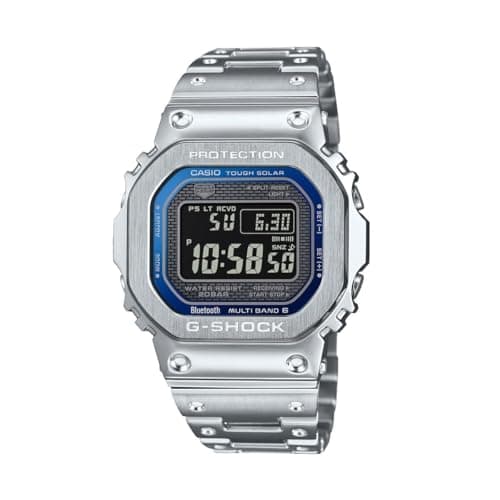
The registry makes the point without any arithmetic from us. The Bertucci A-2T Solar is a 40 mm unibody titanium case rated to 200 m and Bertucci publishes it at 59.5 grams. The Suunto Vertical Titanium Solar is a 100 m solar GPS watch with a Grade 5 titanium bezel at 74 grams. Meanwhile the G-Shock GMW-B5000 in stainless steel, which is a small square watch by any measure, is 167 grams, and Casio sells titanium variants of the same watch at roughly 104 to 106 grams. Same design, same dimensions, 60 grams of difference. What that weight feels like day to day, and whether the titanium version is worth the step, is argued in our GMW-B5000 review.
That matters for a buy-it-for-life owner in a way that is easy to miss on a product page: a watch you find heavy is a watch you take off, and a watch in a drawer is not the watch you bought. Weight is why titanium appears on almost every flagship on this site, from the titanium roundup onward.
Scratches: steel is harder, titanium hides it
This is where most of the internet argument happens, and both camps are half right.
Steel is the harder surface. Commercial-grade titanium scuffs more readily than 316L stainless, and a titanium bracelet picks up hairlines faster than a steel one. Anyone telling you titanium is the scratch-proof choice is confusing it with the lens.
Titanium hides the damage better. Most titanium watch cases are blasted or brushed rather than polished, and titanium is grey all the way through with no bright-chrome base to expose, so a scuff reads as a change in texture instead of a flash of light. A scratch on a polished steel case is a mirror with a line through it, and you will see it from across a room.
Steel can be made new again. This is the real argument for steel on a decade-long purchase. A watchmaker can refinish a steel case and bracelet repeatedly for modest money. Titanium can be refinished too, but fewer shops will take it, it is easier to get wrong, and the oxide layer that makes titanium corrosion-proof has to re-form afterwards.
Note that none of this touches the screen, which is a different material with a different failure mode entirely. That is covered in most scratch-resistant smartwatch and sapphire vs Gorilla Glass.
Corrosion and skin
Titanium forms a stable oxide film the instant it meets air, and that film is what makes it effectively immune to salt water and sweat. Stainless steel resists corrosion by the same mechanism, through its chromium content, but it is not immune: trapped salt in a bracelet, in a case back groove or around a spring bar will eventually pit lower-grade steel. For a watch worn kayaking, fishing or anywhere near the ocean, that is a real difference rather than a brochure one.
Titanium is also the better choice if metal bothers your skin. Nickel is the common culprit in contact dermatitis and stainless steel alloys contain it; the titanium alloys used in watches generally do not.
Grade 2, Grade 5 and what 316L means
The grade on the spec sheet is worth reading, because it is the part makers are specific about.
- Grade 2 titanium is commercially pure. Light, very corrosion-resistant, the softest of the titanium options.
- Grade 5 titanium (Ti-6Al-4V) is the alloy, and it is meaningfully harder and stronger than Grade 2. When a maker names it, that is a real claim: Suunto specifies a Grade 5 titanium bezel on the Vertical Titanium Solar, and COROS specifies a Grade 5 titanium alloy bezel with a PVD coating on the VERTIX 2S.
- 316L stainless is the marine-grade steel most quality watches use, and Marathon names it on the 41 mm Large Diver's Quartz. It is the steel to want.
- PVD and DLC coatings are applied over either metal and are harder than both. They also wear through at the edges eventually, and when they do the repair is a recoat, not a polish.
The comparison table
| Titanium | Stainless steel | |
|---|---|---|
| Weight | Roughly 55-60% of steel | The heavier option |
| Surface hardness | Lower; scuffs sooner | Higher; resists hairlines better |
| How marks look | Texture change, grey through | Bright line on a polished face |
| Refinishing | Possible, fewer shops, easier to spoil | Routine, cheap, repeatable |
| Salt water | Effectively immune | Resistant; can pit where salt is trapped |
| Skin reaction | Nickel-free alloys; the hypoallergenic choice | Contains nickel |
| Cost | Higher, both material and machining | Lower |
| Best for | Large watches, all-day wear, salt water | Smaller watches, polished finishes, long-term repair |
The picks in both materials
Our picks for this
Two titanium, two steel
A titanium field watch, a titanium GPS watch, a 316L military-pattern diver and the steel square, so the weight and finish difference is visible across four real watches.
Best field watch overall
Bertucci A-2T Solar Classic (40mm titanium)
Solar, no charger8.4/10A patented unibody titanium case, 40 mm by 11 mm, sapphire, 200 m and 59.5 g. The clearest demonstration of what titanium buys you.
Check price · Amazon#ad · Price as of November 4, 2026 · Disclosure for the link to Bertucci A-2T Solar Classic (40mm titanium)
Best solar GPS watch that isn't a Garmin
Suunto Vertical Titanium Solar
Solar GPS8.1/10Grade 5 titanium bezel over a glass-fibre-reinforced polyamide case: sapphire, 100 m and a solar lens at 74 g.
$549.00Amazon#ad · Price as of November 4, 2026 · Disclosure for the link to Suunto Vertical Titanium Solar
 Stock photo
Best military-issue analog
Marathon 41mm Large Diver's Quartz (TSAR)
Replaceable cell8.2/10316L stainless steel, 41 mm, 30 ATM, sapphire and a screw-down crown. Marine-grade steel doing the job steel is best at.
Check price · Amazon#ad · Price as of November 4, 2026 · Disclosure for the link to Marathon 41mm Large Diver's Quartz (TSAR)
Best metal square
G-Shock GMW-B5000 (full metal square)
Solar, no charger8.1/10Stainless steel case, bezel and bracelet at 167 g, with titanium variants of the same watch around 104 to 106 g. The same design in both metals.
$483.00Amazon#ad · Price as of November 4, 2026 · Disclosure for the link to G-Shock GMW-B5000 (full metal square)
How to choose
Buy titanium if the watch is 45 mm or larger, if you wear it all day including in bed, if it goes in salt water, or if steel irritates your wrist. On a big outdoor watch the weight saving is the difference between wearing it and not.
Buy steel if the watch is small enough that weight is not an issue, if you prefer a polished finish, or if the idea of having the case refinished in year seven appeals to you. Steel is also simply cheaper, and spending the difference on sapphire or a better power system is usually the better trade.
Buy resin if what you actually want is impact survival and a watch you never think about. It is lighter than either metal, costs nothing, and is the reason a G-Shock outlives watches that cost ten times as much.
How we scored this
What we checked to build this ranking
Every pick here is researched against the documents that decide whether a watch lasts: the maker's own battery table read mode by mode, what the lens and case are actually made of, the water rating, whether a MIL-STD-810 line is on the record and in whose words, and how long the maker keeps updating the line. Each one is then scored on a public rubric weighted for a decade of ownership, and every figure links to where it came from.
That is why the order on this page is worth following: it is built from specs you can open yourself, and commissions never set a score or decide a pick. The rubric and its weights are published.
Questions
Frequently asked
Is titanium or stainless steel better for a watch?
Titanium is better for weight, corrosion resistance and sensitive skin; stainless steel is better for surface hardness, price and refinishing. On a large outdoor watch titanium is usually the right answer because the weight saving is roughly 40 percent; on a small watch steel costs less and polishes back to new.
Does titanium scratch more easily than steel?
Yes, the surface is softer, so it picks up scuffs sooner. The scuffs are much less visible because titanium is grey through its whole thickness and is usually blasted or brushed rather than polished, so damage reads as texture rather than as a bright line.
What is the difference between Grade 2 and Grade 5 titanium?
Grade 2 is commercially pure titanium: light and highly corrosion-resistant but soft. Grade 5 is the Ti-6Al-4V alloy, which is significantly harder and stronger. When a maker names Grade 5, as Suunto does on the Vertical Titanium Solar bezel, it is a real specification rather than marketing.
Will a stainless steel watch rust?
Not in normal wear. It can pit where salt is trapped and never rinsed off, typically in a bracelet, around spring bars or in a case back groove. 316L marine-grade steel, which Marathon specifies on its 41 mm diver, is the grade to look for. Titanium does not have this failure mode at all.
Is a titanium watch worth the extra money?
On a watch over about 45 mm, yes, because the weight is what decides whether you keep wearing it. On a 38 to 42 mm watch the saving is small enough that the money is usually better spent on a sapphire lens or a solar movement.
Keep reading
Related on Bezel & Bearing
Receipts
Sources
- Bertucci — A-2T Original Classic, U.S. Patented Unibody titanium case (checked 2026-09-26)
- Long Island Watch (authorized dealer) — Bertucci A-2T Solar Classic #12800, full specifications (checked 2026-09-26)
- Suunto — Vertical Titanium Solar Black product page and tech specs (checked 2026-09-20)
- Marathon Watch — 41mm Large Diver's Quartz (TSAR) product page (checked 2026-09-20)
- COROS — VERTIX 2S / APEX / NOMAD specification tables (checked 2026-09-20)
- G-Central — G-Shock GMW-B5000 spec sheet and list price (checked 2026-09-28)
- CasioFanMag — GMW-B5000, module 3459 battery operating times transcribed from Casio's operation guide (checked 2026-09-28)
- Garmin newsroom — fenix 8 Series press release (checked 2026-09-20)
Battery, glass, case and water figures come from the maker's own owner's manuals, spec pages and press releases, linked on every product so you can open the page they came from. Prices are set by Amazon and change often, so each buy button takes you to the current one. Read the full method.