Built to Last / Guide
Sapphire crystal vs Corning Gorilla Glass 3: what each one is for, in the words of the people who make them
Gorilla Glass 3 was engineered to hide damage and keep strength after it happens. Sapphire was chosen because it does not take the damage in the first place. Those are two different goals, and once you see that, the choice stops being a ranking.
By Mike M.Updated Researched from the maker's manuals and spec sheets
#adReader-supported: we may earn a commission if you buy through our links, at no extra cost to you. It never decides a ranking. How we rate · Disclosure
The straight answer
These two materials are not competing to be the same thing, and most comparisons go wrong by pretending they are. Sapphire is chosen to avoid damage. Gorilla Glass 3 was engineered to survive damage gracefully, which Corning calls Native Damage Resistance and describes as molecular changes that make flaws less visible and keep more strength after they appear.
If your watch spends a decade near sand, rock, concrete dust and tool handles, the damage mode that actually happens to you is abrasion, not a single dramatic impact. That is why every top-tier outdoor watch that names its lens names sapphire, and why this site flags sapphire only where a maker says it. The general version of this page, covering mineral crystal too, is sapphire vs Gorilla Glass vs mineral.
What Corning claims for Gorilla Glass 3
Gorilla Glass 3 was launched in January 2013 and is built on a different glass composition from Gorilla Glass 2, with the durability work done at the atomic level of the glass rather than only in the chemical strengthening step. In Corning's own release, the headline claims are:
- Native Damage Resistance — a property of the glass composition itself rather than a coating added afterwards.
- Up to three times the scratch resistance of Gorilla Glass 2.
- A 40% reduction in the number of visible scratches. Note the exact wording: fewer visible scratches, which is about how damage looks as much as whether it is there.
- Up to 50% higher retained strength once flaws have developed, which is the part that keeps a scratched lens from becoming a cracked one.
Read as a buyer rather than as a spec sheet, that is a material designed for a phone: something dropped onto a hard floor, carried in a pocket with keys, and expected to look acceptable rather than pristine after two years. Those are reasonable goals. They are not the same goals as a watch you intend to own for ten.
What the DX in Gorilla Glass 3 with DX is
This is where most watch buyers get confused, and it is worth being precise. The lens Corning lists on the Garmin fenix 7 Series is Corning Gorilla Glass 3 with DX. DX is not a harder glass; it is an anti-reflective treatment applied to Gorilla Glass, and Corning describes the benefit for the fenix 7 Series as a 75% improvement in front surface reflection, which is a readability gain rather than a durability one.
So "Gorilla Glass 3 with DX" means: the GG3 damage behaviour, plus a coating that cuts glare so the screen is easier to read in sunlight. If you have been comparing a "DX" watch against a sapphire watch thinking DX was the durability upgrade, it is not. It is the reason a non-sapphire fenix can look less mirror-like outdoors than you would expect.
What sapphire is, and is not
Watch sapphire is synthetic corundum, grown rather than melted and formed like glass. It is far harder than any strengthened glass, which in practice means that keys, zip pulls, sand and rock do not mark it in normal wear. That is the entire reason it costs more and the entire reason makers advertise it.
Its two honest downsides:
- It is more brittle. Hardness and toughness are different properties. A sharp, concentrated edge strike, a rock corner, a door frame, can chip sapphire where strengthened glass would flex and survive. A chip can breach the seal, which turns a cosmetic problem into a water problem.
- It reflects more. Untreated sapphire is a mirror in bright light, which is why good sapphire watches carry an anti-reflective coating. Casio states anti-glare coating on the sapphire of the Mudmaster GWG-2000 for exactly this reason.
The protection that matters more than either material is the bezel. A lens recessed behind a raised bezel takes the strike on the bezel; a lens flush with a flat case takes it on the lens. That is why a mineral-crystal Rangeman survives decades and a flat, exposed lens of any material does not.
Which watches use which
| Watch | Lens, as named by the maker | Who names it |
|---|---|---|
| Garmin fenix 8 (sapphire editions), tactix 8, Enduro 3, fenix 9 Pro | Scratch-resistant sapphire lens | Garmin press releases |
| Garmin fenix 7 Series | Corning Gorilla Glass 3 with DX | Corning's own product listing |
| Garmin Instinct 2X Solar | Chemically strengthened, scratch-resistant Power Glass lens | Garmin press release |
| Garmin Instinct 3 | Scratch-resistant display; no material named | Garmin press release |
| Amazfit T-Rex 3 | Gorilla Glass touchscreen (generation not stated) | Amazfit specification page |
| G-Shock Mudmaster GWG-2000 | Sapphire with anti-glare coating | Casio spec sheet |
| Suunto Vertical 2, Vertical Titanium Solar | Sapphire crystal | Suunto product pages |
Two rules fall out of that table. First, makers name sapphire when they use it, because it sells watches: if a page does not say sapphire, assume it is not. Second, "Gorilla Glass" without a generation number tells you almost nothing — Amazfit names the brand and not the generation, so we describe the T-Rex 3 as Gorilla Glass and no more. The Garmin-specific version of this argument is Garmin sapphire vs Gorilla Glass.
The picks
Our picks for this
One of each lens, so you can compare them
A sapphire flagship, the watch Corning lists with Gorilla Glass 3 and DX, a budget Gorilla Glass rugged watch, and the only Instinct whose lens Garmin names.
Best mapping watch for a medium wrist
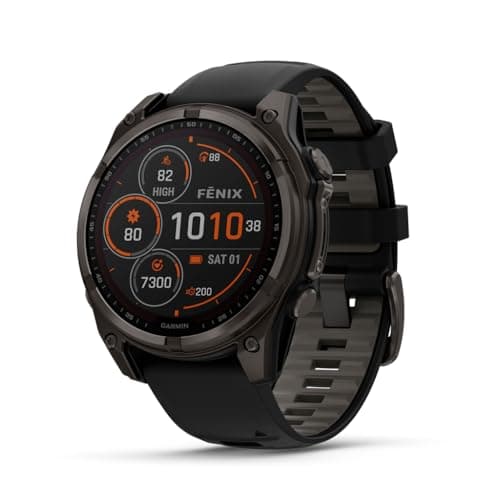
Garmin fenix 8 Solar (47mm, Sapphire)
Solar GPS8.4/10Sapphire lens and titanium bezel on a 40 m dive-rated case: the lens that does not take the damage.
$960.00Amazon#ad · Price as of November 4, 2026 · Disclosure for the link to Garmin fenix 8 Solar (47mm, Sapphire)
Best value mapping fenix
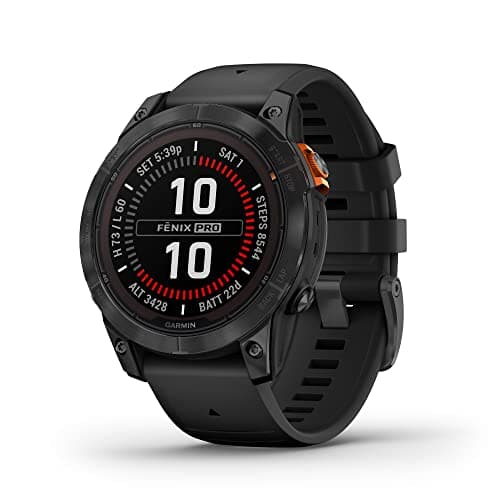
Garmin fenix 7 Pro Solar (47mm)
Solar GPS8.0/10Corning lists Gorilla Glass 3 with DX for the fenix 7 Series, and Garmin publishes the longest smartwatch table of any fenix here at 37 days.
$679.99Amazon#ad · Price as of November 4, 2026 · Disclosure for the link to Garmin fenix 7 Pro Solar (47mm)
 Stock photo
Best rugged smartwatch on a budget
Amazfit T-Rex 3
Rechargeable GPS7.0/10Gorilla Glass behind a stainless bezel, with a 10 ATM rating tested to ISO 22810 by SGS.
Check price · Amazon#ad · Price as of November 4, 2026 · Disclosure for the link to Amazfit T-Rex 3
Best previous-gen Instinct with a flashlight
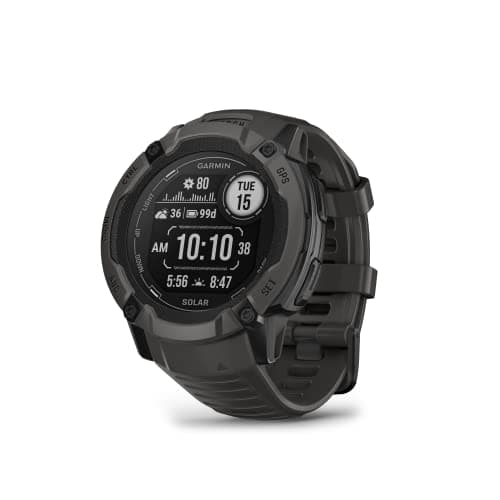
Garmin Instinct 2X Solar (50mm)
Solar GPS7.8/10A chemically strengthened Power Glass lens, named by Garmin, with a 40-day battery table.
$334.90Amazon#ad · Price as of November 4, 2026 · Disclosure for the link to Garmin Instinct 2X Solar (50mm)
How to choose for your use
Buy sapphire if the watch lives in grit, sand, mud, concrete dust or a tool bag, if you intend to keep it for a decade, and if you look at the dial several times a day and care that it stays clear. This is the right default for the buyer this site is written for, and it is why the sapphire models lead most durable watches.
Buy Gorilla Glass 3 or another strengthened glass if the realistic failure mode is dropping the watch onto a hard surface rather than abrading it, if you want the cheaper watch and would rather spend the difference on the power system, or if the watch is a touchscreen you are tapping constantly and a chip-resistant flex is worth more to you than a scratch-free face.
Buy either, behind a raised bezel. If you can only have one thing, have the bezel. The materials argument is real and it is second to the geometry.
How we scored this
What we checked to build this ranking
Every pick here is researched against the documents that decide whether a watch lasts: the maker's own battery table read mode by mode, what the lens and case are actually made of, the water rating, whether a MIL-STD-810 line is on the record and in whose words, and how long the maker keeps updating the line. Each one is then scored on a public rubric weighted for a decade of ownership, and every figure links to where it came from.
That is why the order on this page is worth following: it is built from specs you can open yourself, and commissions never set a score or decide a pick. The rubric and its weights are published.
Questions
Frequently asked
Is sapphire better than Corning Gorilla Glass 3?
For scratch resistance, clearly yes: sapphire is far harder and does not mark in normal wear, while Gorilla Glass 3 will pick up fine scratches from ordinary sand. For impact and flex, Gorilla Glass 3 is better, because sapphire is more brittle and can chip on a sharp edge strike. Corning's GG3 claims are all stated against Gorilla Glass 2, not against sapphire.
What does Corning actually claim for Gorilla Glass 3?
Native Damage Resistance from a new glass composition, up to three times the scratch resistance of Gorilla Glass 2, a 40% reduction in the number of visible scratches, and up to 50% higher retained strength once flaws develop. The wording matters: fewer visible scratches, and strength retained after damage.
What is Gorilla Glass 3 with DX?
Gorilla Glass 3 with an anti-reflective treatment on top. DX is a readability improvement, not a hardness upgrade: Corning describes a 75% improvement in front surface reflection for the Garmin fenix 7 Series, which carries Gorilla Glass 3 with DX.
Which Garmin watches have Gorilla Glass 3?
Corning lists Gorilla Glass 3 with DX for the Garmin fenix 7 Series. Garmin names sapphire on the fenix 8 sapphire editions, tactix 8, Enduro 3 and fenix 9 Pro, and names a chemically strengthened Power Glass lens on the Instinct 2X Solar. On the Instinct 3, Garmin says only "scratch-resistant display", so we do not claim a material for it.
Can Gorilla Glass 3 scratch?
Yes. It is strengthened glass, and quartz sand is harder than glass. Corning's own claim is that fewer of those scratches are visible and that the lens keeps more strength once they exist, not that they do not happen. If scratch-free matters more to you than chip resistance, that is the argument for sapphire.
Keep reading
Related on Bezel & Bearing
Receipts
Sources
- Corning — press release, Gorilla Glass 3 with Native Damage Resistance (checked 2026-10-10)
- Corning — products with Gorilla Glass: Garmin fenix 7 Series (checked 2026-10-10)
- Garmin newsroom — fenix 8 Series press release (checked 2026-09-20)
- Garmin newsroom — fenix 7 Pro Series press release (checked 2026-09-20)
- Garmin newsroom — fenix 9 and fenix 9 Pro press release (checked 2026-09-20)
- Garmin newsroom — Instinct 2X Solar press release (checked 2026-09-20)
- Garmin newsroom — Instinct 3 Series press release (checked 2026-09-20)
- Amazfit — T-Rex 3 product page, Technical Specifications (checked 2026-09-20)
- Suunto — Vertical 2 Titanium Black product page and tech specs (checked 2026-09-20)
Battery, glass, case and water figures come from the maker's own owner's manuals, spec pages and press releases, linked on every product so you can open the page they came from. Prices are set by Amazon and change often, so each buy button takes you to the current one. Read the full method.