Built to Last / Guide
Watch water resistance explained: 200 metres does not mean 200 metres, and the makers say so themselves
The number on the caseback is a static pressure test, not a depth you can visit. Casio publishes what each rating actually allows, and once you read it the ratings stop being mysterious and start being useful.
By Mike M.Updated Researched from the maker's manuals and spec sheets
#adReader-supported: we may earn a commission if you buy through our links, at no extra cost to you. It never decides a ranking. How we rate · Disclosure
The short version
Three facts clear up almost every question people have about this.
One: the number is a pressure, converted into a depth for marketing. 10 bar is 10 atmospheres, which is the pressure at roughly 100 metres of still water. The watch was held at that pressure, motionless, at a set temperature. You moving your arm through water adds pressure the test never applied.
Two: the makers publish what the rating permits, and they are more conservative than you expect. Casio states that 20 bar lets you water ski, surf and snorkel but is not suitable for extended scuba diving. That is 200 m on the caseback and a no to scuba, from Casio.
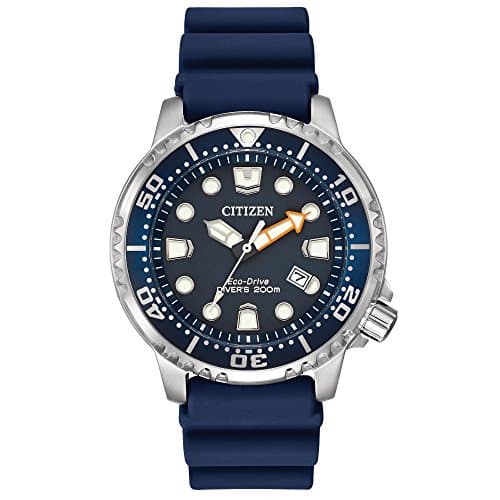
Three: a dive certification is a different and stricter claim than a pressure rating. Citizen describes the Promaster BN0151 as an ISO-certified dive watch at 200 m; Amazfit publishes 10 ATM to ISO 22810 tested by SGS plus a separate freediving certification to 45 m under EN13319 and ISO 6425. A certification names the standard and often the lab. A bare pressure number names neither.
What each rating allows
Reading across Casio's own guidance, with the markings you will actually see on a caseback:
| Marking | Pressure | What it is for |
|---|---|---|
| No marking / "water resistant" | Splash only | Rain and hand washing. Do not swim in it. |
| WATER RESIST 5BAR, 5 ATM | 5 bar | Swimming in still conditions. COROS describes its own 5 ATM watches as surface water activities, not diving. |
| WATER RESIST 10BAR, 10 ATM | 10 bar | Casio: splashes, swimming and other water-related activities, wearable with confidence in wet conditions. |
| WATER RESIST 20BAR, 200 m | 20 bar | Casio: marine activities including water skiing, surfing and snorkelling. Not suitable for extended scuba diving. |
| DIVER'S WATCH / ISO-certified | Varies, with a named standard | Scuba, within the terms of the certification. This is the only marking that means diving. |
The practical takeaway is simple and slightly counterintuitive: the gap that matters most is between 5 bar and 10 bar, not between 10 bar and 20. Going from 5 to 10 is the difference between a watch you hesitate about and a watch you forget about. Going from 10 to 20 mostly buys margin and peace of mind, unless you dive, in which case you need a certification rather than a bigger number.
Why the number is not a depth
Four things the static test does not include, each of which raises the real pressure on the seals:
- Movement. Swinging an arm through water, a dive entry, a hose stream: all produce transient pressures well above the static figure at the same depth.
- Temperature. Gaskets stiffen in cold and soften in heat, and a hot tub then cold water is the classic way to kill a seal that would survive either alone.
- Age. The rating describes a new watch. Rubber gaskets compress, dry and take on a permanent set. A twenty-year-old 200 m watch with original gaskets is not a 200 m watch.
- Operation. Pressing a button or pulling a crown underwater is how water gets past a seal that would otherwise have held. This is the actual, boring cause of most flooded watches.
The standards behind the number
Three names come up on the watches we rank, and they mean different things.
ISO 22810 is the standard for water-resistant watches in general, the ordinary 5, 10 and 20 bar kind. Amazfit cites it for the T-Rex 3's 10 ATM rating and names SGS as the third-party test house, which is unusually transparent for this market and worth crediting.
ISO 6425 is the diver's watch standard, with requirements beyond pressure: it covers things like legibility in darkness, resistance to salt water and magnetic fields, and the condensation and thermal shock tests. A watch permitted to be marked DIVER'S has met this, and a 200 m watch that is not so marked has not.
EN13319 is a European standard for diving accessories, including depth measurement, which is why it turns up alongside dive ratings on watches that measure depth: Apple cites it for the Ultra 3 at 40 m and Amazfit cites it for the T-Rex 3's freediving certification.
Garmin takes a different route on the fenix 8: rather than a bare pressure number, the release describes a 40-metre dive-rated case with leakproof metal buttons. That is a smaller number than 200 m and a bigger claim, which is exactly the point of this section.
What the watches on this site are rated for
| Watch | Rating, in the maker's words |
|---|---|
| Citizen Promaster Dive BN0151 | 200M/20Bar, ISO-certified dive watch |
| Marathon 41mm Diver's Quartz | 30 ATM |
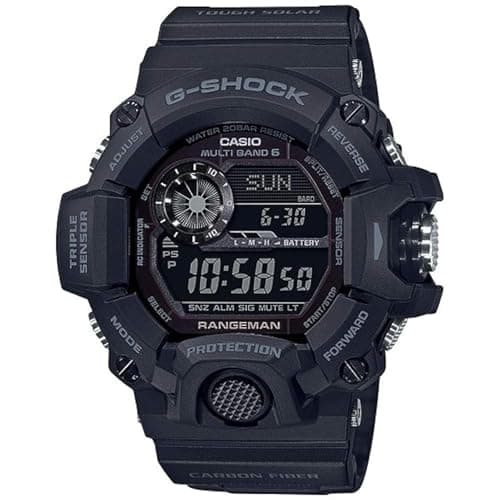
| G-Shock Rangeman GW-9400, Mudman GW-9500, Mudmaster GWG-2000 | 200 meters; shock resistant; mud resistant on the Mudman and Mudmaster |
| G-Shock DW-5600E, GA-100, GA-2100, DW-6900 | 200-meter water resistance, shock resistant |
| Luminox Original Navy SEAL 3001 | 200 meters / 660 feet / 20 ATM |
| Amazfit T-Rex 3 | 10 ATM (ISO 22810, third-party tested by SGS); freediving certification to 45 m (EN13319, ISO 6425) |
| Apple Watch Ultra 3 | Water resistance 100 m; EN13319 recreational scuba diving to 40 m |
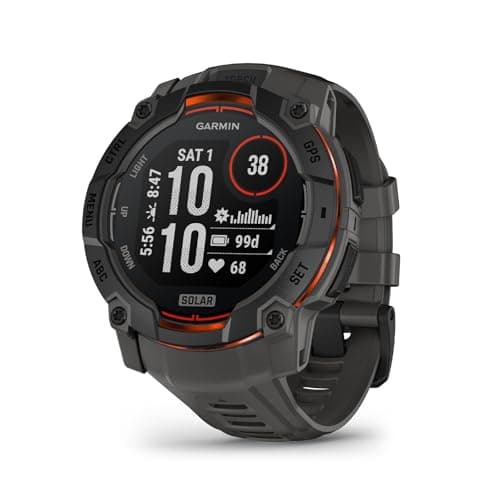
| Garmin Instinct 3 Solar, Instinct E, Instinct 2X Solar | 10 ATM |
| Garmin fenix 8, tactix 8, fenix 9 Pro | 40-meter dive-rated case; leakproof metal buttons on the fenix 8 |
| Garmin Forerunner 970, Forerunner 570 | Swim, 5 ATM |
| COROS NOMAD | 5 ATM (surface water activities, not diving) |
| Suunto Vertical 2, Vertical Titanium Solar | 100 m |
| Suunto Core Alpha | 30 m (suitable for shallow snorkeling to 10 m) |
Two patterns are worth noticing. Every Casio on this site, including the cheapest, is 200 m, which is a large part of why G-Shocks have the reputation they do. And every running watch is 5 ATM, because a running watch is designed to be rained on and swum in, not worn into surf. Choosing between those two worlds is the subject of Instinct vs Forerunner.
The picks
Our picks for this
One watch for each rating that matters
A certified dive watch, a 200 m solar Casio, the best-documented 10 ATM rating on the site, and the 10 ATM GPS watch we rank first overall.
Best solar analog watch
Citizen Promaster Dive BN0151-09L
Solar, no charger7.9/10200M/20Bar and described by Citizen as an ISO-certified dive watch, on Eco-Drive so it never needs a battery.
$337.50Amazon#ad · Price as of November 4, 2026 · Disclosure for the link to Citizen Promaster Dive BN0151-09L
Best for a decade without a charger
G-Shock Rangeman GW-9400
Solar, no charger8.7/10200 m, shock resistant, Tough Solar, with a compass, barometer, altimeter and thermometer and no charger.
$320.00Amazon#ad · Price as of November 4, 2026 · Disclosure for the link to G-Shock Rangeman GW-9400
 Stock photo
Best rugged smartwatch on a budget
Amazfit T-Rex 3
Rechargeable GPS7.0/10The one watch here that names the standard and the lab: 10 ATM to ISO 22810 tested by SGS, plus freediving certification to 45 m.
Check price · Amazon#ad · Price as of November 4, 2026 · Disclosure for the link to Amazfit T-Rex 3
Best for a decade of GPS without a charger
Garmin Instinct 3 Solar (50mm)
Solar GPS8.7/1010 ATM, built to MIL-STD-810, and the battery table that ends in unlimited with solar.
$399.99Amazon#ad · Price as of November 4, 2026 · Disclosure for the link to Garmin Instinct 3 Solar (50mm)
Keeping the rating you paid for
Five rules, all of which come straight out of how the test differs from real life.
1. Never press a button or pull a crown underwater. This is the single most common way a sealed watch floods, and it is entirely avoidable.
2. Rinse in fresh water after salt. Salt crystals dry in the button gaps and abrade the seals. Ten seconds under a tap is the highest-value maintenance habit there is.
3. Avoid hot water and sudden temperature swings. Hot tubs, saunas and hot showers are harder on gaskets than swimming is, because heat and thermal shock both work against the seal.
4. Treat gaskets as a wear part. If a watch is going to be used in water for a decade, a pressure test and reseal at the same time as a battery or cell service is cheap insurance. The service question for solar Casios is covered in G-Shock solar battery replacement.
5. Do not trust an unserviced vintage rating. A 200 m watch from 2006 with original gaskets is a splash-resistant watch until somebody proves otherwise.
Two common versions of this question have their own pages. For paddling, where the watch is submerged and pressed hundreds of times an hour, see best watch for kayaking. For the single most asked version of all, see can you swim with a G-Shock.
How we scored this
What we checked to build this ranking
Every pick here is researched against the documents that decide whether a watch lasts: the maker's own battery table read mode by mode, what the lens and case are actually made of, the water rating, whether a MIL-STD-810 line is on the record and in whose words, and how long the maker keeps updating the line. Each one is then scored on a public rubric weighted for a decade of ownership, and every figure links to where it came from.
That is why the order on this page is worth following: it is built from specs you can open yourself, and commissions never set a score or decide a pick. The rubric and its weights are published.
Questions
Frequently asked
Can you swim with a 10 ATM watch?
Yes. Casio describes 10 bar watches as equipped to withstand splashes, swimming and other water-related activities, and wearable with confidence in wet conditions. What you should not do is press buttons or pull the crown while the watch is submerged.
Does 200 m water resistance mean you can scuba dive?
No, and Casio says so directly: 20 bar allows marine activities like water skiing, surfing and snorkelling but is not suitable for extended scuba diving. Diving needs a watch certified as a diver's watch, which is a separate and stricter claim than a pressure rating.
Why is a Garmin fenix 8 only 40 metres when a G-Shock is 200?
Because they are different kinds of claim. Garmin describes a 40-metre dive-rated case with leakproof metal buttons, which is a specification about diving. A 200 m G-Shock is a static pressure rating, and Casio itself says that rating does not cover extended scuba diving. The smaller number is the bigger claim.
Is 5 ATM enough for a watch?
For running, gym work and rain, yes. For anything involving immersion, surf or a hose, no. COROS describes its own 5 ATM watches as suitable for surface water activities and not diving, and every running watch we rank is 5 ATM for the same reason. If the watch is going in the water, buy 10 ATM.
What is ISO 22810 and ISO 6425?
ISO 22810 is the standard for ordinary water-resistant watches, the 5, 10 and 20 bar kind: Amazfit cites it for the T-Rex 3 and names SGS as the test house. ISO 6425 is the diver's watch standard, which adds requirements beyond pressure such as legibility in darkness, salt-water and magnetic resistance and thermal shock. Only an ISO 6425 watch is a diver's watch.
Keep reading
Related on Bezel & Bearing
Receipts
Sources
- Casio — water resistant watches, what each rating allows (checked 2026-10-10)
- Casio — Operation Guide, module 3410 (GW-9400 Rangeman), Specifications (checked 2026-09-20)
- G-Central — G-Shock DW-5600 spec sheet (checked 2026-09-20)
- Citizen — Promaster Dive BN0151-09L product page (checked 2026-09-20)
- Amazfit — T-Rex 3 product page, Technical Specifications (checked 2026-09-20)
- Apple Support — Apple Watch Ultra 3 Tech Specs (checked 2026-09-20)
- COROS — VERTIX 2S / APEX / NOMAD specification tables (checked 2026-09-20)
- Suunto — Core Alpha Stealth product page and tech specs (checked 2026-09-20)
- Garmin — Instinct 3 Solar Series Owner's Manual, Specifications (checked 2026-09-20)
- Garmin newsroom — fenix 8 Series press release (checked 2026-09-20)
Battery, glass, case and water figures come from the maker's own owner's manuals, spec pages and press releases, linked on every product so you can open the page they came from. Prices are set by Amazon and change often, so each buy button takes you to the current one. Read the full method.