Garmin / Head to head
Garmin fenix 7 Pro vs fenix 8: the older watch still has the longer battery table
Garmin's own figures say the fenix 7 Pro Solar runs 37 days in smartwatch mode and the 47 mm fenix 8 Solar runs 21, or 28 with solar. The fenix 8 answers with sapphire, a titanium bezel, leakproof metal buttons and a dive-rated case. Which of those you need decides this.
By Mike M.Updated Researched from the maker's manuals and spec sheets
#adReader-supported: we may earn a commission if you buy through our links, at no extra cost to you. It never decides a ranking. How we rate · Disclosure
The contenders
Side by side
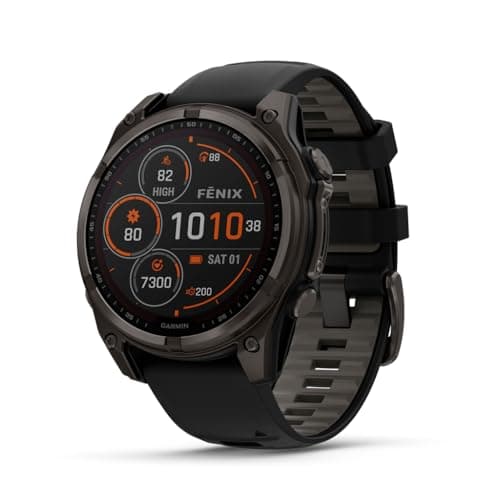
Buy this one
Garmin fenix 8 Solar (47mm, Sapphire)
Solar GPS8.4 /10Sapphire lens, titanium bezel, 40 m dive-rated case with leakproof metal buttons, TopoActive maps, and 21 days of smartwatch battery rising to 28 with solar.
$960.00Amazon#ad · Price as of November 4, 2026 · Disclosure for the link to Garmin fenix 8 Solar (47mm, Sapphire)
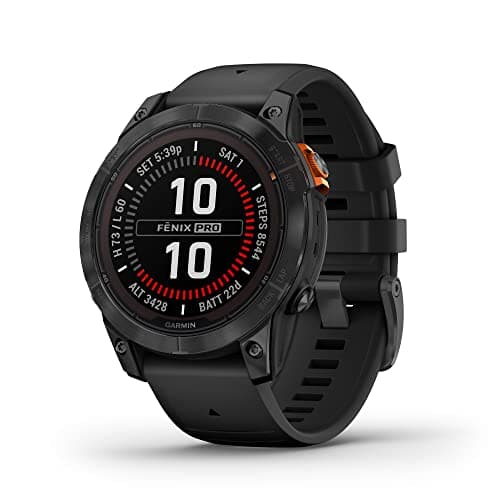
Buy this to save money
Garmin fenix 7 Pro Solar (47mm)
Solar GPS8.0 /1037 days of smartwatch battery and 139 in expedition mode, with maps and a flashlight on a steel bezel. The lens is not sapphire on standard editions.
$679.99Amazon#ad · Price as of November 4, 2026 · Disclosure for the link to Garmin fenix 7 Pro Solar (47mm)
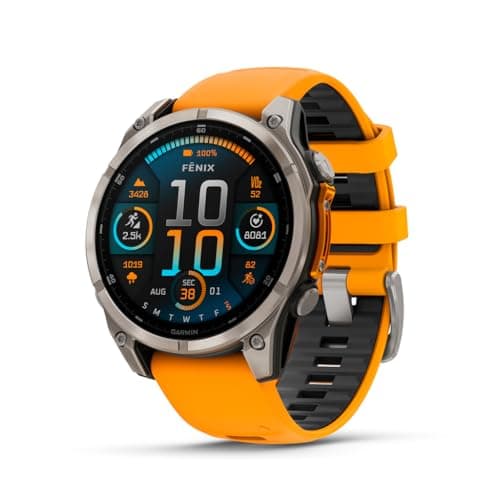
Buy this for the screen
Garmin fenix 8 AMOLED (47mm)
Rechargeable GPS7.7 /10The same sapphire and titanium build with a colour AMOLED: 16 days by gesture, 7 with the display always on.
$972.68Amazon#ad · Price as of November 4, 2026 · Disclosure for the link to Garmin fenix 8 AMOLED (47mm)
The short version
This is an unusual generational comparison, because the newer watch is not better at the thing this site cares about most. Garmin's fenix 8 release moved the line to a sealed, dive-rated case with leakproof metal buttons and made sapphire and titanium standard on the Solar editions. It also, on the 47 mm Solar, publishes a shorter smartwatch battery figure than the fenix 7 Pro Solar it replaced.
So the honest framing is not "which generation is newer". It is: do you want the watch that is harder to break, or the watch that runs longer between charges? Both are still sold, and both have a real answer.
Battery: the older watch wins
Garmin's own published tables, not our estimates:
| Mode | fenix 7 Pro Solar (47mm) | fenix 8 Solar (47mm) | fenix 8 AMOLED (47mm) |
|---|---|---|---|
| Smartwatch | Up to 37 days | Up to 21 days; 28 with solar | Up to 16 days by gesture; 7 always-on |
| GPS-only | Not stated in the Pro release | Up to 67 hours; 92 with solar | Up to 47 hours; 37 always-on |
| Max-battery GPS | Not stated in the Pro release | Up to 132 hours; 283 with solar | Up to 81 hours |
| Expedition | Up to 139 days | See the 51 mm for the longest figures | Not applicable |
Thirty-seven days against twenty-one is not a rounding difference, and 139 days in expedition mode is the kind of number that matters on a long trip where a charger is dead weight. If your use is multi-day and off-grid, the fenix 7 Pro Solar is genuinely the better instrument and it is the cheaper watch.
Materials: the newer watch wins
This is where the fenix 8 earns the upgrade, and it is not close.
- Lens. Garmin names a "scratch-resistant sapphire lens" on the fenix 8 Sapphire editions. On the fenix 7 Pro, Garmin's release does not name the standard lens material, so we do not flag the standard editions as sapphire. Only the fenix 7 Pro Sapphire Edition gets it. That matters more over a decade than any software feature, and the reasoning is in sapphire vs Gorilla Glass.
- Bezel. fenix 8 Solar sapphire editions use a titanium bezel; the fenix 7 Pro uses a steel bezel and rear cover on a fibre-reinforced polymer case. Steel takes a knock as well as titanium and weighs more; titanium is the better material on the wrist.
- Water. The fenix 8 is a 40 m dive-rated case with leakproof metal buttons. The fenix 7 Pro release states testing to U.S. military standards for thermal, shock and water resistance, which is a different and less specific claim about water.
Display: MIP, solar and AMOLED
The fenix 7 Pro line is MIP only, and Garmin calls it a next-generation MIP display. MIP is reflective, so it gets more readable as the light gets brighter and costs almost nothing to leave on. That is the direct reason behind the 37-day figure.
The fenix 8 gives you the choice. The Solar editions keep a MIP-class display under a solar lens; the AMOLED editions are brighter and better in the dark and publish 16 days by gesture or 7 with the display always on. For a buy-it-for-life buyer the solar model is the right side of that trade, and the general argument is in MIP vs AMOLED battery life.
What has not changed
Both generations give you preloaded TopoActive maps, a built-in LED flashlight with variable intensities, a red mode and a strobe, and a MIL-STD-810 line in Garmin's own words. Both run the same core navigation feature set, both take the same style of strap, and both are supported by the same app and the same Garmin service network. Nothing about the fenix 7 Pro is obsolete; it is a current product with a shorter firmware runway ahead of it.
If you want the flashlight to be the deciding feature across the whole Garmin line, that list is Garmin watches with a flashlight, and the mapping models are in Garmin watches with topo maps.
Who should buy which
Buy the fenix 8 Solar (47mm) if the watch will be scratched, submerged or struck, or if you want sapphire and titanium and the longest support runway. This is the right default for most buyers, and it is the watch we rank first in best outdoor watches for men.
Buy the fenix 7 Pro Solar if your trips are long and unplugged, if 37 days and 139 days in expedition mode solve a real problem for you, or if the price difference buys gear you need more. Accept that the standard lens is not sapphire.
Buy the fenix 8 AMOLED (47mm) if you read the screen more than you charge the watch, and you want the sapphire-and-titanium build with a colour display. Seven days always-on is a weekly charge; know that going in.
Buy neither if you want maximum battery with maps and nothing else matters. That is the Enduro 3 at up to 90 days in smartwatch mode, and it is ranked first in longest battery life GPS watches.
The decade verdict
In detail
The contenders, in full
Buy this one
Garmin fenix 8 Solar (47mm, Sapphire)
Sapphire lens, titanium bezel, 40 m dive-rated case with leakproof metal buttons, TopoActive maps, and 21 days of smartwatch battery rising to 28 with solar.
EvidenceResearched · every row sourced
| Power class | Solar GPS. A rechargeable cell topped up by a solar lens. Weeks between charges; the cell still ages like any lithium battery. |
|---|---|
| Battery (smartwatch) | Up to 21 days typical use; up to 28 days with solar |
| Battery (GPS) | Up to 67 hours GPS-only; up to 92 hours with solar |
| Battery (max GPS) | Up to 132 hours max-battery GPS; up to 283 hours with solar |
| Glass | Scratch-resistant sapphire lens (sapphire versions) |
| Bezel & case | Titanium bezel (sapphire versions); leakproof metal buttons |
| Water rating | 40-meter dive-rated case |
| MIL-STD-810 | Tested to U.S. military standards for thermal, shock and water resistance |
| Maps & GPS | TopoActive maps preloaded on sapphire versions |
How the 8.4 score breaks down
- Battery & power independence (25%)
- 8
- Durability of materials (25%)
- 10
- Serviceability & lifespan (20%)
- 7
- Field usability (15%)
- 10
- Value per decade (10%)
- 6
- Mission fit (5%)
- 8
What the spec sheet supports
- Every fenix 8 durability feature in the size most people can actually wear.
- 92 GPS hours with solar covers a long weekend of tracking with margin.
Where it falls short
- Smartwatch battery drops below a month (28 days with solar) versus the 51mm's 48.
- Same MIP-display trade-off as the 51mm.
Skip this if…
…battery days are the reason you are here; the 51mm solar is the fenix for that.
#ad · Price as of November 4, 2026 · Disclosure for the link to Garmin fenix 8 Solar (47mm, Sapphire)
Buy this to save money
Garmin fenix 7 Pro Solar (47mm)
37 days of smartwatch battery and 139 in expedition mode, with maps and a flashlight on a steel bezel. The lens is not sapphire on standard editions.
EvidenceResearched · every row sourced
| Power class | Solar GPS. A rechargeable cell topped up by a solar lens. Weeks between charges; the cell still ages like any lithium battery. |
|---|---|
| Battery (smartwatch) | Up to 37 days in smartwatch mode; up to 139 days in expedition mode |
| Bezel & case | Fiber-reinforced polymer case with a steel bezel and rear cover |
| MIL-STD-810 | Tested to U.S. military standards for thermal, shock and water resistance |
| Display | Next-generation MIP display |
| Maps & GPS | Preloaded TopoActive maps |
| Flashlight | Built-in LED flashlight with variable intensities, red safety light and strobe |
How the 8.0 score breaks down
- Battery & power independence (25%)
- 9
- Durability of materials (25%)
- 8
- Serviceability & lifespan (20%)
- 6
- Field usability (15%)
- 9
- Value per decade (10%)
- 8
- Mission fit (5%)
- 7
What the spec sheet supports
- Solar, flashlight and maps on every size, a generation before the fenix 8 made AMOLED the default.
- A steel bezel is heavier than titanium but takes a knock just as well.
Where it falls short
- Standard editions use a strengthened lens; only the Sapphire Edition gets sapphire, and Garmin's release does not name the standard lens.
- Two generations behind the current fenix 9 for firmware priority.
Skip this if…
…you want the longest firmware runway; buy the newest fenix you can afford instead.
#ad · Price as of November 4, 2026 · Disclosure for the link to Garmin fenix 7 Pro Solar (47mm)
Buy this for the screen
Garmin fenix 8 AMOLED (47mm)
The same sapphire and titanium build with a colour AMOLED: 16 days by gesture, 7 with the display always on.
EvidenceResearched · every row sourced
| Power class | Rechargeable GPS. A rechargeable lithium cell charged from a cable. Days to a few weeks per charge; the cell ages with every cycle. |
|---|---|
| Battery (smartwatch) | Up to 16 days (gesture); up to 7 days always-on |
| Battery (GPS) | Up to 47 hours GPS-only (gesture); 37 hours always-on |
| Battery (max GPS) | Up to 81 hours max-battery GPS |
| Glass | Scratch-resistant sapphire lens (sapphire versions) |
| Bezel & case | Titanium bezel (sapphire versions); leakproof metal buttons; sensor guard |
| Water rating | 40-meter dive-rated case |
| MIL-STD-810 | Tested to U.S. military standards for thermal, shock and water resistance |
| Flashlight | Built-in LED flashlight with variable intensities, red light and strobe |
How the 7.7 score breaks down
- Battery & power independence (25%)
- 6
- Durability of materials (25%)
- 10
- Serviceability & lifespan (20%)
- 7
- Field usability (15%)
- 9
- Value per decade (10%)
- 6
- Mission fit (5%)
- 7
What the spec sheet supports
- Same sapphire/titanium/40 m case as the solar model, with the screen that is easiest to read at night.
- Maps, speaker and mic, flashlight.
Where it falls short
- No solar; 16 days is the ceiling and always-on cuts it to a week.
- Now a generation behind the fenix 9 (August 2026), which doubled map storage and brightened the AMOLED.
Skip this if…
…you charge things reluctantly; the solar 51mm is the fenix 8 built for that person.
#ad · Price as of November 4, 2026 · Disclosure for the link to Garmin fenix 8 AMOLED (47mm)
How we scored this
What we checked to build this ranking
Every pick here is researched against the documents that decide whether a watch lasts: the maker's own battery table read mode by mode, what the lens and case are actually made of, the water rating, whether a MIL-STD-810 line is on the record and in whose words, and how long the maker keeps updating the line. Each one is then scored on a public rubric weighted for a decade of ownership, and every figure links to where it came from.
That is why the order on this page is worth following: it is built from specs you can open yourself, and commissions never set a score or decide a pick. The rubric and its weights are published.
Questions
Frequently asked
Is the fenix 8 better than the fenix 7 Pro?
On materials and sealing, clearly: the fenix 8 Solar sapphire editions give a sapphire lens, a titanium bezel, leakproof metal buttons and a 40 m dive-rated case. On battery, no: Garmin states up to 37 days of smartwatch use and 139 days in expedition mode for the fenix 7 Pro Solar, against 21 days, or 28 with solar, for the 47 mm fenix 8 Solar.
Does the fenix 7 Pro have sapphire?
Only the Sapphire Edition. Garmin's fenix 7 Pro release does not name the lens material on standard editions, so we do not flag them as sapphire. Garmin does name "scratch-resistant sapphire lens" on the fenix 8 Sapphire editions, which is why the fenix 8 carries the flag on this site.
Why does the fenix 8 have a shorter battery life than the fenix 7 Pro?
Because it does more and seals differently. Garmin's fenix 8 release describes a dive-rated case with leakproof metal buttons, a speaker and microphone and a brighter display stack, all of which cost power and internal volume. If you want the new case with the long table, the 51 mm fenix 8 Solar states up to 30 days of smartwatch use and 48 with solar.
Is the fenix 7 Pro still worth buying?
Yes, for a specific buyer: long, unplugged trips where 37 days of smartwatch battery and 139 days in expedition mode matter, and where maps and a flashlight are enough. It is still a current product with the same MIL-STD-810 line Garmin uses on the fenix 8. The compromise is the unnamed standard lens and a shorter firmware runway.
fenix 8 Solar or fenix 8 AMOLED?
Solar if you want weeks between charges and a display that gets easier to read in bright sun. AMOLED if you read the screen constantly and accept 16 days by gesture or 7 always-on. Both get sapphire and a titanium bezel on the sapphire editions. The detail is in fenix 8 battery life.
Keep reading
Related on Bezel & Bearing
Receipts
Sources
- Garmin newsroom — fenix 7 Pro Series press release (checked 2026-09-20)
- Garmin newsroom — fenix 8 Series press release (checked 2026-09-20)
- Garmin — fenix 8 Series Owner's Manual, Battery Information (checked 2026-09-20)
Battery, glass, case and water figures come from the maker's own owner's manuals, spec pages and press releases, linked on every product so you can open the page they came from. Prices are set by Amazon and change often, so each buy button takes you to the current one. Read the full method.