Built to Last / Guide
Garmin solar, explained: what the lens really does, why it sometimes stops charging in the sun, and whether it is worth paying for
Garmin sells 'unlimited battery life' on a footnote almost nobody reads. This guide reads it, along with the manual pages on solar charging, and turns them into the three questions buyers actually ask: how much does solar add, why is my watch not charging in the sun, and is the solar model worth it over the AMOLED one.
By Mike M.Updated Spec-sheet researched, not worn by us
#adReader-supported: we may earn a commission if you buy through our links, at no extra cost to you. It never decides a ranking. How we rate · Disclosure
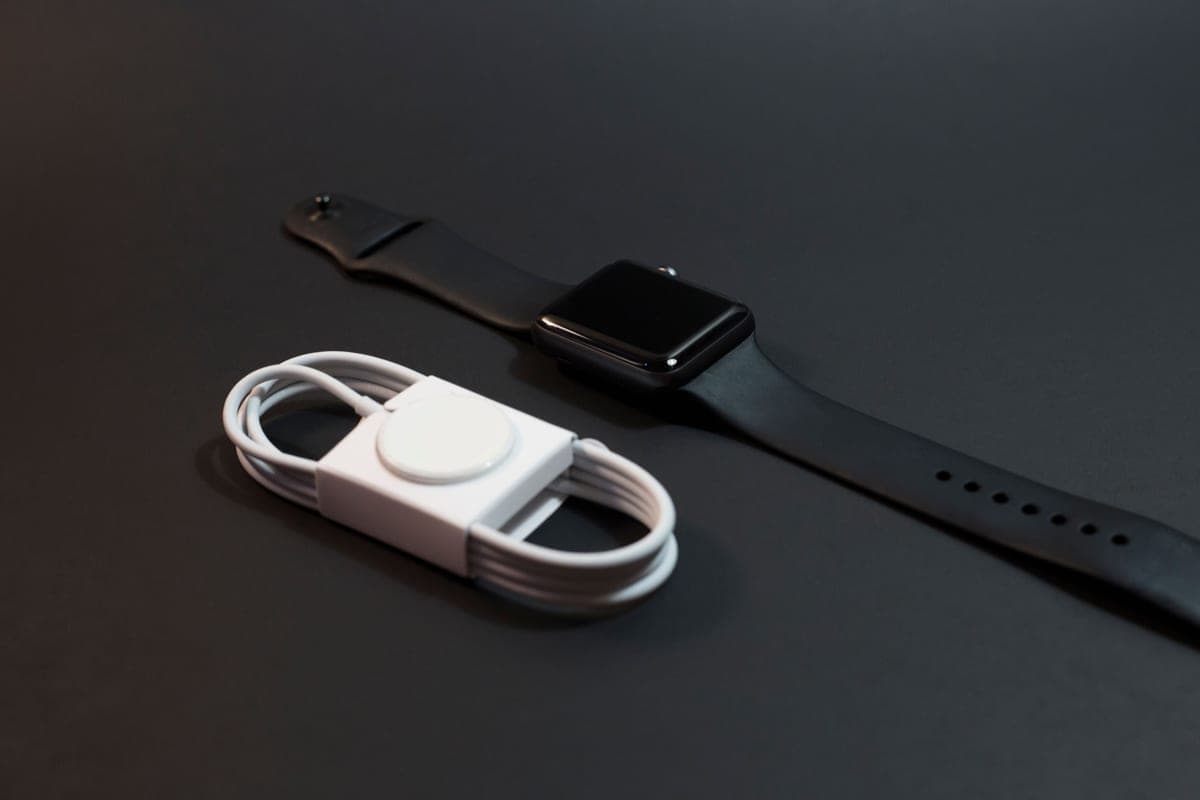
What a Garmin solar lens actually is
Garmin describes the Instinct 3 Solar's power system as a "rechargeable, built-in lithium-ion battery" with a solar charging display, and describes solar charging as a capability that "allows you to charge your watch while you use it." That is the whole claim, and it is worth reading slowly. The cell is the same kind of sealed lithium cell as in the AMOLED model. The solar layer sits in or under the lens and feeds that cell a trickle of current when light hits it. It is a top-up, not a power source; the watch still ships with a cable, still has a charging port, and still lists a USB charging temperature range in its specifications.
This is a different thing from Casio's Tough Solar, where a panel under the dial runs a module that draws microamps and the cell is a watchmaker-serviceable part. The three kinds of "solar" are laid out on how long solar watches last; this page is about the Garmin kind only.
The 50,000-lux footnote, decoded
Every Garmin solar battery table carries the same footnotes, and the whole solar promise lives in them. On the Instinct 3 Solar and fenix 8 battery pages they read, in Garmin's words:
- "Assuming all-day wear with 3 hours per day outside in 50,000 lux conditions" (the smartwatch-mode solar figure).
- "Assuming use outside in 50,000 lux conditions" (the GPS-mode solar figures).
The practical rule this site uses everywhere: plan on the non-solar column and treat the solar column as margin. When the assumption is met, the margin is large; when it is not, the watch is simply the non-solar watch with a slightly more expensive lens.
How much solar adds, model by model
Garmin's own tables, both columns, for the solar watches on this site:
| Watch | Smartwatch mode | Smartwatch with solar | GPS mode | GPS with solar |
|---|---|---|---|---|
| Instinct 3 Solar 50mm | 40 days | Unlimited | 60 h | 260 h |
| Instinct 3 Solar 45mm | 28 days | Unlimited | 40 h | 130 h |
| Instinct 2 Solar 45mm | 40 days | Unlimited | 60 h | 145 h |
| fenix 8 Solar 51mm | 30 days | 48 days | 95 h | 149 h |
| fenix 8 Solar 47mm | 21 days | 28 days | 67 h | 92 h |
| Enduro 3 | Up to 90 days (Garmin gives one figure) | 120 h multi-band | 320 h | |
| fenix 7 Pro Solar | 37 days | Not separately stated in the release | — | — |
Two patterns fall out of the table. First, solar does more for a low-draw watch: the Instinct's solar charging display draws so little that the lens can keep up with it, which is why Garmin writes "unlimited," while the fenix 8's larger always-on display gets a 60 percent extension rather than an infinite one. Second, the GPS gain is real but finite everywhere: 60 to 260 hours on the Instinct is a lot of hunting days, and 95 to 149 hours on the fenix is a week of daily tracking instead of four days. The full per-mode tables, including expedition and max-battery modes, are on Instinct 3 battery life and fenix 8 battery life.
Why a solar Garmin stops charging in the sun
"Garmin solar watch not charging in sun" is one of the most-typed questions about these watches, and the Instinct 3 Solar manual answers most of it in four lines on its "Tips for Solar Charging" page. In Garmin's words:
- "The watch does not solar charge when connected to an external power source or when the battery is full."
- "The watch can protect its battery from extreme temperatures and can limit or stop charging automatically."
- "When you are wearing the watch, avoid covering the face with your sleeve."
- "Regular outdoor use in sunny conditions can extend your battery life."
So, in order of how often each one is the answer:
- The battery is full or nearly full. A watch at 100 percent shows no solar gain because there is nowhere for the charge to go. Garmin's manual says so directly. If you charged by cable last night and left the watch on the dash today, nothing will appear to happen, and nothing is wrong.
- It is hot. A black watch on a dashboard or a wrist in July sun heats up fast, and the manual says the watch protects the cell from extreme temperatures by limiting or stopping charging. The specifications list a USB charging range of 0°C to 45°C for the Instinct 3; Garmin does not publish the solar cut-off, so we will not state one, but a watch that is hot to the touch is a watch that may have stopped charging on purpose.
- The lens is not seeing 50,000 lux. A sleeve, a jacket cuff, a window, shade or a canopy cuts the input far below the footnote's assumption. The Instinct 3 has a solar intensity glance that, per the manual, "displays a graph of the intensity of solar input for the last 6 hours, and the average for the previous week." Open it before deciding the watch is broken; a flat line under a sleeve is the lens working as designed.
- You are reading the wrong number. The solar glance shows intensity, not charge added. A strong reading with a battery percentage that barely moves during a GPS activity is normal: a GPS chip draws more than the lens supplies, which is exactly why the GPS-with-solar figure is 260 hours and not "unlimited."
Is Garmin solar worth it?
On this site the answer is decided by one question: how many charge cycles will the cell see in a decade? Every lithium cell loses capacity with cycles, and a solar watch that meets the footnote cycles its cell a handful of times a year while the AMOLED version of the same watch cycles it every three to four weeks. That is the argument on how long Garmin watches last, and it is why every Garmin near the top of the site's rankings is a solar one.
| Pair | Solar model | AMOLED model | What solar buys, per Garmin |
|---|---|---|---|
| Instinct 3, 50mm | 40 days; unlimited with solar | 24 days gesture; 9 days always-on | A screen that never needs the cable if you are outside; no AMOLED color |
| fenix 8, 47mm | 21 days; 28 with solar | 16 days gesture; 7 days always-on | Roughly double the days at the same size; a solar charging display instead of AMOLED |
So: worth it if you are outside most days, you keep watches for years, and you can live with Garmin's solar charging display instead of an AMOLED one. Not worth it if the watch will live under a sleeve at a desk, in which case the AMOLED figures are the real figures and the screen is nicer. The head-to-head is on Instinct 3 Solar vs AMOLED, and the fenix version is inside the fenix 8 Solar review.
The picks
Our picks for this
Three solar Garmins, and the AMOLED to compare
The watch where solar means unlimited, the mapping watch where it means 48 days, the endurance watch where it means 320 GPS hours, and the AMOLED Instinct for anyone deciding between screens.
 Stock photo
Best for a decade of GPS without a charger
Garmin Instinct 3 Solar (50mm)
Solar GPS8.7/10Unlimited in smartwatch mode with solar, 260 GPS hours with solar; the low-draw screen that makes solar work.
Check price · Amazon#ad · Price set by Amazon · Disclosure for the link to Garmin Instinct 3 Solar (50mm)
- Stock photo
Best all-around rugged GPS watch with maps
Garmin fenix 8 Solar (51mm, Sapphire)
Solar GPS8.7/1030 days, 48 with solar; 95 GPS hours, 149 with solar; sapphire, titanium, maps, a dive rating.
Check price · Amazon#ad · Price set by Amazon · Disclosure for the link to Garmin fenix 8 Solar (51mm, Sapphire)
- Stock photo
Best battery life with maps
Garmin Enduro 3
Solar GPS8.5/1090 days in smartwatch mode and 320 GPS hours with solar at 63 g, with topo maps.
Check price · Amazon#ad · Price set by Amazon · Disclosure for the link to Garmin Enduro 3
- Stock photo
Best Instinct for readability at night
Garmin Instinct 3 AMOLED (50mm)
Rechargeable GPS7.4/10The same watch without the lens: 24 days on gesture, 9 always-on. Buy it for the screen, not the decade.
Check price · Amazon#ad · Price set by Amazon · Disclosure for the link to Garmin Instinct 3 AMOLED (50mm)
How to get more out of it
- Wear it outside the cuff. Garmin's first tip is not to cover the face with a sleeve. A jacket over the lens turns a solar watch into a plain one.
- Charge it to about 80 percent by cable, not 100, before a sunny trip if you want to see solar do something; a full cell cannot accept solar charge, per the manual. On a long trip the point is moot, because GPS will make room.
- Keep it out of the hot car. The watch pauses charging to protect the cell in extreme heat; a dashboard is the worst place to "charge it in the sun."
- Watch the solar intensity glance for a week, then believe its average, not the footnote. If your week averages low, plan on the non-solar column.
- Use Battery Saver and Power Modes. The Power Manager menu (hold MENU, then Power Manager on the Instinct 3) sets watch-mode and activity-mode savings and shows battery estimates in days or hours; a lower draw is what lets a modest solar input keep up.
- Turn off always-on display on an AMOLED. On the fenix 8 AMOLED 47mm, always-on cuts the smartwatch figure from 16 days to 7. Garmin quotes the fenix 8 Solar 51mm's 48 days with an always-on display already, so the solar models do not carry this penalty, which is part of why they are here.
If the goal is a watch that never meets a charger at all, that is a different technology and a different page: best solar watches ranks the Garmins beside the Casio Tough Solar models that Casio rates for months in the dark with no cable in the box.
How we scored this
Watches we claim to have worn or tested: 0
Plenty of sites say they took every watch up a mountain. We didn't, and we say so. What we do instead: read the maker's own battery table mode by mode, check what the lens and case are actually made of, note the water rating and whether a MIL-STD-810 claim exists, ask how long the maker keeps updating the line, and score every pick on a public rubric weighted for a decade of ownership. Every figure links to where it came from.
Scores are editorial judgments from that documented research, not test results. Commissions never set a score or decide a pick. The rubric and its weights are published.
Questions
Frequently asked
Does Garmin solar really give unlimited battery life?
Under Garmin's stated condition only: all-day wear with three hours a day outside at 50,000 lux, in smartwatch mode. The Instinct 3 Solar is rated 40 days without that light and unlimited with it. GPS modes are rated in hours (60, or 260 with solar) and are never unlimited.
Why is my Garmin solar watch not charging in the sun?
Garmin's manual gives the usual reasons: the watch does not solar charge when the battery is full or when it is plugged in, it can limit or stop charging to protect the battery from extreme temperatures, and a sleeve over the face blocks the input. Check the solar intensity glance, which graphs the last six hours of input, before assuming a fault.
Is the Garmin fenix 8 Solar worth it over the AMOLED?
If you are outdoors most days and keep a watch for years, yes: Garmin rates the 47mm Solar at 21 days (28 with solar) against 16 days on gesture or 7 always-on for the 47mm AMOLED, and fewer charge cycles mean a slower-aging cell. If the watch lives indoors, the AMOLED's figures are the real figures and its screen is the better one.
Do solar Garmin watches still need to be charged?
Yes. The solar layer tops up a sealed lithium cell; the watch ships with a cable and lists a USB charging temperature range of 0°C to 45°C. Only a low-draw watch in daily direct sun, like the Instinct 3 Solar under Garmin's footnote, can run indefinitely without it.
Keep reading
Related on Bezel & Bearing
Receipts
Sources
- Garmin — Instinct 3 Solar Series Owner's Manual, Solar Charging and Tips for Solar Charging (checked 2026-09-21)
- Garmin — Instinct 3 Solar Series Owner's Manual, Battery Life Information (checked 2026-09-20)
- Garmin — Instinct 3 Solar Series Owner's Manual, Specifications (checked 2026-09-20)
- Garmin — Instinct 3 Solar Series Owner's Manual, Glances (sunrise/sunset, moon phase, ABC) (checked 2026-09-20)
- Garmin — Instinct 3 Solar Series Owner's Manual, Power Manager Settings (checked 2026-09-21)
- Garmin newsroom — Instinct 3 Series press release (checked 2026-09-20)
- Garmin newsroom — fenix 8 Series press release (checked 2026-09-20)
- Garmin — Instinct 3 AMOLED Series Owner's Manual, Battery Life Information (checked 2026-09-20)
- Garmin — Instinct 2 Series Owner's Manual, Battery Life Information (checked 2026-09-20)
- Garmin — fenix 8 Series Owner's Manual, Battery Information (checked 2026-09-20)
- Garmin newsroom — Enduro 3 press release (checked 2026-09-20)
- Garmin newsroom — fenix 7 Pro Series press release (checked 2026-09-20)
- Casio — Operation Guide, module 3410 (GW-9400 Rangeman), Specifications (checked 2026-09-20)
We don't own or wear-test these watches and we don't pretend to. Battery, glass, case and water figures come from the maker's own owner's manuals, spec pages and press releases (linked on every product), and where a figure isn't published we say so. Prices are set by Amazon and change often, so we don't print them. Read the full method.