Tactical / The rankings
The best watches for search and rescue: satellite messaging, grid coordinates and a battery that lasts the callout
A SAR watch is a backup navigation and communication system, not a fitness tracker. It has to work at hour thirty of a search, in the dark, with gloves on, after the phone died.
By Mike M.Updated Researched from the maker's manuals and spec sheets
#adReader-supported: we may earn a commission if you buy through our links, at no extra cost to you. It never decides a ranking. How we rate · Disclosure
Quick picks
The rankings at a glance
| # | Product | Best for | Score | Price |
|---|---|---|---|---|
| 1 | 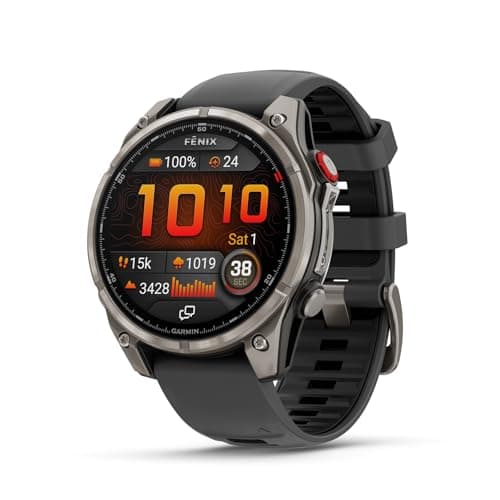 Garmin fenix 8 Pro – AMOLED (51mm) inReach satellite messaging, check-ins and SOS plus LTE on the wrist, with 27 days of smartwatch battery and 78 GPS hours. Subscription required. | Best for SAR overallRechargeable GPS | 7.9 /10 | $1,179.65Amazon |
| 2 | 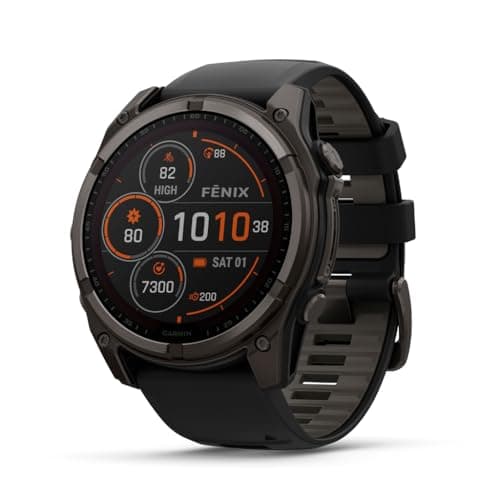 Garmin fenix 8 Solar (51mm, Sapphire) Preloaded maps, sapphire, a titanium bezel, 40 m dive-rated, and 48 days of smartwatch battery with solar plus 149 GPS hours. | Best without a subscriptionSolar GPS | 8.7 /10 | $1,092.78Amazon |
| 3 | 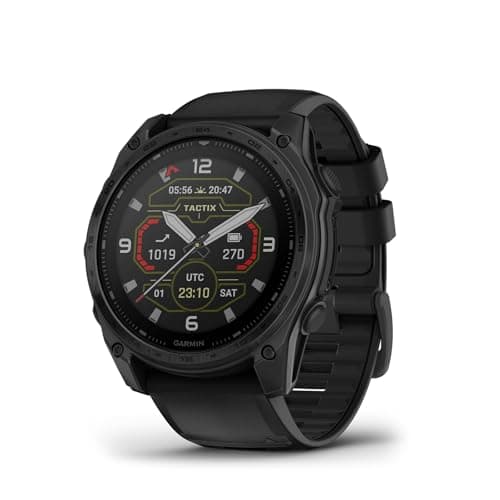 Garmin tactix 8 – Solar (51mm) A multi-LED flashlight with a green light, Stealth Mode, Night Vision Goggle mode and 48 days of smartwatch battery with always-on display. | Best for night operationsSolar GPS | 8.7 /10 | $1,399.99Amazon |
| 4 | 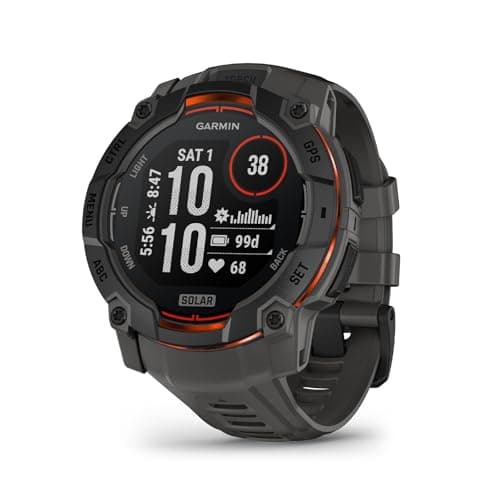 Garmin Instinct 3 Solar (50mm) Unlimited smartwatch battery with sun, 260 GPS hours with solar, a red-mode flashlight, 10 ATM and a MIL-STD-810 build. No maps. | Best value for volunteersSolar GPS | 8.7 /10 | $399.99Amazon |
| 5 | 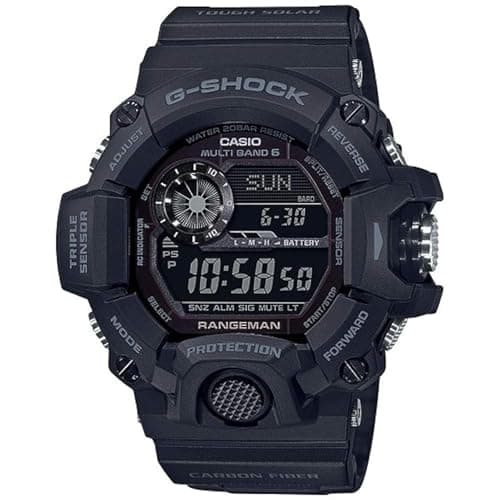 G-Shock Rangeman GW-9400 200 m with a barometer, altimeter, thermometer and radio time calibration, on Tough Solar with about eight months of reserve in the dark. | Best backup watchSolar, no charger | 8.7 /10 | $320.00Amazon |
#ad · Prices come live from Amazon, last checked November 4, 2026. Scores are ours, built from the makers' manuals, battery tables and spec pages. Product photos come from Amazon; anything still on a stock frame is labelled on its card. Tap a row for the full write-up.
The direct answer
Search and rescue is the one use case on this site where a watch is genuinely safety equipment rather than a convenience, and it changes the ranking. Training features are worth nothing. Four things are worth everything: a way to call for help when there is no cell signal, a map and a grid reference, a battery that is still there at hour thirty, and a light you can keep off your night vision.
Only one watch answers all four, and the catch is a subscription.
What a SAR watch has to do
In the order a search actually demands them:
- Report a position precisely. Every Garmin here gives GPS position, and the tactix 8 is the one with the tactical coordinate and ballistics toolset. On a callout you are relaying a location to a command post, and a watch is the fastest way to read one without taking a glove off and waking a phone.
- Navigate back out. A breadcrumb track back to the vehicle is the minimum. A map is better, and in dense cover or fog it is the difference between a controlled exit and a second search.
- Survive the callout. Searches run long and unplanned. A watch that dies at hour twelve is a liability.
- Not blind you. A red or green light preserves dark adaptation; white light costs the whole team twenty minutes.
- Work in gloves and wet. Physical buttons, a sealed case, and a lens that survives being dragged through brush.
Satellite SOS on the wrist
This is the feature that makes the fenix 8 Pro the pick. Garmin specifies inReach satellite messaging, location check-ins and SOS, plus LTE voice and messages, with an active subscription required. That is two-way messaging, not a one-way beacon, and it works where there is no cellular coverage at all.
For a SAR team member that is a genuine capability change: a check-in from a search segment with no signal, a two-way message to command about what you have found, and an SOS if the rescuer becomes the casualty. Garmin also publishes the battery cost of using it: 78 GPS-only hours drops to 21 hours with LTE LiveTrack running, and that figure is worth knowing before you plan around it.
Two honest caveats, both of which come from Garmin's own material. The subscription is not optional and coverage is not global. And if your team already issues inReach handhelds or you carry a phone with satellite SOS, you are paying twice for the same rescue — in which case the fenix 8 Solar is the better buy and the money goes further.
Battery over a long callout
Searches are not planned activities, which is why this section matters more here than on any other page except best watch for deployment.
| Watch | Smartwatch mode | GPS mode |
|---|---|---|
| Garmin Instinct 3 Solar (50mm) | Up to 40 days; unlimited with solar | Up to 60 h GPS-only; up to 260 h with solar |
| Garmin fenix 8 Solar (51mm) | Up to 30 days; up to 48 with solar | Up to 95 h GPS-only; up to 149 h with solar |
| Garmin tactix 8 Solar (51mm) | Up to 48 days with always-on display | fenix 8 Solar 51 mm table |
| Garmin fenix 8 Pro (AMOLED, 51mm) | Up to 27 days gesture; 15 always-on; 34 battery saver | Up to 78 h GPS-only; 21 h with LTE LiveTrack |
| G-Shock Rangeman GW-9400 | Tough Solar; about 8 months of reserve with no light | No GPS |
The pattern is clear. The solar models win the endurance argument outright, because a watch worn outdoors on a daytime search is charging while it works. The fenix 8 Pro buys satellite capability with battery, and that is a defensible trade for the person who needs it.
One practical consequence: a SAR watch should be kept charged and ready rather than charged on the way to a callout. A solar Instinct or fenix in a go-bag with a window is effectively always full. That is what solar is really for, and it is explained in how to charge a solar watch.
The picks, side by side
The fenix 8 Pro leads on capability: inReach satellite SOS and messaging, LTE, a sapphire lens and titanium bezel, leakproof metal buttons, a metal sensor guard, 10 ATM with a 4 ATM EN 13319 dive rating, and an operating range Garmin states as -20 to 45 C. It is the most expensive watch on this site and the only one with an ongoing cost.
The fenix 8 Solar 51 mm is the best SAR watch with no subscription: preloaded TopoActive maps, sapphire, a titanium bezel, a 40 m dive-rated case, a flashlight with a red mode and strobe, and 48 days of smartwatch battery with solar against 149 GPS hours with solar.
The tactix 8 Solar is the pick for teams that work at night or alongside agencies: a multi-LED flashlight with a white or green light, Stealth Mode, Night Vision Goggle mode, Jumpmaster and the Applied Ballistics solver, on the same sapphire and titanium construction with a 40 m dive rating. Up to 48 days of smartwatch battery with the display always on is the standout figure. It is reviewed in full in the tactix 8 review.
The Instinct 3 Solar is the volunteer's answer and a very good one: unlimited smartwatch battery with sun, 260 GPS hours with solar, a flashlight with variable intensities and a red mode, 10 ATM, built to MIL-STD-810 for thermal and shock resistance, and sunrise, sunset and civil twilight from GPS position. No maps and no sapphire for a fraction of the flagship price.
The Rangeman GW-9400 is the backup: 200 metres, a barometer and altimeter for weather and terrain, a thermometer, Multi-Band 6 radio time calibration so the whole team can be on the same minute without a phone, and Tough Solar with about eight months of reserve. It is the watch that cannot run out.
Light discipline and the flashlight
The wrist flashlight is the most underrated feature on a modern outdoor watch, and on a night search it is used constantly: for a map, a radio, a knot, a casualty card, a foot placement. Having it on the wrist rather than in a pocket is the entire point.
What matters is the colour. Garmin's flashlight on the fenix 8, Instinct 3 and Enduro has variable intensities, a red light and a strobe. Red preserves your dark adaptation and does not destroy anyone else's. The strobe is a locator. The tactix 8 goes further with a white or green light, plus Stealth Mode and a Night Vision Goggle mode for teams working with NVGs.
The night-vision and light-discipline features across the site are collected in best tactical smartwatch, and the always-on-illumination alternatives are in tritium vs lume.
The backup watch argument
Most experienced SAR people carry two timepieces, and it is not superstition. The failure modes are different: a GPS watch fails by running out of power or by a software fault, and a solar Casio fails essentially never.
For 93 grams, a Rangeman GW-9400 in a pack pocket gives you radio-synchronised time, a barometer, an altimeter and a 200-metre case that will still be working when everything with a firmware version has stopped. On a team where times on a casualty card have to agree, Multi-Band 6 calibration is a genuinely useful detail.
The decade pick
In detail
The picks, in full
Rank 1
Best for SAR overall
Garmin fenix 8 Pro – AMOLED (51mm)
inReach satellite messaging, check-ins and SOS plus LTE on the wrist, with 27 days of smartwatch battery and 78 GPS hours. Subscription required.
EvidenceResearched · every row sourced
| Power class | Rechargeable GPS. A rechargeable lithium cell charged from a cable. Days to a few weeks per charge; the cell ages with every cycle. |
|---|---|
| Battery (smartwatch) | Up to 27 days with gesture (15 days always-on); up to 34 days in battery saver watch mode |
| Battery (GPS) | Up to 78 hours GPS-only (56 always-on); 60 hours all satellite systems; 53 hours all systems plus multi-band; 21 hours with LTE LiveTrack |
| Battery (max GPS) | Up to 123 hours max-battery GPS; up to 24 days expedition GPS |
| Glass | Sapphire lens and titanium bezel (fenix 8 sapphire construction) |
| Bezel & case | Titanium bezel; leakproof metal buttons; metal sensor guard cover |
| Water rating | 10 ATM; 4 ATM Dive (EN 13319) |
| Sensors | inReach satellite messaging, location check-ins and SOS; LTE voice and messages; active subscription required |
| Flashlight | Integrated LED flashlight |
| Operating temp | Operating and storage -20° to 45°C (-4° to 113°F); charging 0° to 45°C |
How the 7.9 score breaks down
- Battery & power independence (25%)
- 7
- Durability of materials (25%)
- 10
- Serviceability & lifespan (20%)
- 6
- Field usability (15%)
- 10
- Value per decade (10%)
- 5
- Mission fit (5%)
- 9
What the spec sheet supports
- Two-way satellite messaging and SOS without carrying a separate inReach.
- 27 days of smartwatch battery is unusual for a watch with a cellular modem.
Where it falls short
- The satellite and LTE features need an active subscription, and coverage is not global.
- The MicroLED version drops to 10 days; the AMOLED is the one to buy for battery.
Skip this if…
…you already carry an inReach or a phone with satellite SOS; you are paying twice for the same rescue.
#ad · Price as of November 4, 2026 · Disclosure for the link to Garmin fenix 8 Pro – AMOLED (51mm)
Rank 2
Best without a subscription
Garmin fenix 8 Solar (51mm, Sapphire)
Preloaded maps, sapphire, a titanium bezel, 40 m dive-rated, and 48 days of smartwatch battery with solar plus 149 GPS hours.
EvidenceResearched · every row sourced
| Power class | Solar GPS. A rechargeable cell topped up by a solar lens. Weeks between charges; the cell still ages like any lithium battery. |
|---|---|
| Battery (smartwatch) | Up to 30 days typical use; up to 48 days with solar |
| Battery (GPS) | Up to 95 hours GPS-only; up to 149 hours with solar |
| Battery (max GPS) | Up to 186 hours max-battery GPS; up to 653 hours with solar |
| Battery (solar) | Expedition GPS mode up to 50 days; up to 118 days with solar |
| Glass | Scratch-resistant sapphire lens (sapphire versions) |
| Bezel & case | Titanium bezel (sapphire versions); leakproof metal buttons; sensor guard |
| Water rating | 40-meter dive-rated case |
| MIL-STD-810 | Tested to U.S. military standards for thermal, shock and water resistance |
| Maps & GPS | TopoActive maps preloaded on sapphire versions |
| Flashlight | Built-in LED flashlight with variable intensities, red light and strobe |
How the 8.7 score breaks down
- Battery & power independence (25%)
- 9
- Durability of materials (25%)
- 10
- Serviceability & lifespan (20%)
- 7
- Field usability (15%)
- 10
- Value per decade (10%)
- 6
- Mission fit (5%)
- 8
What the spec sheet supports
- Sapphire, titanium and leakproof metal buttons on a case Garmin dive-rates to 40 m.
- 653 hours of max-battery GPS with solar is the longest figure in Garmin's fenix 8 table.
- Preloaded topo maps, a speaker and mic, and a flashlight.
Where it falls short
- A MIP display in a world of AMOLEDs; that is also why the battery lasts.
- The fenix 9 Pro (August 2026) now sits above it in the line, with a titanium case and solar on select models.
- Big: 51mm is a lot of watch under a sleeve.
Skip this if…
…you have never used the maps on a watch; the Instinct 3 Solar gives you the battery for half the money.
#ad · Price as of November 4, 2026 · Disclosure for the link to Garmin fenix 8 Solar (51mm, Sapphire)
Rank 3
Best for night operations
Garmin tactix 8 – Solar (51mm)
A multi-LED flashlight with a green light, Stealth Mode, Night Vision Goggle mode and 48 days of smartwatch battery with always-on display.
EvidenceResearched · every row sourced
| Power class | Solar GPS. A rechargeable cell topped up by a solar lens. Weeks between charges; the cell still ages like any lithium battery. |
|---|---|
| Battery (smartwatch) | Up to 48 days in smartwatch mode with always-on display (51mm Solar) |
| Glass | Scratch-resistant sapphire lens |
| Bezel & case | Titanium bezel; leakproof buttons |
| Water rating | 40-meter dive rating with leakproof buttons |
| MIL-STD-810 | Built to a U.S. military standard (MIL-STD-810) for thermal, shock and water resistance |
| Sensors | Stealth Mode, Night Vision Goggle mode, Jumpmaster (HAHO, HALO, static), Applied Ballistics Ultralight solver |
| Flashlight | Multi-LED flashlight with white or green light |
How the 8.7 score breaks down
- Battery & power independence (25%)
- 9
- Durability of materials (25%)
- 10
- Serviceability & lifespan (20%)
- 7
- Field usability (15%)
- 10
- Value per decade (10%)
- 5
- Mission fit (5%)
- 10
What the spec sheet supports
- The only watch here with sapphire, titanium, a MIL-STD claim, a dive rating and the tactical software in one case.
- Preloaded Applied Ballistics solver, unlike the Instinct 3 Tactical's paid unlock.
- 48 days in smartwatch mode on the solar model.
Where it falls short
- Garmin positions it at the top of its tactical line; the Instinct 3 Tactical does the light-discipline features for far less.
- A big 51mm watch.
Skip this if…
…you want the tactical features without the fenix price; the Instinct 3 Solar Tactical is the honest alternative.
#ad · Price as of November 4, 2026 · Disclosure for the link to Garmin tactix 8 – Solar (51mm)
Rank 4
Best value for volunteers
Garmin Instinct 3 Solar (50mm)
Unlimited smartwatch battery with sun, 260 GPS hours with solar, a red-mode flashlight, 10 ATM and a MIL-STD-810 build. No maps.
EvidenceResearched · every row sourced
How the 8.7 score breaks down
- Battery & power independence (25%)
- 10
- Durability of materials (25%)
- 8
- Serviceability & lifespan (20%)
- 7
- Field usability (15%)
- 9
- Value per decade (10%)
- 10
- Mission fit (5%)
- 8
What the spec sheet supports
- Garmin's own table shows the 50mm solar model doubling the 45mm in GPS-with-solar hours (260 vs 130).
- Physical buttons, a monochrome display readable in full sun, and a flashlight with a red mode.
- 10 ATM rating and a MIL-STD 810 claim on a watch that costs less than half a fenix.
Where it falls short
- No maps: it navigates breadcrumb trails and waypoints, not topo maps.
- The solar figures assume three hours a day at 50,000 lux, which is midday sun, not a sleeve.
- Garmin does not name the lens material; treat it as strengthened glass, not sapphire.
Skip this if…
…you need on-wrist topo maps, or you wear long sleeves and work indoors, where the solar math never happens.
#ad · Price as of November 4, 2026 · Disclosure for the link to Garmin Instinct 3 Solar (50mm)
Rank 5
Best backup watch
G-Shock Rangeman GW-9400
200 m with a barometer, altimeter, thermometer and radio time calibration, on Tough Solar with about eight months of reserve in the dark.
EvidenceResearched · every row sourced
| Power class | Solar, no charger. A solar cell that recharges from any light and never meets a charger. The rechargeable cell is a watchmaker-replaceable part. |
|---|---|
| Battery (cell) | Approximately 8 months from full charge to Level 4 with no light (Casio's stated usage conditions) |
| Power | Solar panel and one rechargeable battery (Tough Solar) |
| Glass | Mineral crystal |
| Water rating | 200 meters |
| Sensors | Digital compass, barometer, altimeter, thermometer; sunrise/sunset; Multi-Band 6 time calibration (WWVB, DCF77, MSF, JJY, BPC) |
| Weight | 93 g |
| Size | 55.2 × 53.5 × 18.2 mm |
| Operating temp | Low-temperature resistance -10°C (14°F) |
How the 8.7 score breaks down
- Battery & power independence (25%)
- 10
- Durability of materials (25%)
- 7
- Serviceability & lifespan (20%)
- 10
- Field usability (15%)
- 7
- Value per decade (10%)
- 10
- Mission fit (5%)
- 8
What the spec sheet supports
- Solar and atomic: it sets itself from a radio signal and never sees a cable.
- A module that has been in production for over a decade; parts, straps and bezels are everywhere.
- Sunrise/sunset on the watch, the one hunting feature the Garmin Instinct does without a phone.
Where it falls short
- Mineral crystal, not sapphire; the Rangeman lives behind a raised bezel for a reason.
- No GPS, no maps, no heart rate. It tells you where north is, not where you are.
- Big and thick at 18.2 mm.
Skip this if…
…you want a track of where you walked; an ABC watch measures the world, it does not map it.
#ad · Price as of November 4, 2026 · Disclosure for the link to G-Shock Rangeman GW-9400
How to choose a SAR watch
1. Decide whether you need satellite on the wrist. If your team issues inReach handhelds or your phone has satellite SOS, you do not, and the money is better spent on battery.
2. Prefer solar for readiness, not for runtime. A go-bag watch that is always full beats a watch with a bigger number that needed charging before you left.
3. Buy maps if your terrain is featureless or forested. Breadcrumbs are enough on open ground and not enough in dense cover or fog.
4. Require a red or green light mode. White light at night costs your whole team dark adaptation.
5. Buttons and a sealed case. Gloves, rain and brush. A touchscreen-only watch is not a SAR watch.
6. Carry a solar Casio as the backup. Ninety-odd grams for a barometer, an altimeter, radio-synchronised time and a watch that cannot go flat.
How we scored this
What we checked to build this ranking
Every pick here is researched against the documents that decide whether a watch lasts: the maker's own battery table read mode by mode, what the lens and case are actually made of, the water rating, whether a MIL-STD-810 line is on the record and in whose words, and how long the maker keeps updating the line. Each one is then scored on a public rubric weighted for a decade of ownership, and every figure links to where it came from.
That is why the order on this page is worth following: it is built from specs you can open yourself, and commissions never set a score or decide a pick. The rubric and its weights are published.
Questions
Frequently asked
What is the best watch for search and rescue?
The Garmin fenix 8 Pro in AMOLED, because Garmin specifies inReach satellite messaging, location check-ins and SOS plus LTE on the watch itself, with up to 27 days of smartwatch battery and 78 GPS hours. An active subscription is required. Without a subscription, the fenix 8 Solar is the better buy.
Which Garmin watch has satellite SOS?
The fenix 8 Pro. Garmin lists inReach satellite messaging, location check-ins and SOS alongside LTE voice and messaging, with an active subscription required and coverage that is not global. Garmin also publishes the battery cost: GPS runtime drops from 78 hours to 21 with LTE LiveTrack running.
Do I need maps on a SAR watch?
In dense cover, fog or featureless terrain, yes — being able to see what is around you rather than just the line you walked is the point. On open ground a breadcrumb track back to the vehicle is usually enough, which is why the Instinct 3 Solar is a sound volunteer pick.
How much battery do I need for a callout?
Plan for a search running much longer than expected. The Instinct 3 Solar states up to 60 GPS-only hours and 260 with solar; the fenix 8 Solar 51 mm does 95 and 149; the tactix 8 Solar states up to 48 days of smartwatch battery with the display always on. A solar model worn outdoors in daylight is charging while it works.
Is a G-Shock good for search and rescue?
As a backup, yes. The Rangeman GW-9400 gives 200-metre water resistance, a barometer, altimeter and thermometer, Multi-Band 6 radio time calibration so team times agree, and Tough Solar with roughly eight months of reserve in the dark. It has no GPS, so it supplements a GPS watch rather than replacing one.
Keep reading
Related on Bezel & Bearing
Receipts
Sources
- Garmin newsroom — fenix 8 Pro press release (checked 2026-09-20)
- Garmin — fenix 8 Series Owner's Manual, Battery Information (checked 2026-09-20)
- Garmin — fenix 8 Series Owner's Manual, Specifications (checked 2026-09-20)
- Garmin newsroom — fenix 8 Series press release (checked 2026-09-20)
- Garmin newsroom — tactix 8 press release (checked 2026-09-20)
- Garmin newsroom — Instinct 3 Series press release (checked 2026-09-20)
- Garmin — Instinct 3 Solar Series Owner's Manual, Battery Life Information (checked 2026-09-20)
- Casio — Operation Guide, module 3410 (GW-9400 Rangeman), Specifications (checked 2026-09-20)
Battery, glass, case and water figures come from the maker's own owner's manuals, spec pages and press releases, linked on every product so you can open the page they came from. Prices are set by Amazon and change often, so each buy button takes you to the current one. Read the full method.