Hunting / The rankings
The best watch for fishing: water rating first, sun and moon data second, screens last
A fishing watch gets submerged, not splashed, and the water rating on the back is the one number that decides whether it survives a season of wading. After that it is light: sunrise, sunset, moonrise and a battery that does not die on day three of a trip.
By Mike M.Updated Researched from the maker's manuals and spec sheets
#adReader-supported: we may earn a commission if you buy through our links, at no extra cost to you. It never decides a ranking. How we rate · Disclosure
Quick picks
The rankings at a glance
| # | Product | Best for | Score | Price |
|---|---|---|---|---|
| 1 | 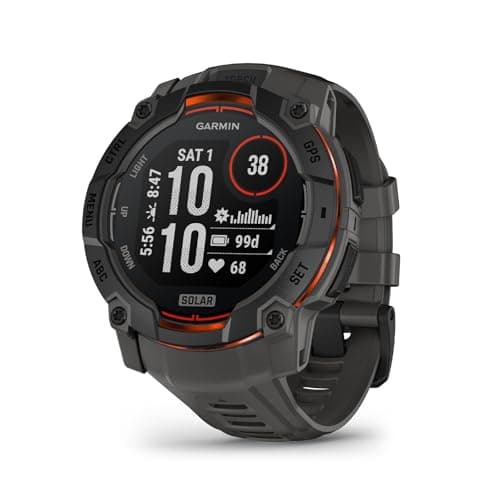 Garmin Instinct 3 Solar (50mm) 10 ATM, sunrise, sunset, moonrise, moonset and moon phase from your GPS position, a red-mode flashlight for a pre-dawn launch, and up to 40 days of battery that solar extends indefinitely. | Best fishing watch overallSolar GPS | 8.7 /10 | $399.99Amazon |
| 2 | 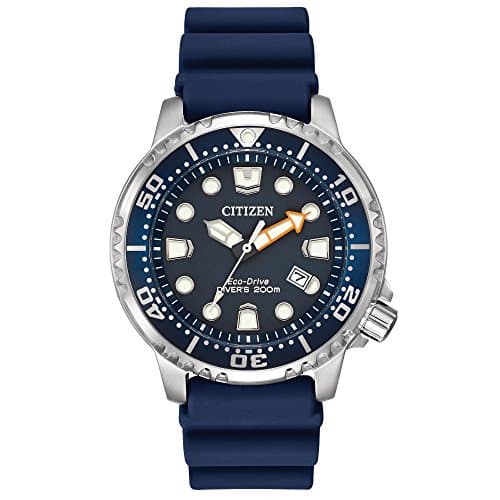 Citizen Promaster Dive BN0151-09L An ISO-certified 200 m diver on Eco-Drive: it charges from any light, never takes a battery, and carries the longest warranty on the site at five years. | Best for a boat and nothing elseSolar, no charger | 7.9 /10 | $337.50Amazon |
| 3 | 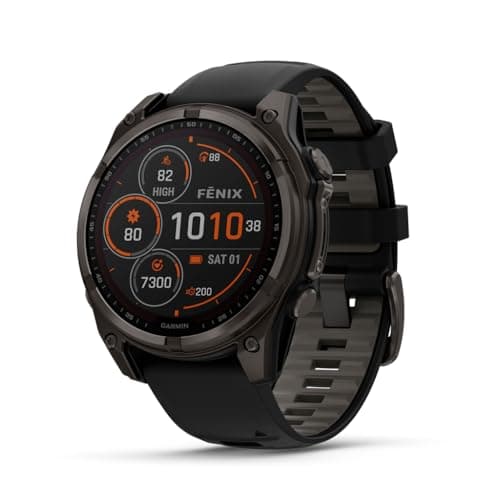 Garmin fenix 8 Solar (47mm, Sapphire) Preloaded TopoActive maps and a 40 m dive-rated case with leakproof metal buttons, which is the only true dive rating among the GPS watches here. | Best for finding waterSolar GPS | 8.4 /10 | $960.00Amazon |
| 4 | 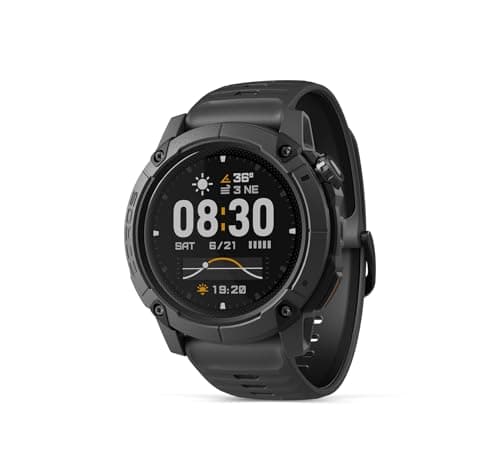 COROS NOMAD 61 g with trail and street names on the map layer and 50 all-systems GPS hours. Hardened mineral glass and 5 ATM are the compromise. | Lightest mapping watchRechargeable GPS | 6.9 /10 | $349.00Amazon |
| 5 | 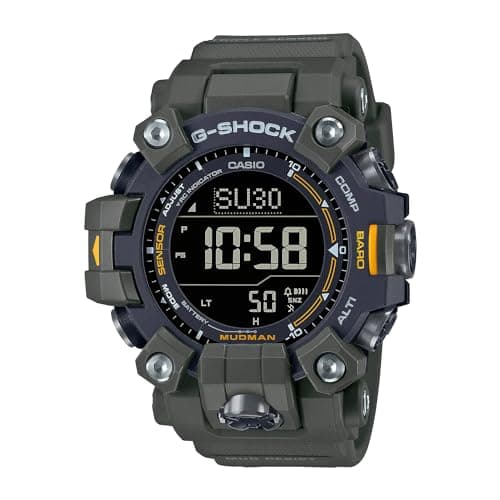 G-Shock Mudman GW-9500 Tough Solar, 200 m, mud resistant, with sunrise and sunset times and a compass, barometer, altimeter and thermometer on an 81 g carbon case. | Best with no chargerSolar, no charger | 8.2 /10 | $347.00Amazon |
#ad · Prices come live from Amazon, last checked November 4, 2026. Scores are ours, built from the makers' manuals, battery tables and spec pages. Product photos come from Amazon; anything still on a stock frame is labelled on its card. Tap a row for the full write-up.
The water rating is the whole decision
Fishing is the one outdoor use where the number on the caseback is not marketing. You are not getting splashed; you are putting your wrist in the water to unhook a fish, netting from a kneeling position, wading to your chest, and washing gear down at the ramp. Pressure and movement are what beat a seal, and a low rating is exactly what does not cover them.
That sorts this page immediately. The Citizen Promaster is 200 m and ISO-certified as a dive watch. The Mudman GW-9500 is 200 m and mud resistant. The Instinct 3 Solar is 10 ATM. The fenix 8 Solar is a 40-metre dive-rated case with leakproof metal buttons, which is a different and stricter claim from a static pressure rating. The COROS NOMAD is 5 ATM, and COROS itself describes that as surface water activities, not diving. If your season involves wading, that last one is the compromise you are accepting to save 30 grams.
Sun, moon and why anglers care
After water, the data an angler actually uses is light. First and last light decide when you are on the water; the moon phase and moonrise matter to anyone fishing a tide or a feed window. This is the one place where a GPS watch genuinely beats an analog, because it knows where you are.
Garmin publishes exactly this for the Instinct 3: a glance for sunrise, sunset and civil twilight and another giving moonrise, moonset and moon phase derived from your GPS position. Casio gives sunrise and sunset times on the Mudman GW-9500 and the Rangeman, computed from a city or coordinates you set. The full list of watches that carry this data is in watches with sunrise, sunset and moon phase.
Why these five, in this order
The Instinct 3 Solar wins on the combination nothing else here matches: 10 ATM, the sun and moon glances, a flashlight with a red mode that does not kill your night vision at a 4 a.m. launch, a MIP display that stays readable with the sun straight off the water, and Garmin's battery table reading up to 40 days of typical use and unlimited with three hours a day at 50,000 lux. A fishing trip is daylight, which means the watch charges while you fish.
The Citizen Promaster BN0151 is second because it is the purest version of this site's argument. Eco-Drive runs off any light source and Citizen states it never needs a battery replacement; the case is a 200 m ISO-certified diver in stainless steel; and the warranty is five years, the longest of any watch we rank. It tells you the time and the date and nothing else, which for a lot of anglers is the correct feature set.
The fenix 8 Solar (47mm) is here for one job: finding water. Preloaded TopoActive maps on a sapphire lens and titanium bezel, in a 40 m dive-rated case with leakproof metal buttons, is the right tool if your fishing involves walking into drainages you have not fished before. Up to 21 days of smartwatch use and 28 with solar keeps it honest on a long trip.
Fly fishing and wading
Fly fishing punishes two things: weight on the casting wrist and anything that catches line. That argues for a small, smooth case, and it argues hard against a 50 mm watch with a raised bezel. The honest recommendation here is the Instinct 3 Solar in the 45 mm size rather than the 50 mm if you are a caster first, or the COROS NOMAD at 61 g with a silicone band and 49 g on nylon if light matters more than the water rating. We would still not take a 5 ATM watch to the chest in a cold river, and neither would COROS, whose own spec line says surface water activities.
If you want the lightest thing that still goes underwater without worry, the Mudman GW-9500 is 81 g, 200 m, mud sealed and runs on light. It is the answer for anyone who fishes and does not want a screen to manage.
Offshore and the boat
Saltwater is a materials problem, not a battery problem. Salt attacks plated finishes, pitted stainless and any exposed spring bar, and it dries into button gaps. Three rules follow. Rinse the watch in fresh water at the end of the day, every day, which costs ten seconds and is the single highest-return habit in this whole guide. Prefer resin, polymer or titanium over plated steel. And prefer a screw-down crown and sealed pushers, which is what the Citizen and the Master of G Casios give you.
For a boat specifically, the solar analog is the best buy on this page. No charging, no screen to glare, no mode to get lost in, and a dive rating that covers a wet deck for a decade.
What we will not claim about tides
Plenty of fishing-watch lists promise tide graphs. We only flag what a maker's own document states, and among the watches above, Garmin publishes sun and moon data and Casio publishes sunrise and sunset times. Where a tide feature exists on a specific reference, it is tied to a tide station you have to set, and it is not the same as a live forecast. If a tide graph is your deciding feature, verify it on the exact model number before you buy, because it moves between references inside the same product line. Our standard of evidence is set out on how we rate.
The decade pick
In detail
The picks, in full
Rank 1
Best fishing watch overall
Garmin Instinct 3 Solar (50mm)
10 ATM, sunrise, sunset, moonrise, moonset and moon phase from your GPS position, a red-mode flashlight for a pre-dawn launch, and up to 40 days of battery that solar extends indefinitely.
EvidenceResearched · every row sourced
How the 8.7 score breaks down
- Battery & power independence (25%)
- 10
- Durability of materials (25%)
- 8
- Serviceability & lifespan (20%)
- 7
- Field usability (15%)
- 9
- Value per decade (10%)
- 10
- Mission fit (5%)
- 8
What the spec sheet supports
- Garmin's own table shows the 50mm solar model doubling the 45mm in GPS-with-solar hours (260 vs 130).
- Physical buttons, a monochrome display readable in full sun, and a flashlight with a red mode.
- 10 ATM rating and a MIL-STD 810 claim on a watch that costs less than half a fenix.
Where it falls short
- No maps: it navigates breadcrumb trails and waypoints, not topo maps.
- The solar figures assume three hours a day at 50,000 lux, which is midday sun, not a sleeve.
- Garmin does not name the lens material; treat it as strengthened glass, not sapphire.
Skip this if…
…you need on-wrist topo maps, or you wear long sleeves and work indoors, where the solar math never happens.
#ad · Price as of November 4, 2026 · Disclosure for the link to Garmin Instinct 3 Solar (50mm)
Rank 2
Best for a boat and nothing else
Citizen Promaster Dive BN0151-09L
An ISO-certified 200 m diver on Eco-Drive: it charges from any light, never takes a battery, and carries the longest warranty on the site at five years.
EvidenceResearched · every row sourced
| Power class | Solar, no charger. A solar cell that recharges from any light and never meets a charger. The rechargeable cell is a watchmaker-replaceable part. |
|---|---|
| Power | E168 Eco-Drive: powered by any light source, no battery replacement |
| Glass | Anti-reflective mineral crystal |
| Bezel & case | Stainless steel, 44 mm; polyurethane strap |
| Water rating | 200M/20Bar, ISO-certified dive watch |
| Warranty | 5-year limited warranty |
How the 7.9 score breaks down
- Battery & power independence (25%)
- 9
- Durability of materials (25%)
- 7
- Serviceability & lifespan (20%)
- 9
- Field usability (15%)
- 6
- Value per decade (10%)
- 9
- Mission fit (5%)
- 6
What the spec sheet supports
- A five-year warranty is the longest on the site.
- Solar analog with an ISO dive rating for the price of a Rangeman.
Where it falls short
- Mineral crystal.
- Citizen's page does not state a dark-running power reserve for this model.
Skip this if…
…you want a sapphire diver; Citizen's page names mineral for this one.
#ad · Price as of November 4, 2026 · Disclosure for the link to Citizen Promaster Dive BN0151-09L
Rank 3
Best for finding water
Garmin fenix 8 Solar (47mm, Sapphire)
Preloaded TopoActive maps and a 40 m dive-rated case with leakproof metal buttons, which is the only true dive rating among the GPS watches here.
EvidenceResearched · every row sourced
| Power class | Solar GPS. A rechargeable cell topped up by a solar lens. Weeks between charges; the cell still ages like any lithium battery. |
|---|---|
| Battery (smartwatch) | Up to 21 days typical use; up to 28 days with solar |
| Battery (GPS) | Up to 67 hours GPS-only; up to 92 hours with solar |
| Battery (max GPS) | Up to 132 hours max-battery GPS; up to 283 hours with solar |
| Glass | Scratch-resistant sapphire lens (sapphire versions) |
| Bezel & case | Titanium bezel (sapphire versions); leakproof metal buttons |
| Water rating | 40-meter dive-rated case |
| MIL-STD-810 | Tested to U.S. military standards for thermal, shock and water resistance |
| Maps & GPS | TopoActive maps preloaded on sapphire versions |
How the 8.4 score breaks down
- Battery & power independence (25%)
- 8
- Durability of materials (25%)
- 10
- Serviceability & lifespan (20%)
- 7
- Field usability (15%)
- 10
- Value per decade (10%)
- 6
- Mission fit (5%)
- 8
What the spec sheet supports
- Every fenix 8 durability feature in the size most people can actually wear.
- 92 GPS hours with solar covers a long weekend of tracking with margin.
Where it falls short
- Smartwatch battery drops below a month (28 days with solar) versus the 51mm's 48.
- Same MIP-display trade-off as the 51mm.
Skip this if…
…battery days are the reason you are here; the 51mm solar is the fenix for that.
#ad · Price as of November 4, 2026 · Disclosure for the link to Garmin fenix 8 Solar (47mm, Sapphire)
Rank 4
Lightest mapping watch
COROS NOMAD
61 g with trail and street names on the map layer and 50 all-systems GPS hours. Hardened mineral glass and 5 ATM are the compromise.
EvidenceResearched · every row sourced
| Power class | Rechargeable GPS. A rechargeable lithium cell charged from a cable. Days to a few weeks per charge; the cell ages with every cycle. |
|---|---|
| Battery (smartwatch) | 22 days daily use |
| Battery (GPS) | 50 hours all systems on; 56 hours endurance mode; 34 hours dual-frequency |
| Glass | Hardened mineral glass |
| Bezel & case | Fiber reinforced polymer with aluminum alloy bezel |
| Water rating | 5 ATM (surface water activities, not diving) |
| Maps & GPS | Landscape maps with trail and street names, topo maps; dual-frequency GNSS |
| Weight | 61 g with silicone band; 49 g with nylon band |
| Size | 47.8 × 47.8 × 14.8 mm |
How the 6.9 score breaks down
- Battery & power independence (25%)
- 7
- Durability of materials (25%)
- 6
- Serviceability & lifespan (20%)
- 6
- Field usability (15%)
- 8
- Value per decade (10%)
- 8
- Mission fit (5%)
- 8
What the spec sheet supports
- Trail and street names on the map layer, which a Garmin Instinct cannot show at all.
- Lightest mapping watch on the site.
Where it falls short
- Mineral glass and 5 ATM.
- No solar, no flashlight.
Skip this if…
…your season involves wading; 5 ATM and mineral glass are the wrong pair for a river.
#ad · Price as of November 4, 2026 · Disclosure for the link to COROS NOMAD
Rank 5
Best with no charger
G-Shock Mudman GW-9500
Tough Solar, 200 m, mud resistant, with sunrise and sunset times and a compass, barometer, altimeter and thermometer on an 81 g carbon case.
EvidenceResearched · every row sourced
| Power class | Solar, no charger. A solar cell that recharges from any light and never meets a charger. The rechargeable cell is a watchmaker-replaceable part. |
|---|---|
| Battery (cell) | Approximately 6 months with no light (Casio's stated usage conditions) |
| Power | Solar panel and one rechargeable battery |
| Glass | Mineral |
| Bezel & case | Carbon, resin and bio-based resin |
| Water rating | 200 meters; shock resistant; mud resistant |
| Sensors | Digital compass, altimeter, barometer, thermometer; sunrise/sunset times |
| Weight | 81 g |
| Size | 56.7 × 52.7 × 14.8 mm |
How the 8.2 score breaks down
- Battery & power independence (25%)
- 9
- Durability of materials (25%)
- 7
- Serviceability & lifespan (20%)
- 9
- Field usability (15%)
- 7
- Value per decade (10%)
- 9
- Mission fit (5%)
- 9
What the spec sheet supports
- 3.4 mm thinner and 12 g lighter than the Rangeman GW-9400 by the published figures.
- Mud-resistant buttons and a carbon-reinforced case.
- Sunrise/sunset and a barometer graph for reading weather in a stand.
Where it falls short
- Six months of stated dark-running versus the Rangeman's eight.
- Mineral crystal.
Skip this if…
…you want the longest-proven G-Shock module; the Rangeman has a decade more history behind it.
#ad · Price as of November 4, 2026 · Disclosure for the link to G-Shock Mudman GW-9500
How to buy a fishing watch
1. Start at 10 ATM. Anything less is a watch that goes near water, not in it. If you wade or dive, go to a 200 m or certified dive rating.
2. Decide whether you want light data or map data. Sunrise, sunset and moon phase are what most anglers use daily; maps matter only if you are finding new water on foot.
3. Pick the power system for your trip length. Solar or Eco-Drive means a week off-grid is a non-event. A cable-charged watch means remembering a cable.
4. Favour a sunlight-readable display. Glare off water is the worst lighting a watch face sees. A MIP display or a plain LCD beats AMOLED here, every time.
5. Rinse it in fresh water after saltwater. This is the difference between a ten-year watch and a three-year one, and it is free.
6. Buy the smaller case if you cast. A 45 mm Instinct does everything the 50 mm does except catch your line.
If you fish from a kayak, the water rating and the buttons matter far more than they do from a bank or a boat, and the picks shift accordingly: best watch for kayaking.
How we scored this
What we checked to build this ranking
Every pick here is researched against the documents that decide whether a watch lasts: the maker's own battery table read mode by mode, what the lens and case are actually made of, the water rating, whether a MIL-STD-810 line is on the record and in whose words, and how long the maker keeps updating the line. Each one is then scored on a public rubric weighted for a decade of ownership, and every figure links to where it came from.
That is why the order on this page is worth following: it is built from specs you can open yourself, and commissions never set a score or decide a pick. The rubric and its weights are published.
Questions
Frequently asked
What is the best watch for fishing?
The Garmin Instinct 3 Solar (50mm). It is 10 ATM, built to MIL-STD-810, and gives sunrise, sunset, civil twilight, moonrise, moonset and moon phase from your GPS position, plus a flashlight with a red mode. Garmin states up to 40 days of smartwatch battery and calls it unlimited with three hours a day at 50,000 lux, so a daylight trip charges it.
What water resistance do you need for a fishing watch?
10 ATM is the sensible floor, because fishing means repeated immersion and moving water rather than splashes. If you wade deep or dive, step up to a 200 m rating or a certified dive case: the Citizen Promaster BN0151 is ISO-certified at 200 m and the Garmin fenix 8 case is dive rated to 40 m with leakproof metal buttons.
Is a GPS watch worth it for fishing?
It is if you walk to your water or fish at first and last light. The sun and moon data a GPS watch computes from your actual position is the most-used feature for most anglers, and maps matter when you are exploring new drainages. If you fish from a boat you know, a solar analog diver does the job for less and never needs charging.
What is the best Garmin watch for fishing and hunting?
The Instinct 3 Solar for both, because the same sun, moon and solar advantages apply in a treestand and on a riverbank, and it is 10 ATM. If you want maps as well, the fenix 8 Solar adds TopoActive mapping and a sapphire lens. The hunting-specific ranking is best GPS watch for hunting.
Do fishing watches show tides?
Some references do, tied to a tide station you set, but it varies between models inside the same line and it is not a live forecast. We only state what a maker's own document states, so for the watches here we flag Garmin's sun and moon glances and Casio's sunrise and sunset times. Check the exact model number if a tide display is your deciding feature.
Keep reading
Related on Bezel & Bearing
Receipts
Sources
- Garmin newsroom — Instinct 3 Series press release (checked 2026-09-20)
- Garmin — Instinct 3 Solar Series Owner's Manual, Glances (sunrise/sunset, moon phase, ABC) (checked 2026-09-20)
- Garmin — Instinct 3 Solar Series Owner's Manual, Battery Life Information (checked 2026-09-20)
- Garmin newsroom — fenix 8 Series press release (checked 2026-09-20)
- Garmin — fenix 8 Series Owner's Manual, Battery Information (checked 2026-09-20)
- Citizen — Promaster Dive BN0151-09L product page (checked 2026-09-20)
- COROS — VERTIX 2S / APEX / NOMAD specification tables (checked 2026-09-20)
- Casio — Operation Guide, module 3553 (GW-9500 Mudman), Specifications (checked 2026-09-20)
- G-Central — G-Shock GW-9500 Mudman spec sheet (checked 2026-09-20)
Battery, glass, case and water figures come from the maker's own owner's manuals, spec pages and press releases, linked on every product so you can open the page they came from. Prices are set by Amazon and change often, so each buy button takes you to the current one. Read the full method.