GPS Watches / Guide
What size GPS watch should I buy: measure the wrist, then decide what the extra battery is worth
A bigger outdoor watch is not vanity, it is a bigger cell and a bigger solar lens, and the makers publish exactly how many hours that buys. Here is how to work out whether those hours are worth the millimetres on your wrist.
By Mike M.Updated Researched from the maker's manuals and spec sheets
#adReader-supported: we may earn a commission if you buy through our links, at no extra cost to you. It never decides a ranking. How we rate · Disclosure
The short version
Outdoor watch sizing is unusual, because the case size is not a style choice the way it is on a dress watch. On a GPS watch, a bigger case contains a bigger battery and, on the solar models, a bigger solar lens, and the maker publishes the difference in hours. So the question is not "what looks right"; it is how many extra hours am I getting, and is that worth wearing a larger watch for ten years.
For most people the honest answer is the smaller size, because the smaller case still carries the feature that matters most on this site: the solar claim. A 45 mm Instinct 3 Solar says unlimited with solar in exactly the same way the 50 mm does.
How to measure, properly
Two minutes with a soft tape measure or a strip of paper and a ruler:
- Wrap the tape around your wrist just past the wrist bone, towards the hand, which is where a watch actually sits. Not over the bone.
- Snug, not tight. Note the number in millimetres.
- Compare against the case width the maker publishes, not the lug-to-lug of a dress watch, because rugged GPS watches have integrated or short lugs.
Rough guidance, which is guidance and not a rule:
| Wrist circumference | Case sizes that usually work |
|---|---|
| Under 160 mm (6.3 in) | 42 to 45 mm. The 45 mm Instinct 3 Solar, the 42.9 mm-wide GMA-S2100 |
| 160 to 175 mm (6.3 to 6.9 in) | 45 to 47 mm. The 45 mm Instinct 3 Solar or the 47 mm fenix 8 Solar |
| 175 to 190 mm (6.9 to 7.5 in) | 47 to 50 mm. Either fenix 8 size, the 50 mm Instinct 3 Solar |
| Over 190 mm (7.5 in) | 50 to 51 mm. The 51 mm fenix 8 Solar, Enduro 3, tactix 8, Rangeman at 55.2 mm wide |
One caveat worth more than the table: if you will wear the watch over a jacket cuff or under a glove, size down. A case that fits bare skin comfortably is a case that catches on a sleeve.
What the bigger case actually buys
Here is the part nobody puts in a sizing guide, from the makers' own battery tables:
| Watch and size | Smartwatch battery | GPS-only | Max-battery GPS |
|---|---|---|---|
| Instinct 3 Solar, 45 mm | Up to 28 days; unlimited with solar | 40 h; 130 h with solar | 100 h; unlimited with solar |
| Instinct 3 Solar, 50 mm | Up to 40 days; unlimited with solar | 60 h; 260 h with solar | 150 h; unlimited with solar |
| fenix 8 Solar, 47 mm | Up to 21 days; 28 with solar | 67 h; 92 h with solar | 132 h; 283 h with solar |
| fenix 8 Solar, 51 mm | Up to 30 days; 48 with solar | 95 h; 149 h with solar | 186 h; 653 h with solar |
Read that honestly and two conclusions fall out. On the fenix, the step from 47 mm to 51 mm is large: nine extra days of smartwatch use, 28 extra GPS hours and more than double the max-battery figure with solar. If you do multi-day trips, that is a real argument for the big case.
On the Instinct, the step from 45 mm to 50 mm buys twelve days and twenty GPS hours, on a watch whose smaller size already says unlimited with solar. Unless you are routinely recording 40-plus hour activities, the smaller Instinct gives up almost nothing you will notice. The whole solar argument is in are solar watches worth it.
Thickness matters more than width
Everyone shops on diameter and then complains about thickness. Case height is what decides whether a watch catches on a cuff, bangs on a door frame and sits comfortably when you sleep in it, and the makers publish it.
For scale, using the figures on this site: the G-Shock GA-2100 is 11.8 mm, the GMA-S2100 is 11.2 mm, the COROS APEX 2 Pro is 14 mm, the COROS NOMAD is 14.8 mm, the COROS VERTIX 2S is 16 mm, the Casio Rangeman GW-9400 is 18.2 mm and the G-Shock GBD-H2000 is 19.4 mm. That is an eight-millimetre spread, and in use the difference between an 11 mm watch and a 19 mm watch is far more noticeable than two millimetres of diameter.
If you work with your hands, wear long sleeves, or have ever caught a watch on a rope or a door handle, treat height as the first number you check. The thin-case argument for Casio is in best G-Shock for work.
If you have a small wrist
The rugged outdoor category is sized for large wrists and there is no point pretending otherwise. Three honest options:
The 45 mm Instinct 3 Solar is the best answer in GPS watches. It is a genuinely smaller case with the full solar claim, 10 ATM, the MIL-STD-810 line and the flashlight, giving up only battery hours.
The 47 mm fenix 8 Solar is the smaller mapping option, with sapphire and a titanium bezel and a 40 m dive-rated case. It is still a substantial watch; the 51 mm is a lot of watch.
A smaller Casio if you do not need GPS. The GMA-S2100 is 46.2 by 42.9 by 11.2 mm and 41 g, which Casio describes as its small case size and which is the smallest, lightest tough watch we rank. The reasoning is in best G-Shock for small wrists.
One more option people forget: the strap. A nylon strap on a COROS or Suunto saves real weight, 17 grams on the VERTIX 2S and 13 on the APEX 2 Pro by COROS's own figures, and nylon conforms to a thin wrist far better than thick silicone.
The picks
Our picks for this
One watch per size bracket
The small solar GPS watch, the smaller mapping fenix, the big-battery Instinct, and the smallest tough watch on the site for anyone who does not need GPS at all.
Best solar GPS watch for smaller wrists
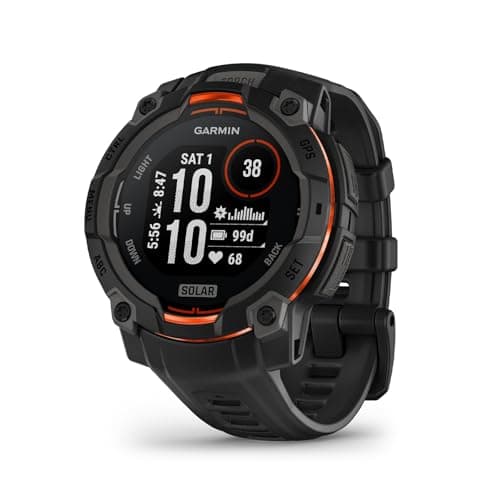
Garmin Instinct 3 Solar (45mm)
Solar GPS8.3/10The 45 mm case keeps the unlimited-with-solar claim, 10 ATM, the MIL-STD-810 line and the flashlight, at 28 days and 40 GPS hours.
$339.99Amazon#ad · Price as of November 4, 2026 · Disclosure for the link to Garmin Instinct 3 Solar (45mm)
Best mapping watch for a medium wrist
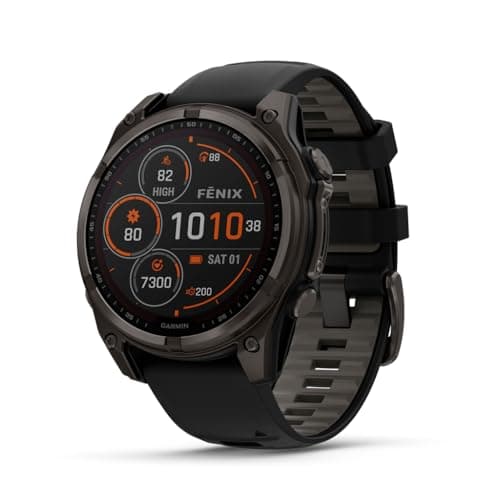
Garmin fenix 8 Solar (47mm, Sapphire)
Solar GPS8.4/10The smaller mapping fenix: sapphire, titanium bezel, 40 m dive-rated case, 21 days rising to 28 with solar.
$960.00Amazon#ad · Price as of November 4, 2026 · Disclosure for the link to Garmin fenix 8 Solar (47mm, Sapphire)
Best for a decade of GPS without a charger
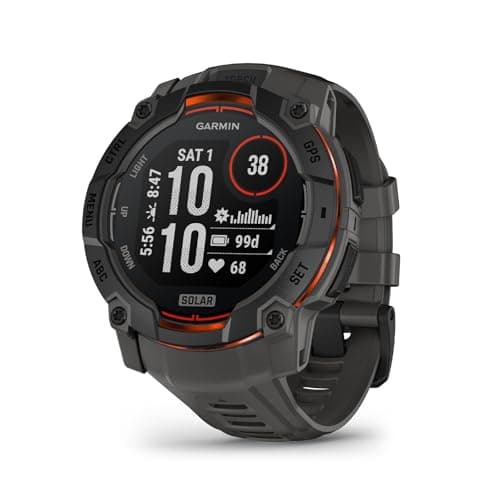
Garmin Instinct 3 Solar (50mm)
Solar GPS8.7/10The size step is worth 40 days and 60 GPS hours, or 260 with solar, if your wrist takes it.
$399.99Amazon#ad · Price as of November 4, 2026 · Disclosure for the link to Garmin Instinct 3 Solar (50mm)
Best G-Shock for a small wrist
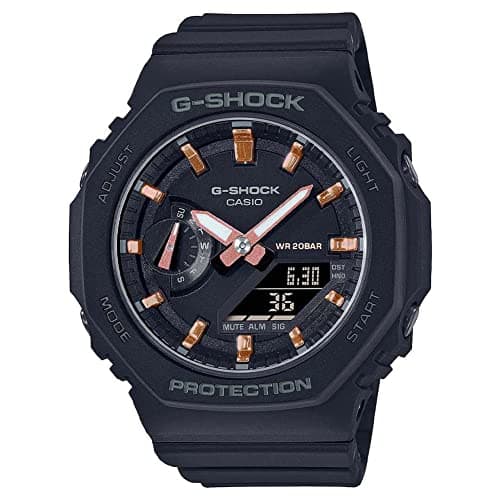
G-Shock GMA-S2100
Replaceable cell7.8/1046.2 x 42.9 x 11.2 mm and 41 g: Casio's small case size, 200 m, with two cells rated at about three years.
$96.02Amazon#ad · Price as of November 4, 2026 · Disclosure for the link to G-Shock GMA-S2100
The rules, in order
1. Measure first. Past the wrist bone, towards the hand, snug. Everything else follows from that number.
2. Check thickness before diameter. An 11 mm watch disappears; a 19 mm watch announces itself. Both are published.
3. Buy the size whose battery table you need, not the longest one. On the Instinct, the smaller case already says unlimited with solar. On the fenix, the big case genuinely earns its size on long trips.
4. Size down if you wear sleeves or gloves. The watch that fits bare skin is the watch that catches on everything else.
5. Consider the strap as part of the size. Nylon saves grams and conforms better than silicone.
6. The watch you keep wearing wins. A 51 mm case in a drawer has a battery life of zero. This is the whole reason we rank the 45 mm and 47 mm sizes as the default recommendation, and it is consistent with the ranking logic in best rugged GPS watches.
How we scored this
What we checked to build this ranking
Every pick here is researched against the documents that decide whether a watch lasts: the maker's own battery table read mode by mode, what the lens and case are actually made of, the water rating, whether a MIL-STD-810 line is on the record and in whose words, and how long the maker keeps updating the line. Each one is then scored on a public rubric weighted for a decade of ownership, and every figure links to where it came from.
That is why the order on this page is worth following: it is built from specs you can open yourself, and commissions never set a score or decide a pick. The rubric and its weights are published.
Questions
Frequently asked
What size GPS watch should I buy?
Measure your wrist just past the wrist bone. Under about 165 mm, buy a 45 mm Instinct 3 Solar or a 47 mm fenix 8 Solar. Over about 180 mm, a 50 mm or 51 mm case wears fine and buys real battery. In between, buy the smaller case, because the smaller Instinct still carries the unlimited-with-solar claim.
What size Garmin Instinct should I get, 45 mm or 50 mm?
The 50 mm buys up to 40 days of smartwatch battery, 60 GPS hours and 260 with solar, against 28 days, 40 hours and 130 with solar on the 45 mm. Both make the same unlimited-with-solar claim for everyday wear, so unless you record activities longer than about 40 hours, the 45 mm is the better everyday watch.
Is a 50 mm watch too big?
On a wrist over about 180 mm, no. Below about 165 mm it will overhang. Case height matters at least as much: the watches on this site range from 11.2 mm to 19.4 mm thick, and that spread is far more noticeable in daily use than a few millimetres of diameter.
What is the best GPS watch for a small wrist?
The 45 mm Garmin Instinct 3 Solar, which keeps the solar claim, 10 ATM, the MIL-STD-810 line and the flashlight in a genuinely smaller case. If you want maps, the 47 mm fenix 8 Solar is the smaller mapping option. If you do not need GPS, the G-Shock GMA-S2100 is 42.9 mm wide, 11.2 mm thick and 41 g.
Does a bigger watch really have better battery life?
Yes, and the makers publish the difference. A 51 mm fenix 8 Solar states up to 30 days of smartwatch use and 653 hours of max-battery GPS with solar, against 21 days and 283 hours on the 47 mm. On a solar watch the lens area grows with the case too, which is why the big sizes post the biggest with-solar numbers.
Keep reading
Related on Bezel & Bearing
Receipts
Sources
- Garmin — Instinct 3 Solar Series Owner's Manual, Battery Life Information (checked 2026-09-20)
- Garmin — Instinct 3 Solar Series Owner's Manual, Specifications (checked 2026-09-20)
- Garmin newsroom — Instinct 3 Series press release (checked 2026-09-20)
- Garmin — fenix 8 Series Owner's Manual, Battery Information (checked 2026-09-20)
- Garmin newsroom — fenix 8 Series press release (checked 2026-09-20)
- G-Central — G-Shock GMA-S2100 spec sheet (checked 2026-09-26)
- G-Central — G-Shock GA-2100 spec sheet (checked 2026-09-26)
- Casio — Operation Guide, module 3410 (GW-9400 Rangeman), Specifications (checked 2026-09-20)
- G-Central — G-Shock GBD-H2000 spec sheet and list price (checked 2026-09-28)
- COROS — VERTIX 2S / APEX / NOMAD specification tables (checked 2026-09-20)
Battery, glass, case and water figures come from the maker's own owner's manuals, spec pages and press releases, linked on every product so you can open the page they came from. Prices are set by Amazon and change often, so each buy button takes you to the current one. Read the full method.